
The Radiant Synthesis: Light, Line, and Mystery in 16th-Century Italian Art
In short: This spotlight explores the exquisite 16th-century Italian works blending Urbino's narrative precision with Venice's atmospheric warmth, perfect for modern homes.
The Magic of the In-Between
In the sixteenth century, Northern and Central Italy were alive with artistic experimentation. If you traveled from the hilltop court of Urbino to the floating canals of Venice, you would witness two entirely different revolutions in vision. Urbino prized structural clarity, classical symmetry, and intellectual precision. Venice, on the other hand, was drunk on color, soft light, and painterly atmosphere. But what happened when these two worlds met?
The works attributed to the "Probably Urbino district or Venetian 16th Century" are the gorgeous answer to that question. Rather than belonging neatly to one single master, these pieces represent a fluid, exciting exchange of ideas. They capture a moment when the sharp draftsmanship of the High Renaissance softened under the warm, glowing light of the Venetian lagoon.
Narrative, Myth, and the Humanist Spirit
Look closely at these compositions, and you will find yourself stepping into a world of classical mythology, biblical allegory, and humanist philosophy. The artists of this era were not just painters; they were storytellers weaving complex narratives into every brushstroke. Yet, unlike the rigid academic works of later centuries, these pieces feel remarkably alive.
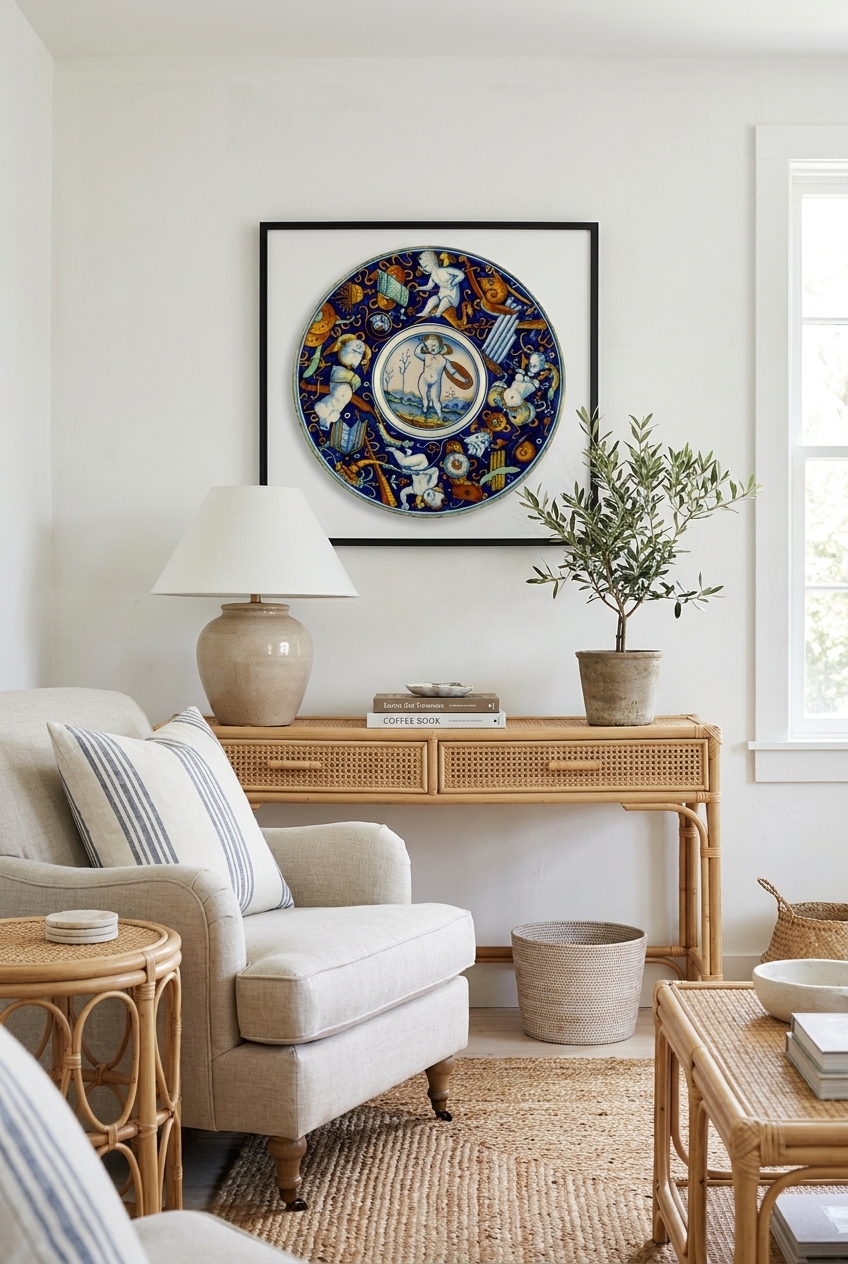
A perfect example of this narrative charm is the Plate with border of putti and trophies amid grotesques; in the center, a winged putto standing, armed, in a landscape. Created around 1510 to 1520, this work showcases the era's love for whimsical, classical motifs. The "grotesque" style—inspired by ancient Roman ruins rediscovered during the Renaissance—is balanced by a central figure that feels both playful and heroic. It is a masterclass in how sixteenth-century artists blended grand historical themes with intimate, decorative grace.
What to Look For: Color and Composition
When viewing these works, pay attention to the unique tension between line and color. You can see the legacy of High Renaissance draftsmanship in the graceful anatomy of the figures and the balanced weight of the compositions. Every element feels deliberate, anchoring the viewer's eye.
But it is the tonal warmth that truly steals the show. Instead of the cool, intellectual light found in Florentine painting, these works are bathed in a rich, golden atmosphere. The edges of figures are slightly softened—a technique known as sfumato—allowing them to melt gently into their backgrounds. The colors are saturated and deep, evoking the velvets, tapestries, and maritime light of the Venetian empire.
Living with Renaissance Masterpieces
There is a common misconception that Renaissance art only belongs in dark, wood-paneled libraries. In truth, these works bring an incredible warmth and intellectual depth to modern, minimalist spaces. The rich terracotta, deep blues, and golden ochres of the Full Probably Urbino district or Venetian 16th Century collection act as instant focal points, grounding a room with historical weight without feeling dated.
A high-quality canvas reproduction of these works captures the subtle textures of the original brushwork and the soft, atmospheric glow of the paint. Placed above a clean-lined modern sideboard or in a brightly lit hallway, these prints create a beautiful dialogue between the ancient and the contemporary, reminding us that true beauty transcends the centuries.
Frequently asked questions
What does "Probably Urbino district or Venetian" mean?
It indicates that the artwork shares stylistic characteristics of both regions. During the 16th century, artists traveled and traded ideas, creating a beautiful hybrid style that combines Urbino's precise drawing with Venice's rich color.
What are "grotesques" in Renaissance art?
Grotesques are decorative patterns featuring fantastical foliage, human figures, and animals. They were inspired by ancient Roman wall paintings discovered in underground ruins (grottoes) during the Renaissance.
How do these prints fit into modern interior design?
Their warm, earthy color palettes and classical compositions provide a striking contrast to modern minimalist furniture, adding texture, history, and a sophisticated focal point to any room.