The Restful Bedroom: How to Choose Calming Landscape Art
In short: Create a serene bedroom sanctuary by choosing low-contrast landscapes, framing with natural wood tones, and positioning art where your eyes naturally rest when waking.
The Psychology of the Horizon
The bedroom is our ultimate sanctuary, a space where the nervous system should naturally downshift. When selecting art for this intimate room, the goal is to invite quiet contemplation rather than high-energy excitement. Landscapes are uniquely suited to this task because of their inherent geometry. The horizontal line of a horizon naturally signals safety, stability, and calm to the human brain.
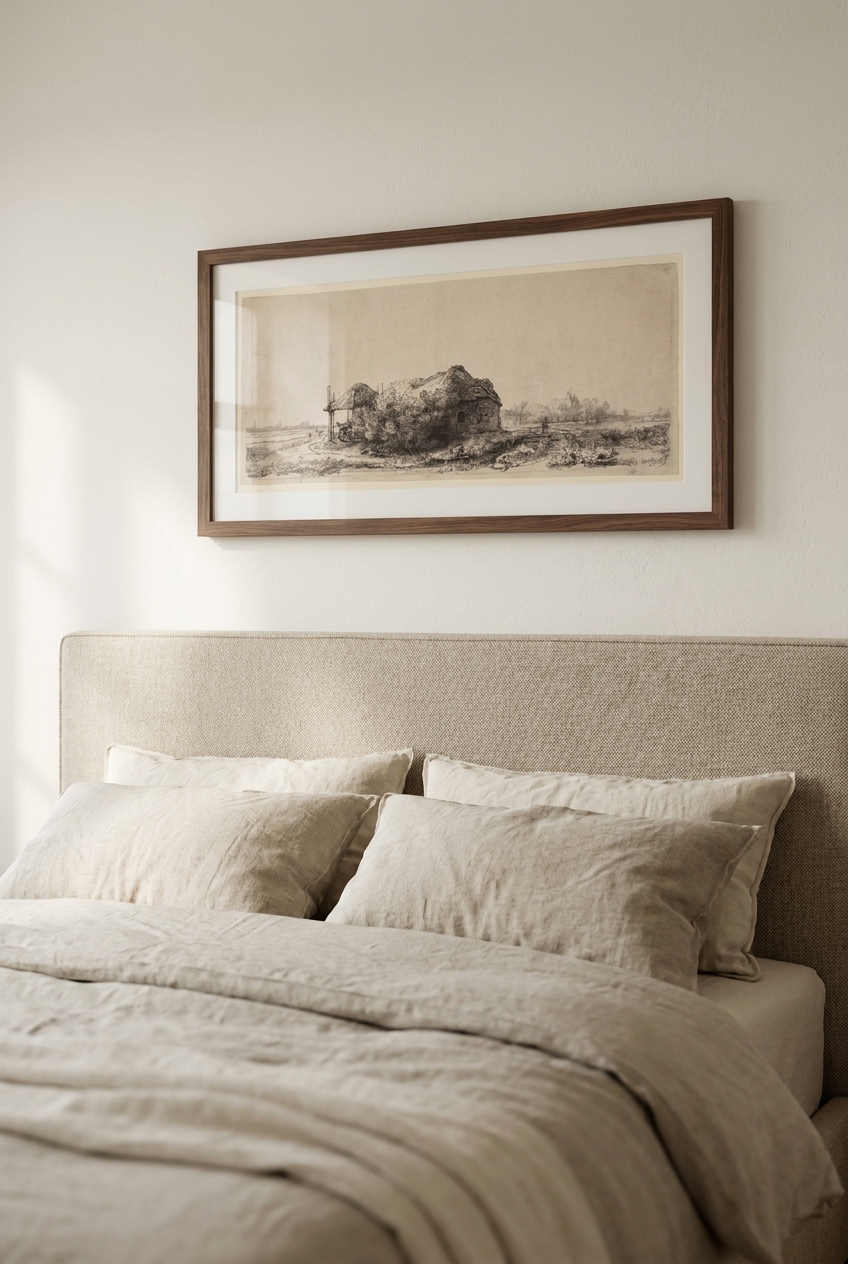
To achieve a restful mood, look for compositions with low visual contrast and soft, diffused light. Avoid dramatic storm scenes or jagged, aggressive peaks. Instead, opt for rolling hills, quiet meadows, or gentle waterways. A classic example of this grounding effect can be found in Rembrandt's Landscape with a Cottage and Hay Barn: Oblong, where the low horizon and soft, sprawling countryside create an immediate sense of quietude and space.
Scale, Placement, and Sightlines
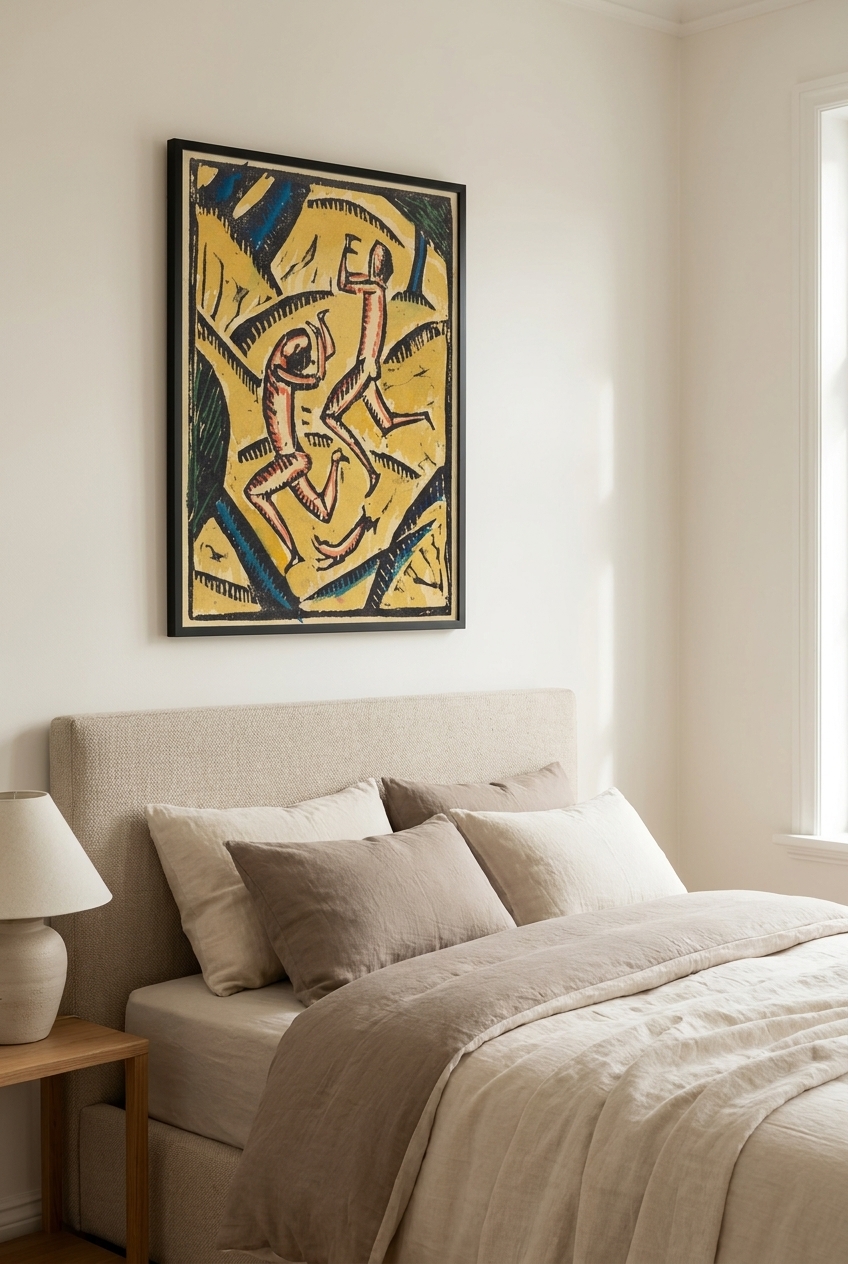
Where you hang your artwork is just as important as the piece itself. In a bedroom, there are two primary zones for art: above the bed and opposite the bed. Above the bed serves as an anchor for the room's design, grounding the headboard and establishing the color palette. If you place a landscape here, ensure it is scaled correctly—ideally spanning about two-thirds the width of your headboard to maintain visual balance.
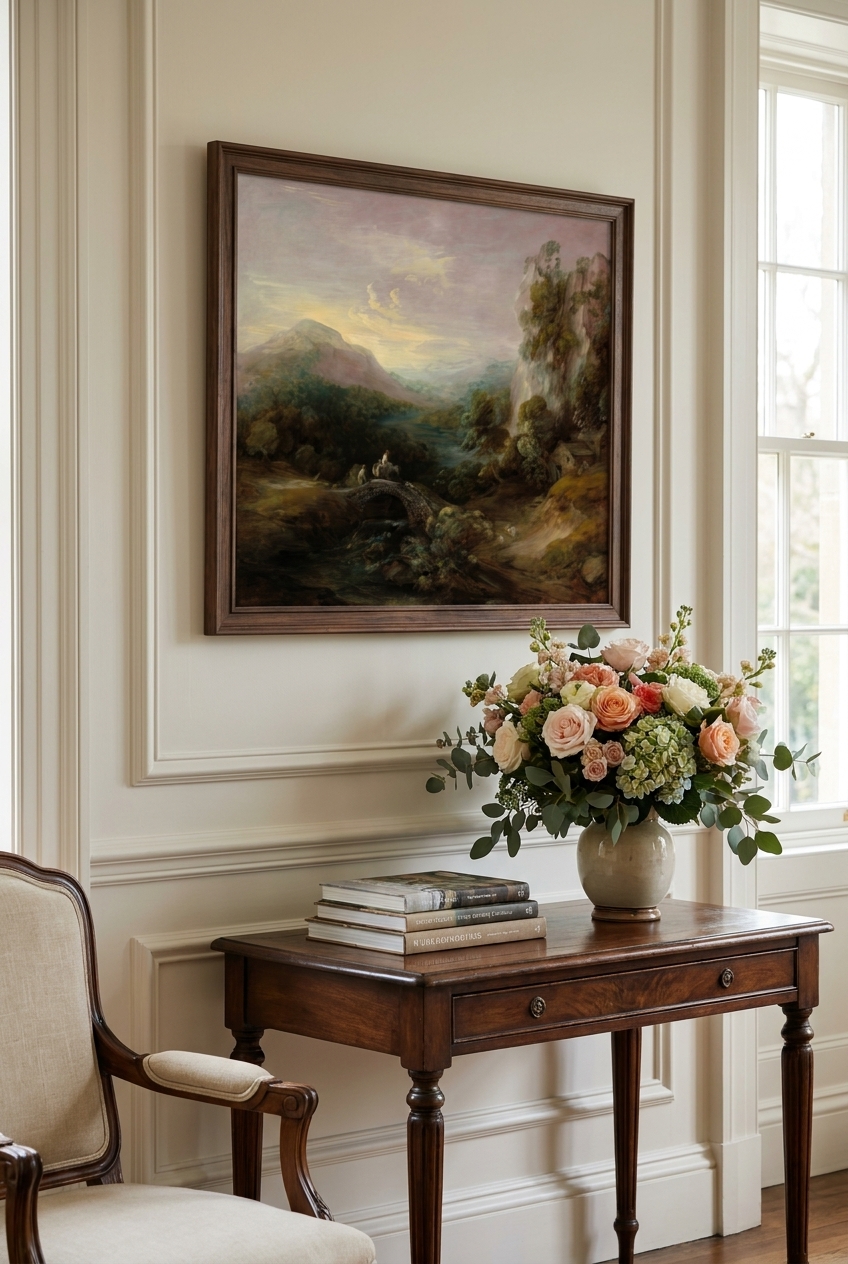
However, the wall opposite your bed is where you will actually look as you drift off to sleep and wake up in the morning. This is the perfect spot for a deeply immersive work. A larger-scale piece, such as Thomas Gainsborough's atmospheric Mountain Landscape with Bridge, acts as a visual window, drawing the eye into a soft, hazy distance and encouraging deep, slow breathing before sleep.
Framing and Palette Integration
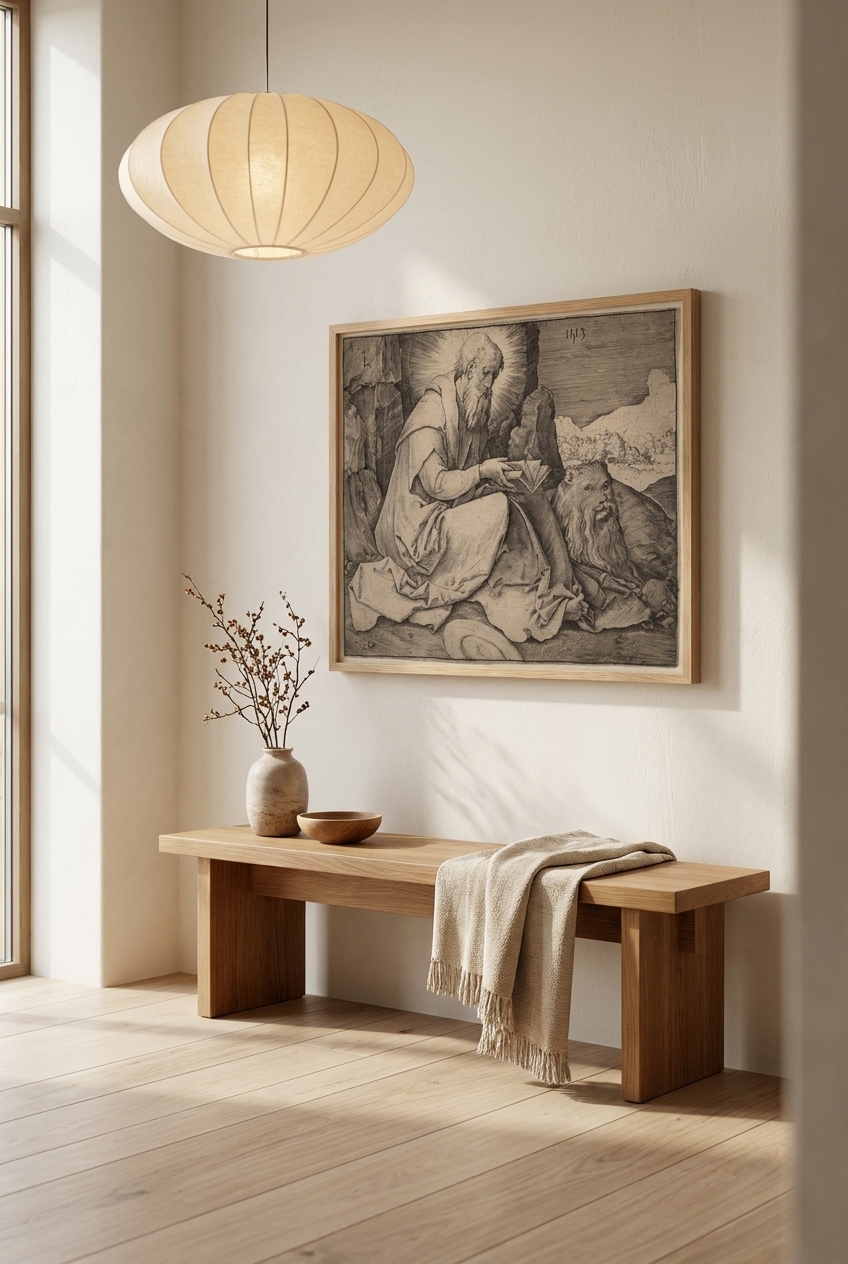
To maintain a serene atmosphere, your framing choices should feel organic and understated. Avoid high-gloss black frames or overly ornate, heavy gold gilding, which can feel too formal or distracting. Instead, opt for natural wood tones like white oak, walnut, or maple. These materials bring a warm, tactile element of the outdoors inside, reinforcing the natural theme of the landscape.
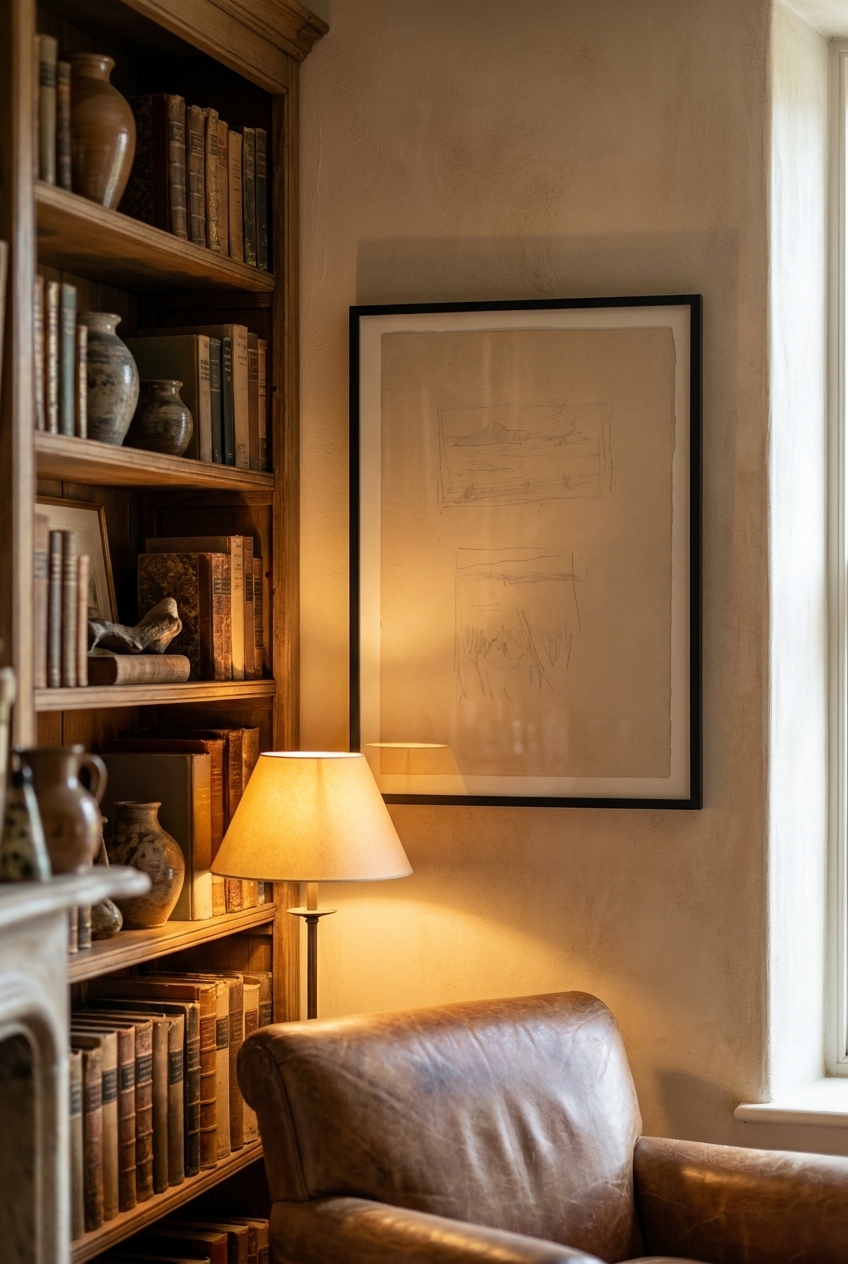
Consider how the tones of the artwork interact with your bedroom textiles. You do not need a perfect color match; in fact, a room that is too perfectly coordinated can feel sterile. Instead, look for gentle dialogues between the art and the space. For instance, the delicate, atmospheric tones in James McNeill Whistler's Two Sketches of Landscape Pictures hung at the Society of British Artists pair beautifully with linen bedding in oatmeal, sage green, or soft slate blue, creating a layered, lived-in elegance.
The Art of Quiet Details
Ultimately, a restful bedroom is about curation and editing. Resist the urge to clutter the walls with too many small frames, which can create visual noise. A single, well-chosen landscape print with a generous mat board allows the eye to rest and breathe. By focusing on soft light, natural textures, and thoughtful placement, you can turn your bedroom into a deeply restorative gallery of your own.
Frequently asked questions
Where is the best place to hang a landscape print in a bedroom?
The two best locations are directly above the headboard to anchor the room's design, or on the wall opposite the bed, which provides a calming visual anchor to look at when you wake up and fall asleep.
Should I choose a framed print or a canvas for a relaxing bedroom?
Framed prints with non-reflective glass and linen mats offer a softer, more classic feel that suits a restful bedroom. Canvases provide a more modern, textured look but can sometimes feel less intimate.
How do I match the art's colors with my existing bedroom decor?
Look for landscape art that shares one or two subtle undertones with your bedding or walls. You do not need a perfect match; instead, aim for complementary, muted tones like sage green, soft ochre, or slate blue.