The Sculptural Grace of John Melville Kelly
In short: John Melville Kelly blended classical draftsmanship with a deep love for the Pacific, creating monumental, statuesque portraits that bring warmth and quiet dignity to any modern space.
An Artist of Classical Restraint
In the early to mid-20th century, Hawaii was often depicted through a lens of fleeting, romanticized exoticism. But when printmaker John Melville Kelly arrived in the islands, he saw something far deeper. Armed with a profound commitment to classical draftsmanship, Kelly looked past the superficial and captured the quiet monumentality of the people he met. His work became a masterclass in rendering the human figure with sculptural dignity, transforming everyday portraiture into something heroic and enduring.
Kelly’s background in rigorous academic drawing allowed him to approach his subjects with a rare sensitivity. Rather than chasing modern trends, he leaned into a tradition that valued precise line, balanced composition, and anatomical harmony. Today, exploring the Full John Melville Kelly collection reveals an artist who was deeply respectful of his subjects, capturing their essence with an elegance that feels entirely timeless.
Carving Form from Light and Shadow
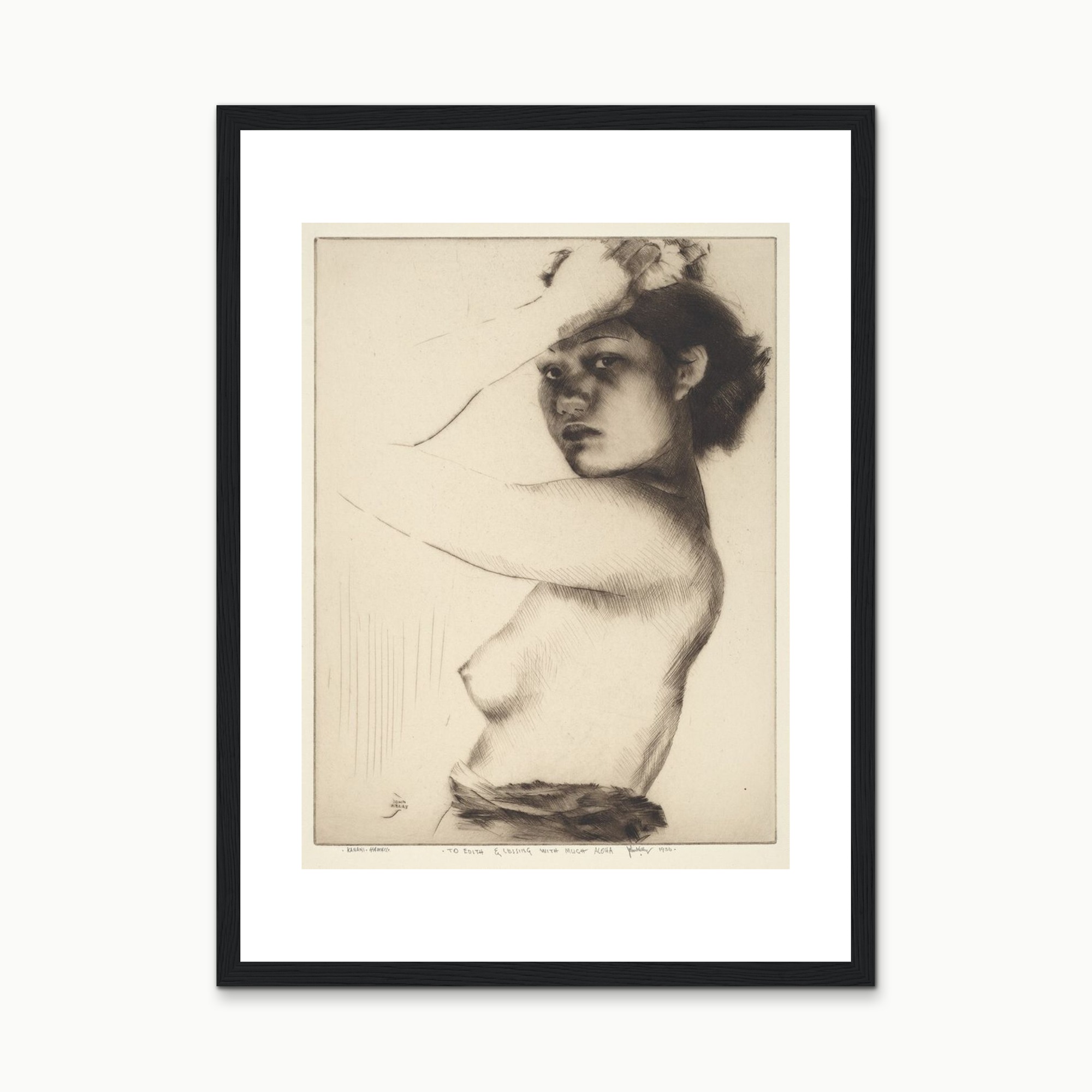
What makes Kelly’s printmaking so arresting is his masterful command of tone and contour. He did not merely draw his subjects; he seemed to carve them out of two-dimensional space. By focusing on the interplay of rich, velvety shadows and soft, glowing highlights, he gave his figures a statuesque presence. You can feel the weight, warmth, and physical reality of the people in his prints.
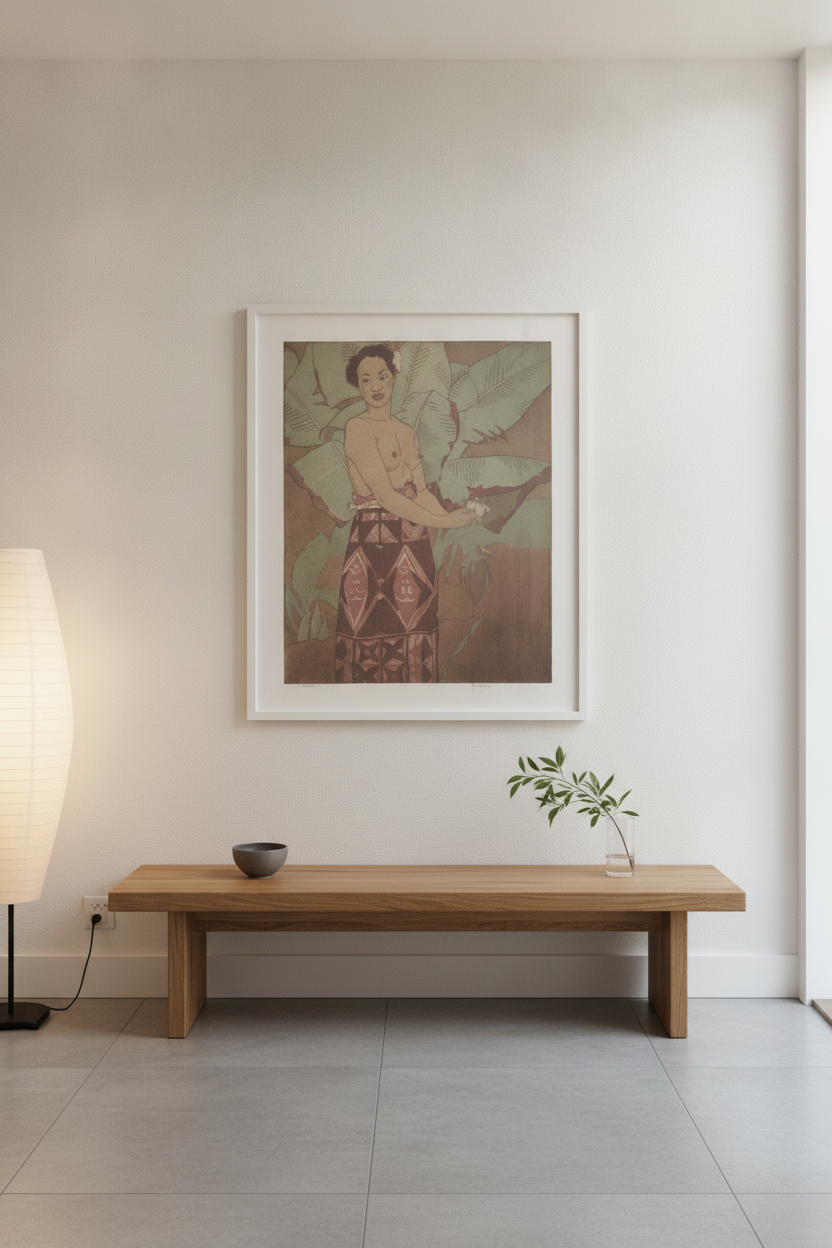
This technique is beautifully displayed in works like Kanani, Hawaii (1936). In this piece, the delicate lines of the face and the soft fall of hair are balanced by a powerful, confident composition. Kelly’s refined restraint means there are no cluttered backgrounds or unnecessary details. Every line serves a purpose, drawing the viewer’s eye to the essential beauty and character of the subject.
A Quiet, Timeless Dignity
While many artists of his era focused on dramatic landscapes, Kelly’s heart lay in the human face and form. His portraits do not feel like snapshots frozen in time; instead, they possess a quiet grace that transcends the decades. His subjects gaze out with a calm, self-assured strength that commands respect.
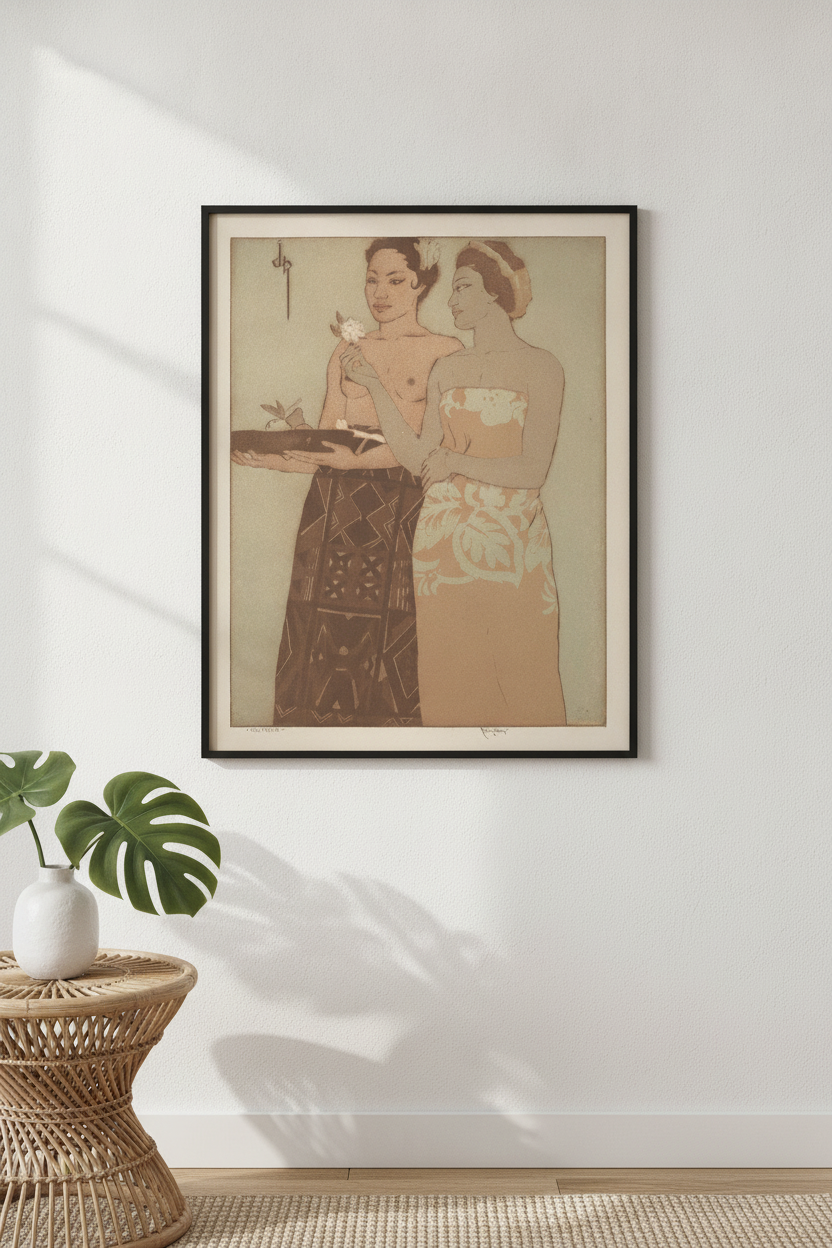
This sense of enduring dignity is a hallmark of his celebrated portrait Polynesia (1879). Through subtle gradations of tone and a flawless understanding of human anatomy, Kelly elevates the portrait into a heroic study of character. The print feels both deeply personal and universally human, a testament to his ability to find the monumental in the quiet moments of life.
Why Kelly’s Work Belongs in the Modern Home
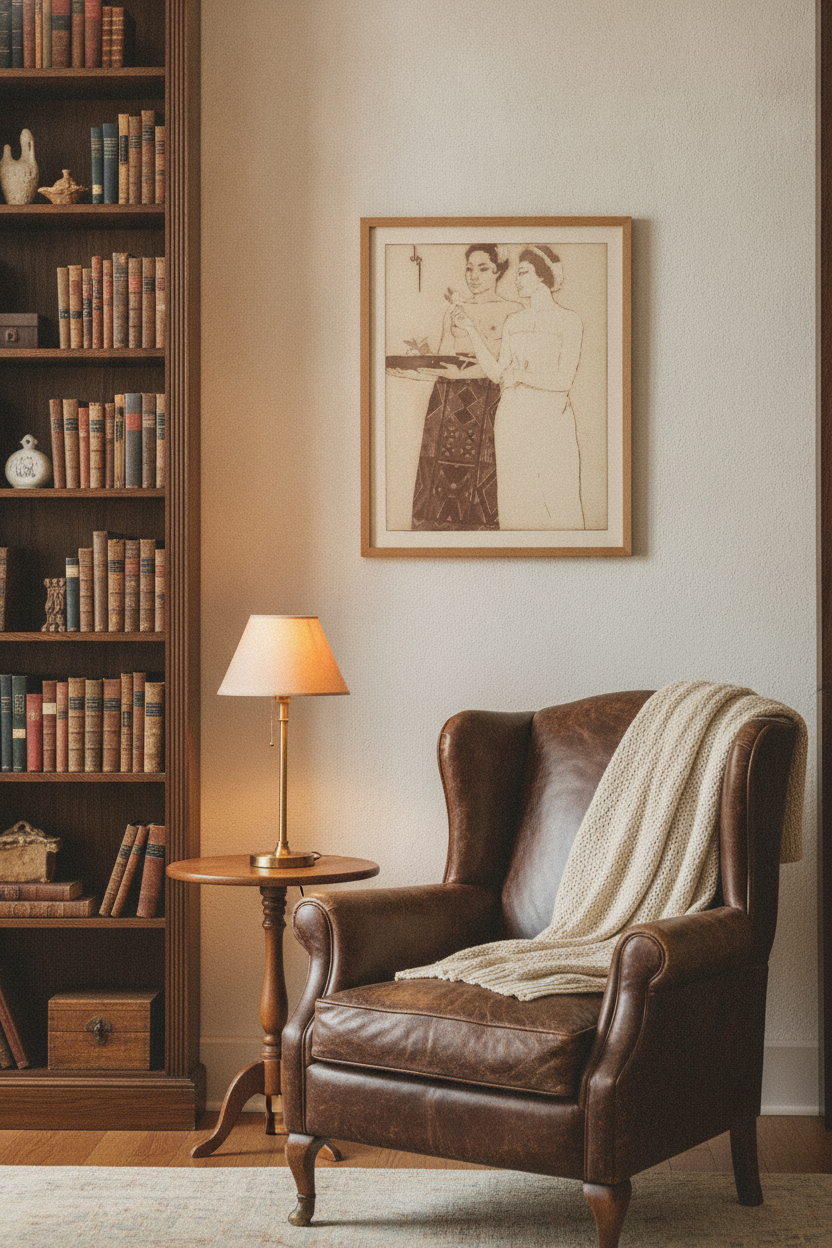
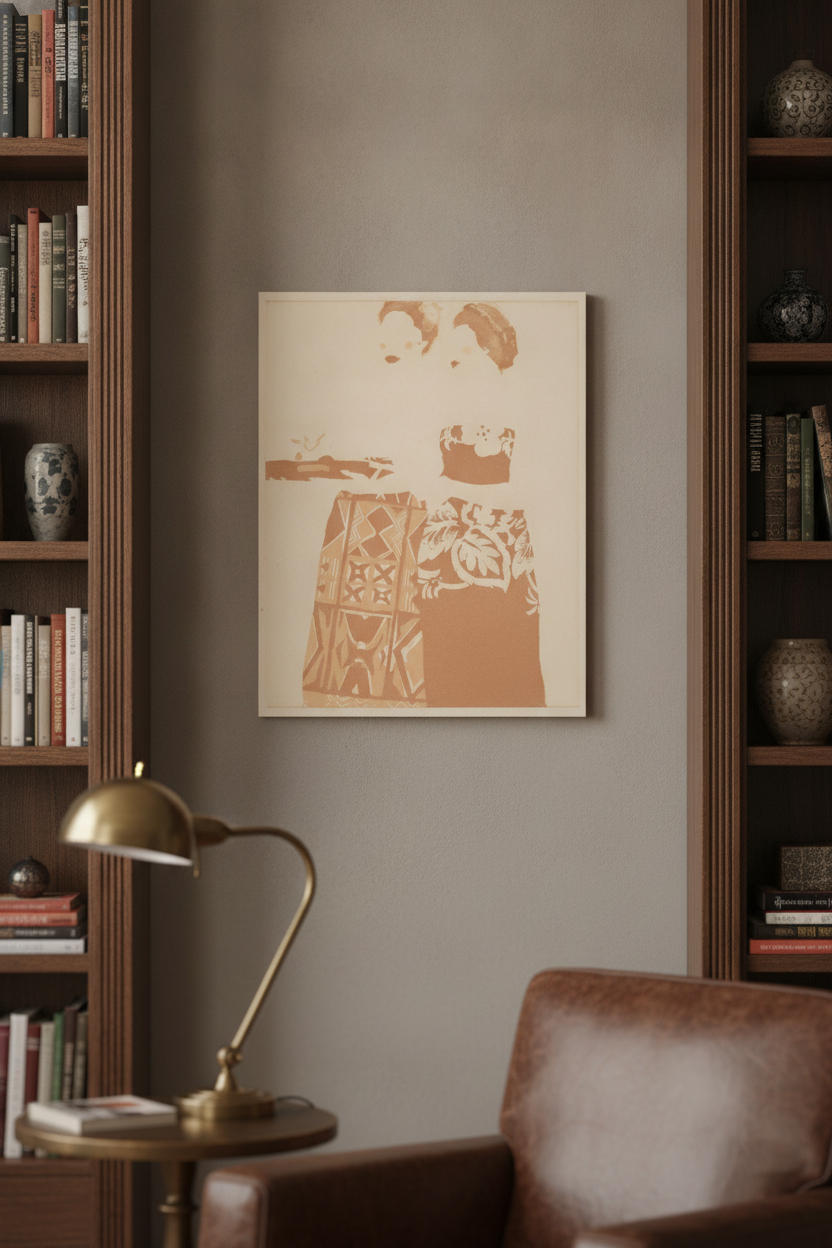
In contemporary interior design, we often look for pieces that offer a sense of calm, grounding, and warmth. John Melville Kelly’s prints do exactly that. Because his style is rooted in classical draftsmanship rather than loud, busy patterns, his work acts as a serene focal point in a room.
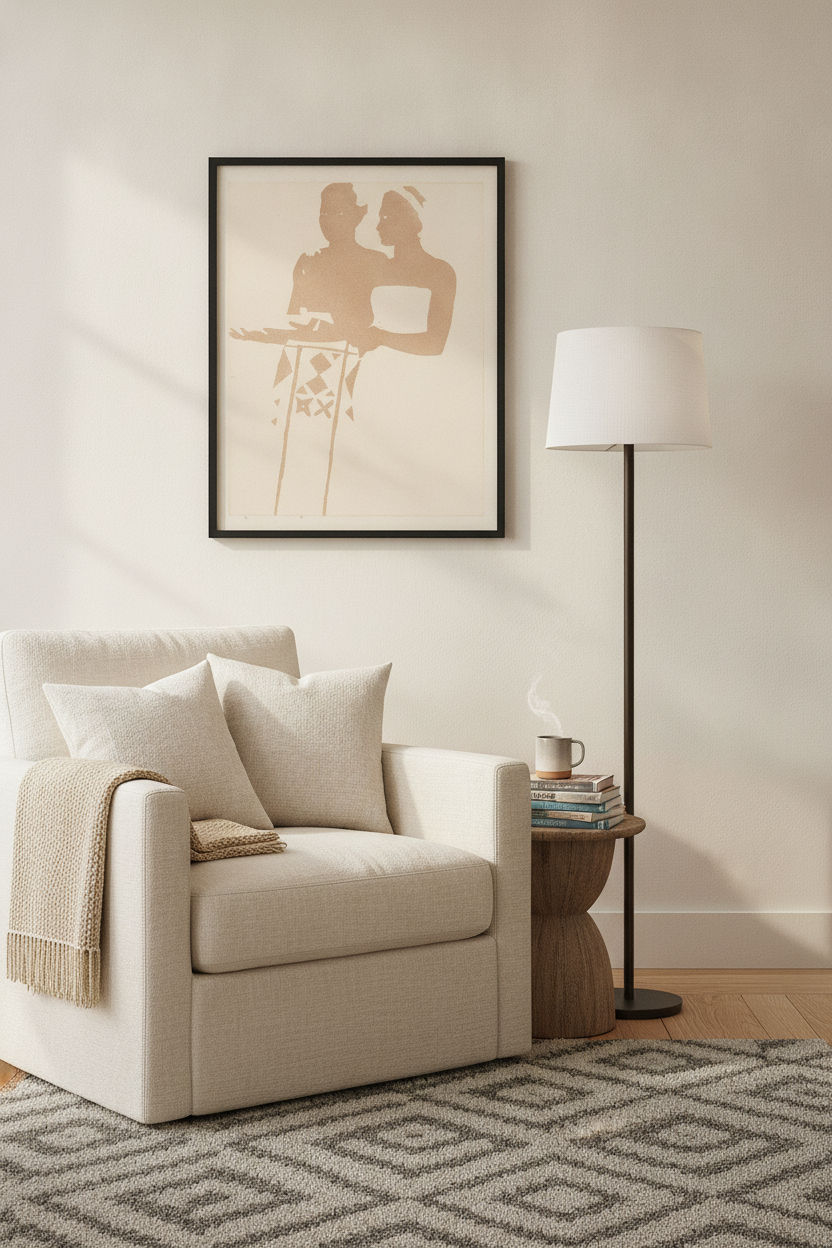
Whether framed as a large-format statement piece or hung as part of a curated gallery wall, these prints bridge the gap between historic artistry and modern minimalism. The rich, monochromatic tones of his etchings and aquatints pair beautifully with natural wood, warm textiles, and clean, modern furniture, bringing a touch of soulful, historic elegance to any living space.
Frequently asked questions
What printmaking techniques did John Melville Kelly use?
Kelly was a master of intaglio printmaking, particularly etching and aquatint. These techniques allowed him to achieve incredibly fine, precise lines alongside rich, velvety tones of shadow, giving his portraits their characteristic sculptural depth.
How does Kelly’s work differ from other vintage depictions of Hawaii?
While many artists of the era created commercialized or superficial depictions of the Pacific, Kelly approached his subjects with a classical, academic sensibility. He focused on anatomical harmony, dignity, and quiet strength, elevating his portraits into timeless works of fine art.
Where is the best place to hang a John Melville Kelly print in a home?
Because of their calm, grounding presence, Kelly’s portraits work beautifully in spaces meant for relaxation and conversation, such as living rooms, studies, or bedrooms. Their neutral, tonal palettes make them incredibly versatile for various color schemes.