The Sculptural Soul of the Renaissance: After Polidoro da Caravaggio
In short: Works created "after" Polidoro da Caravaggio celebrate the High Renaissance tradition of academic draftsmanship, capturing the muscular energy, dramatic light, and sculptural beauty of classical antiquity.
The Legacy of a Renaissance Maverick
In the bustling workshops of sixteenth-century Rome, art was not just about individual genius; it was a conversation across generations. Among the most influential voices in this dialogue was Polidoro da Caravaggio. A standout pupil of Raphael, Polidoro revolutionized Roman streetscapes by painting palace facades with extraordinary, monochrome frescoes that resembled classical stone reliefs. Today, works designated as "after Polidoro da Caravaggio" capture this magnificent, sculptural tradition.
When we look at pieces from the Full after Polidoro da Caravaggio collection, we are stepping into a rich lineage of academic draftsmanship. Later masters and students studied Polidoro's compositions intensely, copying his dynamic linework and dramatic shading to master the human form. These prints are not mere copies; they are passionate acts of emulation that kept the spirit of the High Renaissance alive for centuries.
High Drama in Monochrome and Movement
The visual language of these works is instantly recognizable. It is characterized by a muscular, statuesque quality that feels carved rather than drawn. Figures leap, strain, and pose with an athletic intensity directly inspired by ancient Roman sarcophagi and ruins. There is a profound sense of weight and gravity in every limb.
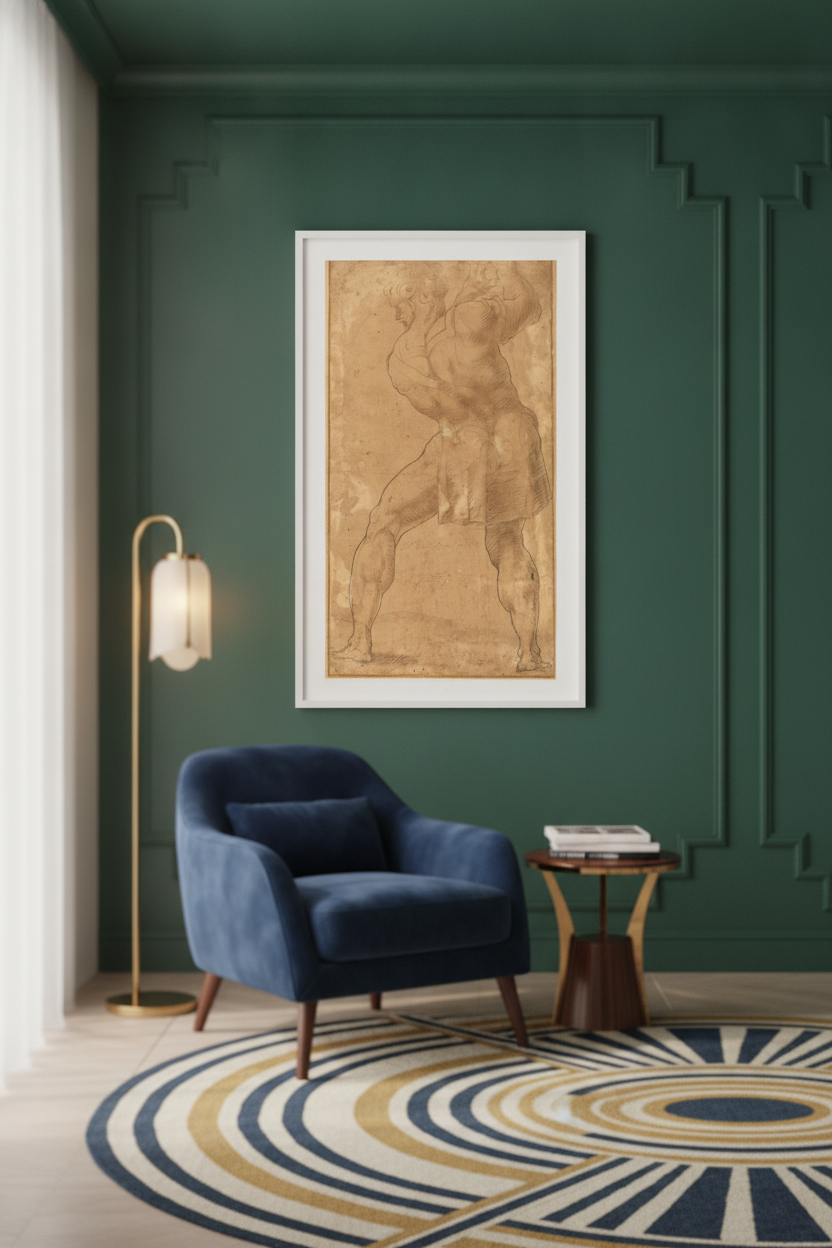
Consider the striking Figure of a Man. Here, the artist uses powerful chiaroscuro—the dramatic contrast between light and shadow—to carve the subject out of the background. The fluid grace of classical drapery clings to the figure, accentuating the tension of the pose. Every stroke of the pen or chalk serves to emphasize the physical presence and emotional depth of the subject.
The Art of Emulation
To modern eyes, the idea of creating art "after" another artist might seem unusual, but in the Renaissance and Baroque eras, it was the ultimate sign of respect. Copying a master's work was the primary way artists learned their craft. By retracing Polidoro's lines, later artists absorbed his understanding of anatomy, composition, and storytelling.
This process of emulation allowed Polidoro's fragile facade paintings—many of which have unfortunately been lost to weather and time—to survive through the ages. Through these dedicated studies, we can still experience the grandeur of Renaissance Rome in its purest, most intimate form: the drawn line.
Bringing Classical Grandeur Home
There is a unique warmth in bringing these classical reproductions into a contemporary home. Unlike brightly colored paintings that demand a specific color scheme, these monochrome and sepia-toned studies offer a sophisticated neutrality. They bring a sense of history, intellect, and quiet drama to any room.
Whether framed on a minimalist gallery wall or hung as a focal piece above a fireplace, these prints bridge the gap between antiquity and modern design. They remind us of the enduring power of human form and movement, rendered with a confidence that never goes out of style.
Frequently asked questions
What does "after" mean in an artist's attribution?
In art history, "after" means the work was created by a later artist who copied, engraved, or closely adapted an original design by the master—in this case, Polidoro da Caravaggio. It represents a long-standing academic tradition of learning from past masters.
Who was Polidoro da Caravaggio?
Polidoro da Caravaggio (c. 1499 – 1543) was a celebrated Italian High Renaissance painter and a key pupil of Raphael. He was famous for decorating the facades of Roman palaces with dramatic, monochrome frescoes that looked like classical stone carvings.
How do these prints fit into modern interior design?
Because of their focus on form, line, and monochrome or sepia tones, these works act as elegant neutrals. They offer the intellectual weight of classical art without clashing with modern, minimalist, or contemporary color palettes.