
The Serene Order of Robert Stewart: Classical Harmony for the Modern Home
In short: Robert Stewart’s art channels the balance, golden light, and structured harmony of the classical tradition, offering a peaceful sanctuary for contemporary walls.
The Pursuit of Perfect Balance
In a world that often feels chaotic and fast-paced, the art of Robert Stewart offers a welcome sanctuary of order and calm. Rooted deeply in the rigorous traditions of the Classical era, Stewart’s work reflects an enduring devotion to balance, proportion, and an idealized view of the natural world. Drawing inspiration from the grand academic schools of Europe, his compositions intentionally eschew the chaotic and unpredictable. Instead, they present a serene, structured harmony where every element is meticulously positioned to evoke a sense of the sublime.
Rather than chasing fleeting trends, Stewart focused on the timeless. His paintings invite us to step into a landscape where nature is not wild and threatening, but beautifully composed and intellectually satisfying. It is this dedication to classical principles that makes exploring the Full Robert Stewart collection such a comforting, grounding experience for art lovers today. His work serves as a testament to the intellectual pursuits of neoclassicism and the pastoral tradition, capturing a quiet harmony that feels increasingly rare.
Light, Atmosphere, and Restraint
When you look closely at Stewart’s work, his stylistic signature quickly becomes clear. He was a master of atmospheric perspective, using subtle shifts in tone and color to create an extraordinary sense of depth. Instead of dramatic, theatrical gestures or jarring color contrasts, Stewart relied on a restrained and highly sophisticated palette.
Soft, golden light is a constant presence in his pieces, bathing rolling hills, quiet valleys, and classical motifs in a warm, gentle glow. His brushwork is delicate and deliberate, prioritizing quiet contemplation over flashy technique. This thoughtful approach captures the poetic stillness of a bygone era, making each painting feel like a window into a quieter, more reflective world. The eye is guided gently through the scene, moving from soft foregrounds to hazy, distant horizons without any sudden disruption.
A Classical Touch for Contemporary Spaces
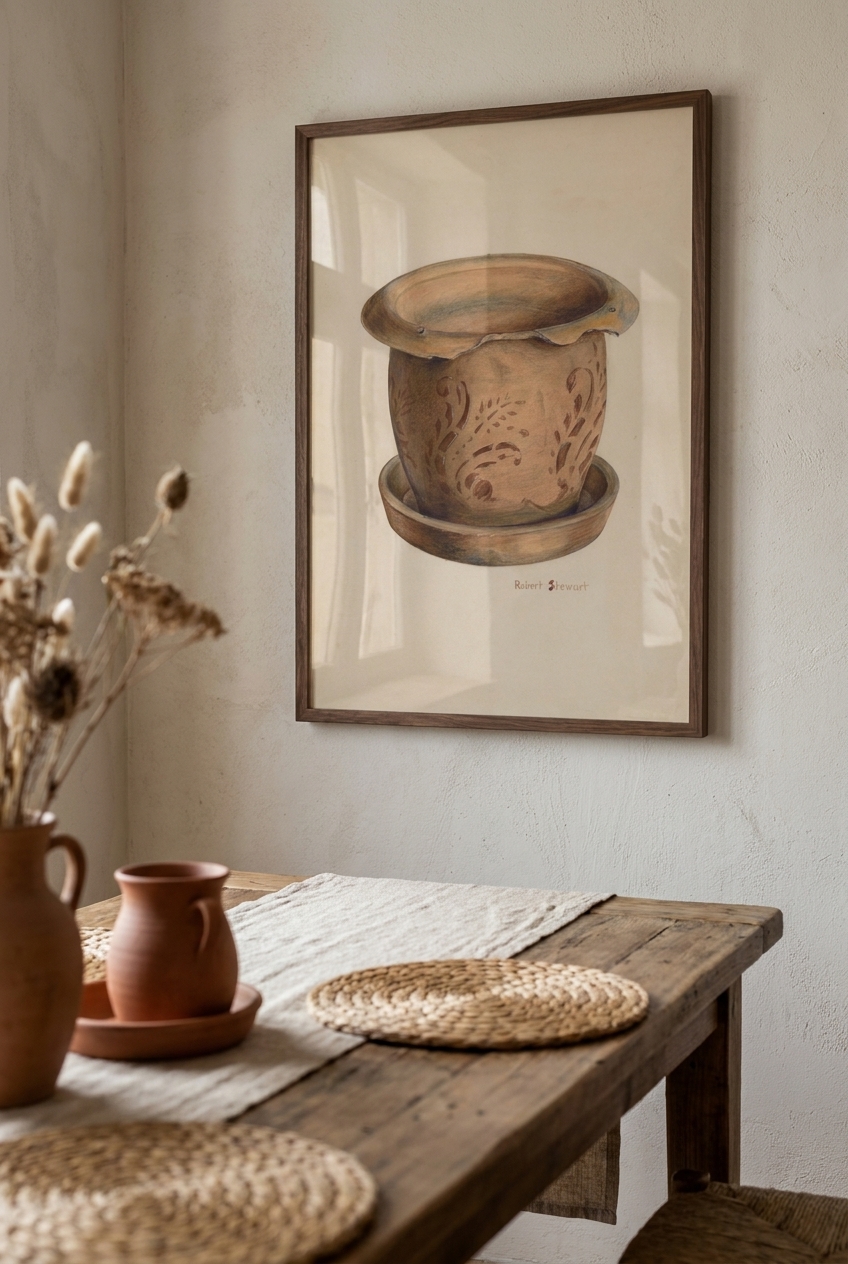
There is a unique magic in placing classical art within a modern interior. The clean lines and minimalist tendencies of contemporary design provide the perfect foil for Stewart’s structured, harmonious compositions. A piece like his Flower Crock brings an immediate sense of history, warmth, and quiet dignity to a room without overwhelming the existing decor. It demonstrates how classical principles of proportion and balance can elevate even the simplest everyday objects into works of quiet majesty.
Whether printed on textured fine-art paper or stretched canvas, Stewart’s landscapes and still lifes act as visual anchors. They draw the eye, soothe the mind, and spark quiet conversation. In a living room, study, or bedroom, these works do more than decorate—they establish an atmosphere of thoughtful elegance and enduring beauty. They remind us of the power of restraint, proving that sometimes the quietest statements are the ones that linger longest in our minds.
Frequently asked questions
What defines Robert Stewart's artistic style?
Stewart's style is defined by its classical balance, atmospheric perspective, and a restrained palette. He used soft, golden light and delicate brushwork to create serene, structured compositions that evoke a sense of poetic stillness.
How do these classical prints fit into modern home decor?
The structured harmony and calm tones of Stewart's work complement modern interiors beautifully. They offer a warm, grounding contrast to clean lines and minimalist spaces, adding depth and historic character.
What is the significance of the "Flower Crock" piece?
The "Flower Crock" is a wonderful example of Stewart's ability to bring classical principles of balance, light, and proportion to everyday, rustic subjects, turning a simple still life into a study of quiet dignity.