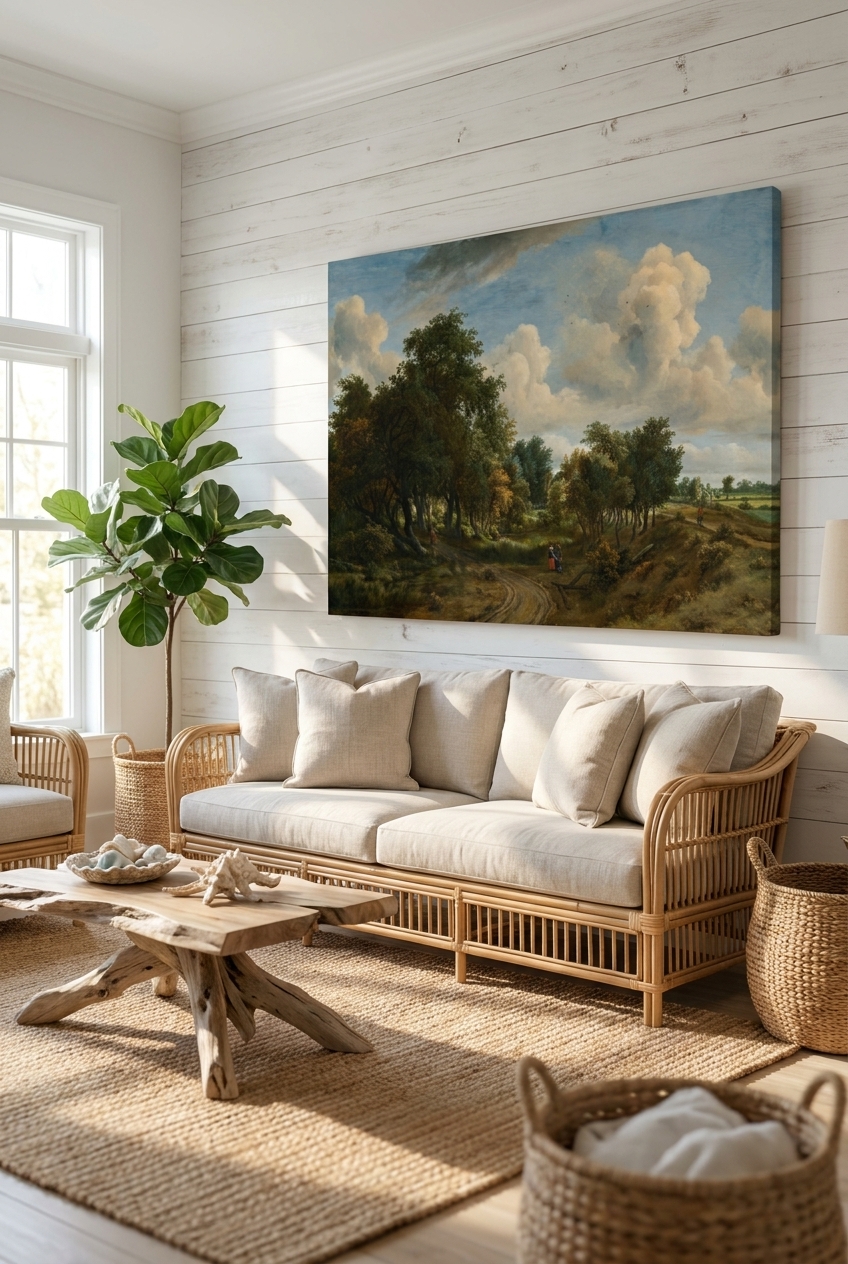
The Serene Woodlands of Meindert Hobbema: Master of Dutch Golden Age Landscapes
In short: Meindert Hobbema captured the quiet magic of the Dutch countryside with unparalleled light, shadow, and spatial depth, creating peaceful, timeless art.
The Quiet Master of the Dutch Countryside
During the seventeenth century, the Dutch Republic experienced a spectacular flowering of art, science, and trade. While many painters of this Golden Age turned their eyes toward bustling city streets or dramatic, stormy seas, Meindert Hobbema found his muse in the quiet, sun-dappled woodlands just beyond the city walls of Amsterdam. Born in 1638, Hobbema became the most famous pupil of the great landscape painter Jacob van Ruisdael. Yet, while Ruisdael often painted turbulent, heroic scenes of nature, Hobbema preferred a gentler world of winding paths, rustic cottages, and friendly clearings.
Hobbema did not simply copy the countryside; he composed it. He took elements of the real Dutch landscape and arranged them with a sense of classical order and harmony. Today, exploring the complete collection of Meindert Hobbema prints reveals an artist who invites us to slow down, breathe, and step into a world of serene contemplation.
Light, Shadow, and the Winding Path
What makes a Hobbema painting so instantly recognizable is his masterful orchestration of light and shadow. He had a unique ability to make the sun feel alive on the canvas. In a typical Hobbema landscape, the foreground might lie in a cool, deep shadow cast by towering oaks, while just beyond, a clearing is bathed in brilliant, warm sunshine. This contrast creates an incredible sense of depth, pulling the viewer’s eye deep into the picture plane.
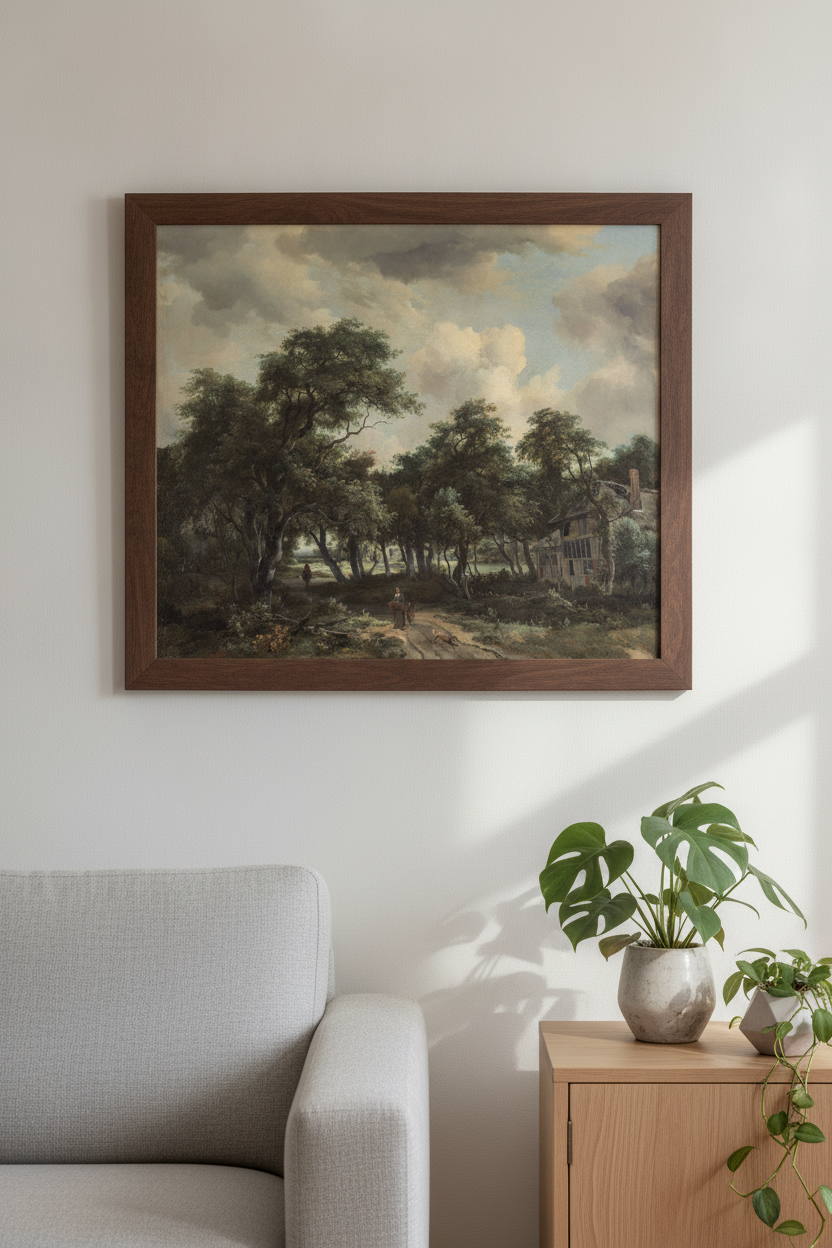
A perfect example of this technique is his masterpiece, A Wooded Landscape (1663). Here, the trees are not solid blocks of green; they are airy and alive, their leaves painted with delicate, individual touches that let the sky peek through. A winding dirt road coaxes us forward, guiding our gaze past quiet ponds and rustic figures. This rhythmic clarity makes his compositions feel incredibly spacious and balanced.
The Warmth of Rustic Life
Unlike some landscape painters who treated human dwellings as minor details, Hobbema celebrated the quiet harmony between people and nature. His paintings are dotted with watermills, simple wooden bridges, and cozy cottages tucked under the protective canopy of ancient trees. These structures feel organic, as if they grew out of the earth alongside the forests.
In his celebrated work, Hut among Trees (c. 1664), we see this intimate relationship beautifully realized. A simple, thatched-roof cottage is nestled snugly among dense foliage, partially hidden but radiating a sense of safety and home. The figures wandering the paths are not heroes or gods, but ordinary country folk going about their day. It is this lack of pretense, combined with breathtaking technical skill, that gives Hobbema’s art its enduring, universal appeal.
Bringing Hobbema’s Serenity into the Modern Home
There is a reason Hobbema’s landscapes have remained beloved for over three centuries, and why they translate so beautifully into fine-art prints and canvases for modern interiors. In our fast-paced, screen-filled lives, his paintings act as visual sanctuaries. They offer a window to a slower, quieter world where the only sound is the wind rustling through the leaves or the gentle splash of a watermill.
From a design perspective, Hobbema’s palette is wonderfully versatile. His rich, earthy tones—warm ochres, deep forest greens, soft sky blues, and warm creams—blend effortlessly with contemporary decor. Whether framed as a commanding centerpiece in a minimalist living room or hung as a canvas in a cozy study, a Hobbema reproduction brings natural warmth, sophisticated depth, and a timeless sense of peace to any space.
Frequently asked questions
Who was Meindert Hobbema's teacher?
Hobbema was the only documented student of Jacob van Ruisdael, one of the most celebrated Dutch landscape painters of the 17th century. While Ruisdael's style was often dark, dramatic, and moody, Hobbema developed a brighter, more sunny, and peaceful approach to the landscape.
Are Hobbema's landscapes real, existing places?
Not exactly. While Hobbema based his paintings on the actual Dutch countryside—particularly the sandy, wooded regions of eastern Netherlands—his compositions were carefully constructed in his studio. He combined real elements like specific trees, watermills, and cottages to create an idealized, harmonious scene.
Why did Hobbema paint fewer paintings later in his life?
In 1668, Hobbema married and took a stable, well-paying job as a wine-gauger for the Amsterdam customs house. This civil service position left him with far less time to paint, though he still produced occasional masterpieces, including his famous 'The Avenue at Middelharnis' in 1689.