
The Shimmering Worlds of Childe Hassam
In short: Childe Hassam brought French Impressionism home to America, capturing New York's energy and New England's quiet shores with brilliant, broken brushstrokes and a deep love for light.
The American Impressionist Pioneer
At the turn of the twentieth century, American art was searching for a new voice. Enter Frederick Childe Hassam, a Boston-born painter who looked at the fleeting play of sunlight and saw a way to capture the soul of a rapidly changing nation. While French Impressionists like Monet and Renoir were busy transforming European art, Hassam took their revolutionary ideas and gave them a distinctly American energy.
Hassam did not merely copy the French style; he adapted it. In our Childe Hassam collection, you can see how he combined the loose, joyful brushwork of Paris with a solid sense of structure and place that felt uniquely American. He became a master of capturing both the quiet, sun-drenched corners of New England and the bustling, flag-lined avenues of New York City.
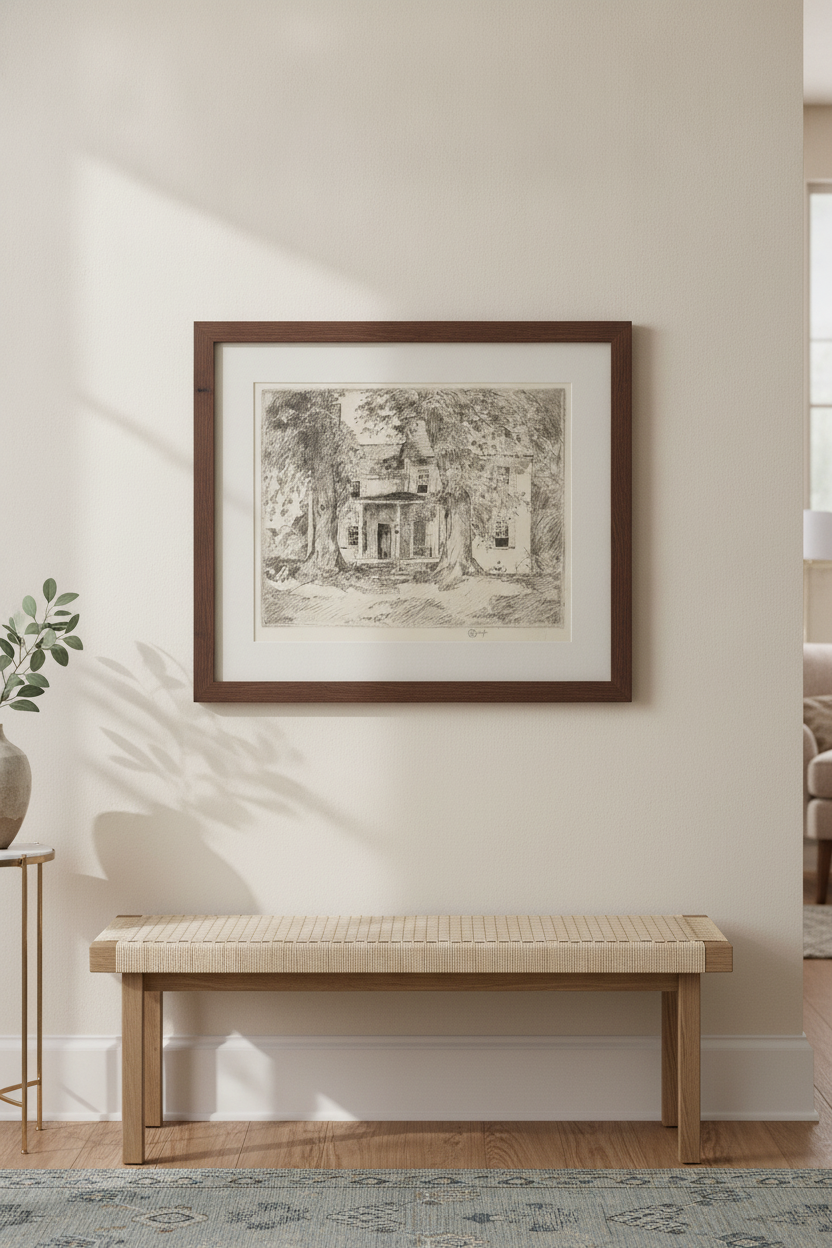
Shimmering Surfaces, Solid Bones
When you look closely at a Hassam painting, you will notice a fascinating tension. On the surface, his work is a flurry of rapid, broken brushstrokes and vibrant, pure colors. He laid down paint in quick dashes, allowing your eyes to mix the colors from a distance. This technique gives his canvases a shimmering, breathing quality, as if the air itself is alive with light.
Yet, beneath this dancing surface lies a classical sense of balance. Unlike some of his European contemporaries who let form dissolve entirely into light, Hassam maintained a strong underlying structure. Whether painting a towering skyscraper or a winding coastal path, his compositions feel grounded, balanced, and enduring.
A Legacy of Quiet Majesty
While Hassam is famous for his urban scenes, his love for history and the natural landscape remained a constant throughout his long career. In his later years, he turned his eye toward historic American landmarks, capturing them with the same atmospheric sensitivity that defined his youth.
A beautiful example of this is his painting of Washington's Headquarters near Valley Forge from 1926. In this piece, Hassam uses his signature light-dappled style to transform a historic stone building into a quiet monument of memory. The soft greens of the foliage and the warm stone walls are bathed in a gentle, nostalgic light, showing how his Impressionist style could bring history to life.
Why Hassam Belongs in the Modern Home
There is a unique warmth to Hassam's work that makes it incredibly well-suited for contemporary living spaces. Because his paintings are so focused on light and atmosphere, they have an expansive quality that can make a room feel larger, brighter, and more open. A high-quality canvas reproduction of his work brings a rich, tactile texture to a wall, mimicking the thick, expressive brushwork of the original oil paintings.
Whether you choose a bustling street scene full of movement or a serene coastal view, Hassam's art introduces a sense of optimism and timeless beauty. His balanced compositions fit naturally above a mantelpiece, in a sunlit dining room, or as a welcoming focal point in an entryway.
Frequently asked questions
What makes American Impressionism different from French Impressionism?
While French Impressionism often focused on the pure, fleeting sensation of light, American Impressionists like Childe Hassam kept a stronger sense of physical structure and draftsmanship. Their work feels more grounded in specific, recognizable places and American landscapes.
What medium did Childe Hassam primarily use?
Hassam was a versatile artist who worked extensively in oils, watercolors, and pastels. He was also an accomplished printmaker, producing numerous etchings and lithographs later in his career.
How did Hassam capture the texture of light so effectively?
He used a technique called "broken color," applying short, rapid strokes of complementary colors directly to the canvas without mixing them on his palette first. From a distance, the viewer's eye blends these colors together, creating a shimmering, luminous effect.