
The Softness of Stone: How Antonio Rossellino Brought Clay-Like Warmth to Renaissance Marble
In short: Antonio Rossellino revolutionized Renaissance sculpture by infusing cold marble with a soft, painterly warmth and profound psychological tenderness.
The Sculptor Who Softened Stone
In the bustling workshops of fifteenth-century Florence, a quiet revolution was taking place. While the city's architects raised soaring domes, sculptors were learning how to make cold, unyielding marble breathe. At the heart of this movement was Antonio Rossellino, a defining master of the Early Renaissance. Rossellino did not just carve stone; he coaxed a gentle, living warmth from it, translating the humanist ideals of his era into works of extraordinary poise.
The Early Renaissance was defined by a passionate revival of classical antiquity, but Rossellino added something deeply personal to this classical framework. He looked at the idealized forms of ancient Rome and infused them with a soft, naturalistic grace. His works are not distant or austere; they are intimate, tender, and profoundly human.
A Painterly Touch in Carved Relief
What makes Rossellino's style so instantly recognizable is his mastery of low relief. In the hands of a lesser artist, shallow carving can look flat and lifeless. Rossellino, however, treated marble almost like paint. He used exceptionally delicate modeling to create a sense of deep space, a technique that allowed light to slide softly across the stone rather than casting harsh shadows.
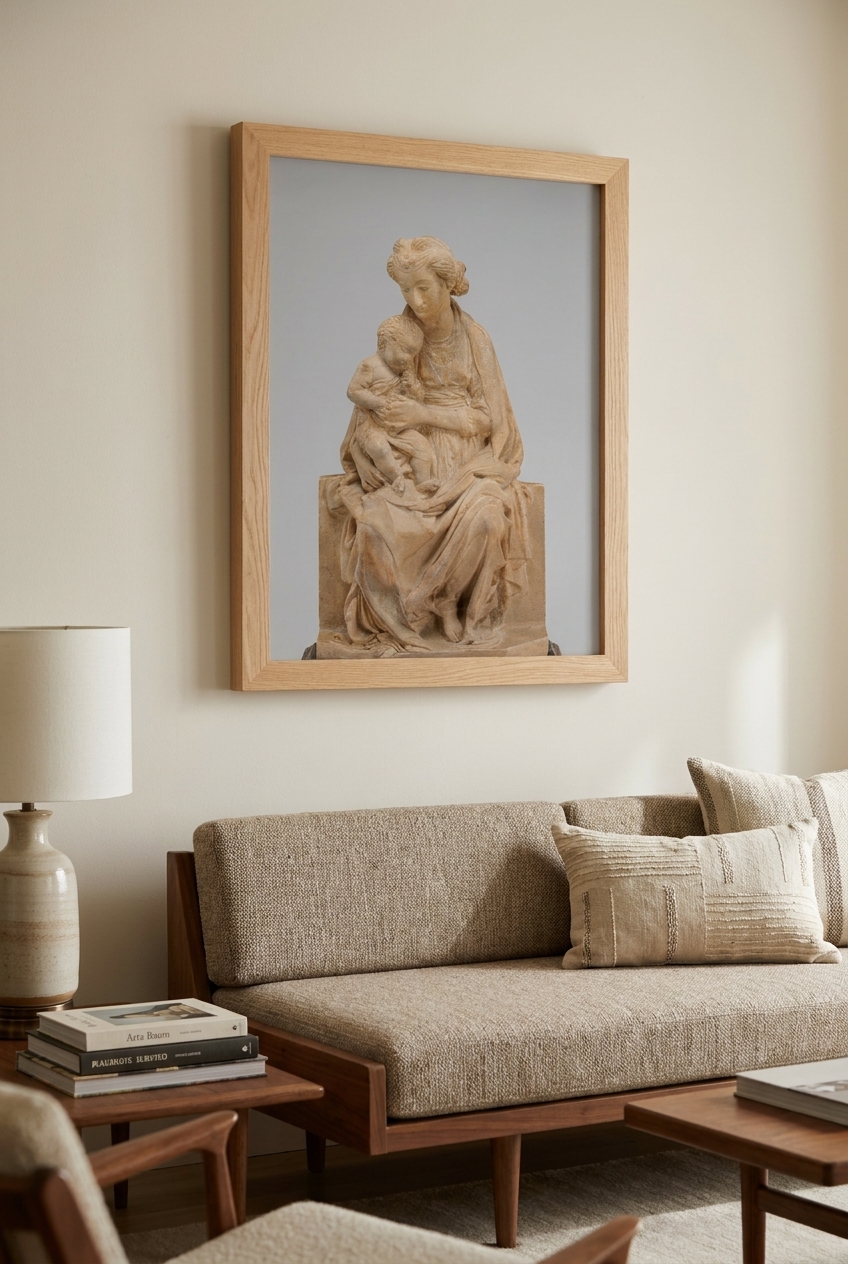
His drapery does not look like chiseled rock; it flows like heavy silk. This painterly approach is beautifully captured in his "Madonna and Child" (c. 1475), where the boundary between the figures and the background seems to dissolve. There is a psychological tenderness here—a quiet, shared moment between mother and child—that feels incredibly modern in its emotional honesty.
The Balance of Humanism and Grace
Rossellino's legacy lies in his ability to strike a perfect balance between classical structure and naturalistic warmth. His sacred portraiture and elegant devotional reliefs were highly sought after by Florentine patrons who wanted art that reflected both their religious devotion and their sophisticated humanist education.
Instead of presenting holy figures as remote deities, Rossellino portrayed them with a relatable, earthly dignity. The faces in his reliefs carry subtle expressions—a half-smile, a thoughtful gaze, a gentle touch. It is this emotional resonance, combined with his flawless technical skill, that has kept his work vital for over five centuries.
Renaissance Elegance for the Modern Home
While Rossellino worked in three dimensions, his masterfully carved reliefs translate beautifully into two-dimensional fine-art prints and canvases. Because his style relies so heavily on the subtle play of light and shadow, a high-quality archival print captures the tactile, sculptural quality of the original marble with astonishing fidelity.
Displaying a piece from the Full Antonio Rossellino collection brings a sense of quiet, classical serenity to a modern interior. The neutral tones of the marble, paired with the soft, fluid lines of his compositions, offer a sophisticated focal point that complements both minimalist and traditional decors. It is an invitation to pause, look closely, and appreciate the timeless beauty of Renaissance humanism.
Frequently asked questions
Who was Antonio Rossellino?
Antonio Rossellino (1427–1479) was an exceptionally influential Italian sculptor of the Early Renaissance, active in Florence. He is celebrated for his delicate marble reliefs and his ability to bring a lifelike, painterly warmth to stone.
What is 'low relief' in Rossellino's work?
Low relief, or basso-rilievo, is a sculpting technique where the figures project only slightly from the background. Rossellino mastered this by using incredibly subtle gradations of depth to create the illusion of three-dimensional space and soft textures.
How do sculptural reproductions work as flat prints?
Our museum-quality prints capture the precise play of light and shadow across Rossellino's carved surfaces. This photographic detail preserves the tactile, three-dimensional illusion of the original marble, making it a striking addition to any wall.