
The Structured Light of Edward L. Loper: A Master of Classical Modernism
In short: Edward L. Loper merged classical composition with bold modernist color. His structured landscapes and still lifes make striking, architecturally balanced art prints for modern spaces.
The Self-Taught Master of Form
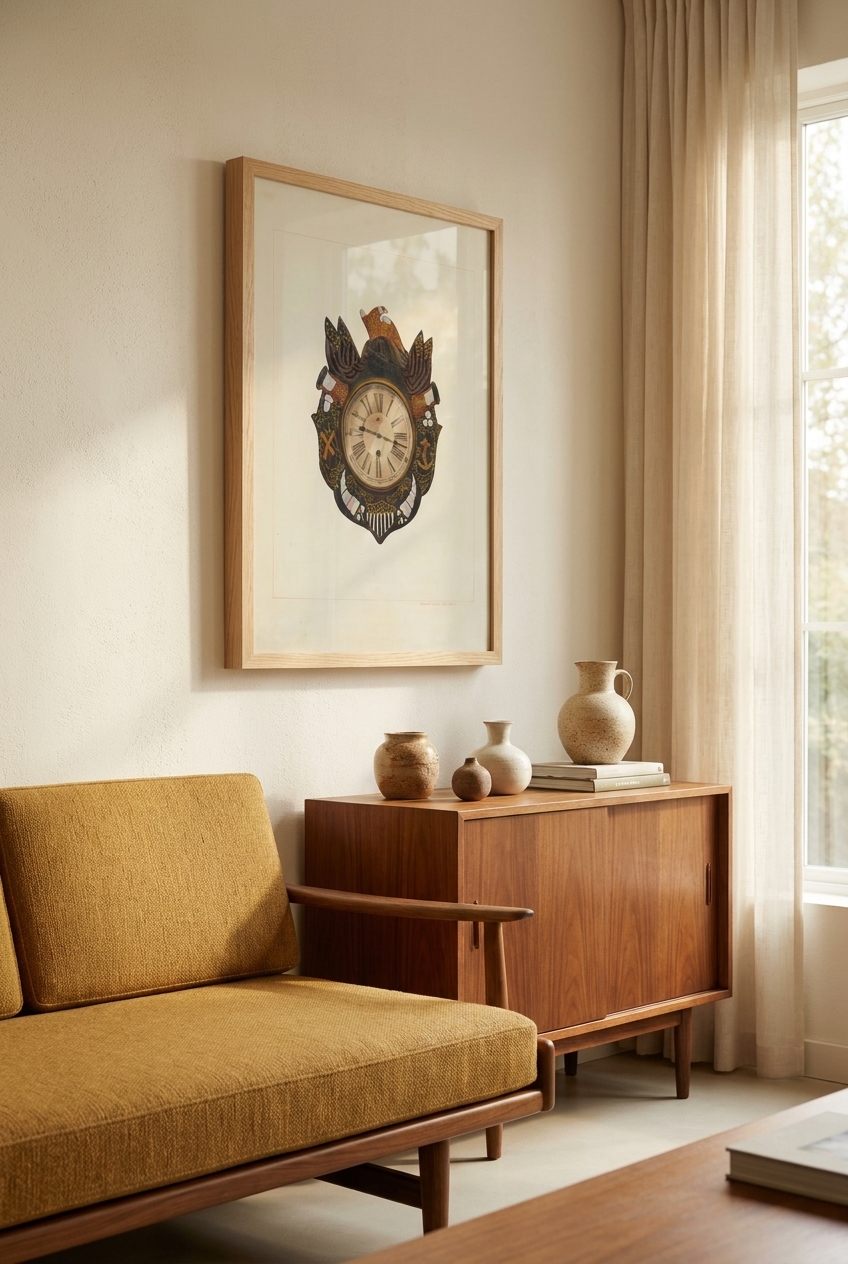
Edward L. Loper was an artist who spent his life teaching himself, and eventually others, how to truly see. Born in Wilmington, Delaware, Loper rose from humble beginnings during the Great Depression to become one of the most vital voices in mid-century American art. Working initially with the Works Progress Administration (WPA), he documented local life and historical objects, including his remarkably detailed rendering of the Eight Day Marine Clock (c. 1938).
But Loper was never content with mere illustration. He possessed a restless, brilliant mind that constantly sought the underlying structure of the visual world. Over a career spanning several decades, he developed a style that beautifully bridged the gap between classical representation and the daring experiments of early 20th-century modernism.
Fractured Light and Architectural Stability
To look at a Loper painting is to see the world organized with exquisite, intellectual precision. He had a rigorous devotion to structure and the classical organization of space. Instead of painting scenes exactly as they appeared, Loper broke them down. He transformed everyday landscapes, quiet street corners, and simple still lifes into complex, geometric compositions.
His signature technique involved fracturing light into distinct, flat planes of color. This bold, faceted application of paint gives his work a unique texture and depth. Every brushstroke functions like a brick in a wall, building an architectural stability. There is no sentimentality or clutter in a Loper canvas; instead, there is a profound sense of harmony, balance, and permanent strength.
The Vibrant Science of Color
Loper’s mastery lay not just in shape, but in his revolutionary approach to color. He was deeply invested in color theory, viewing color as a tool to construct space rather than just decorate it. He placed contrasting hues side-by-side with deliberate precision, allowing the viewer's eye to do the work of blending them.
This technique gives his paintings a luminous, breathing quality. A simple shadow under a tree isn't just gray or brown; in Loper's world, it is a mosaic of deep blues, purples, and cool greens. By avoiding muddy mixtures, his canvases retain a brilliant, sun-drenched clarity that captures the essential spirit of his subjects.
A Timeless Addition to the Modern Home
Why does Loper’s work feel so incredibly fresh today? The answer lies in his clean, geometric sensibilities. In a modern home, where clean lines and thoughtful spaces are celebrated, a Loper print or canvas acts as a perfect visual anchor. His pieces offer a rare combination of bold, colorful energy and calm, structured order.
Whether you are drawn to the quiet dignity of his early still lifes or the vibrant, geometric rhythms of his later landscapes, his art brings a sophisticated, intellectual warmth to any room. Bringing a piece from the full Edward L. Loper collection into your home is more than just hanging a beautiful picture—it is an invitation to live with a masterclass in light, form, and timeless design.
Frequently asked questions
What is Classical Modernism, and how does Loper fit into it?
Classical Modernism refers to a movement that blends the structural discipline and compositional rules of classical art with the bold color, abstraction, and expressive freedom of modern art. Loper fits this perfectly by using geometric planes and modern color theory while maintaining a strict, harmonious balance and recognizable subjects.
How did Loper achieve the unique "glowing" effect in his paintings?
Loper achieved this by applying unblended, contrasting colors directly next to one another in distinct facets or planes. Rather than mixing colors on the palette to create muddy shades, he let the viewer's eye blend the vibrant colors naturally, creating a luminous, energetic quality.
What types of spaces are best suited for an Edward L. Loper print?
Because of their strong geometric structures and balanced compositions, Loper's prints work beautifully in modern, minimalist, or mid-century modern spaces. They add a sophisticated pop of color and architectural stability to living rooms, offices, and dining areas.