The Theatre of Wilderness: Aegidius Sadeler II and Roelandt Savery
In short: At the court of Emperor Rudolf II, engraver Aegidius Sadeler II and painter Roelandt Savery combined forces to create deeply atmospheric, theatrical landscape prints that capture the wild, sublime beauty of the natural world.
The Alchemy of Prague's Imperial Court
In the early seventeenth century, Prague was the intellectual and artistic beating heart of Europe. Under the eccentric patronage of Holy Roman Emperor Rudolf II, the city became a magnet for alchemists, astronomers, and artists. It was in this hotbed of intellectual curiosity that one of the most remarkable collaborations in printmaking history took place: the partnership between the master engraver Aegidius Sadeler II and the painter Roelandt Savery.
Together, they pioneered a vision of the natural world that was entirely new. Rather than presenting nature as a calm, orderly backdrop, they saw it as a living, breathing theater of wild energy. By exploring the full Aegidius Sadeler II after Roelandt Savery collection, we can still feel the electric spark of this historic artistic alliance today.
Translating Paint to Ink
Roelandt Savery was a painter of extraordinary observation. Sent by the Emperor into the Tyrolean Alps to sketch the rugged landscape, he returned with drawings of gnarled trees, rushing waterfalls, and sheer rock faces. But it was Aegidius Sadeler II who possessed the technical genius to translate these atmospheric, firsthand observations into graphic works of astonishing complexity.
Using a burin—a sharp steel cutting tool—Sadeler carved copper plates with a virtuoso command of line. Through meticulous cross-hatching and varying line weights, he didn't just copy Savery's designs; he translated the soft textures of moss, the cold mist of waterfalls, and the heavy weight of ancient stone into rich, velvety tones of black and white. This was not simple reproduction; it was an act of artistic translation that gave the wilderness a powerful, tangible presence.
The Sublime and the Wild
The landscapes created by Sadeler after Savery are celebrated for their rendering of the sublime—a feeling of awe mixed with a touch of terror. In these compositions, ancient, twisted forests and crumbling classical ruins coexist in a delicate, mysterious tension. The artists elevated the natural world into a theatrical stage, capturing both the chaotic wildness of nature and the underlying cosmic order prized by the Rudolfine court.
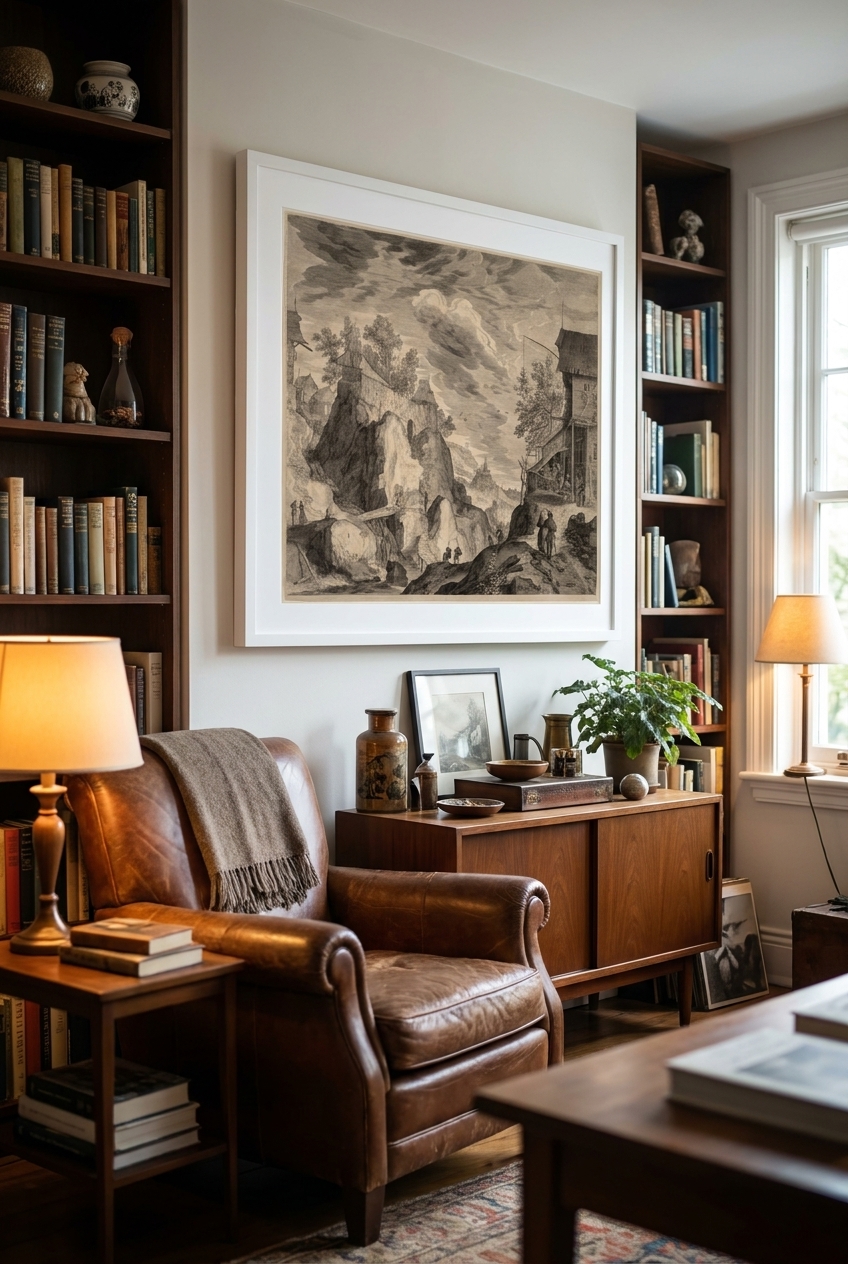
A stunning example of this is the Landscape with an Inn to the Right and House on Rocks to the Left. In this work, the tiny figures of travelers are dwarfed by towering, craggy cliffs and dense, dark foliage. The composition draws the eye deep into a mysterious world where human structures seem temporary, while the earth itself feels ancient and eternal.
Bringing Mannerist Drama to Modern Walls
While these works were created over four centuries ago, they possess a strikingly modern aesthetic. The graphic power of fine-line engraving translates beautifully into contemporary interiors. The rich monochrome palette of deep charcoals, soft grays, and warm whites provides a sophisticated, neutral focal point that complements both minimalist and traditional decor.
When printed on museum-quality archival paper or canvas, the intricate details of Sadeler's engravings come alive. Every tiny leaf, every crack in the stone, and every delicate line of hatching is preserved, offering endless fascination for the viewer. Hanging one of these prints in a modern home is not just an appreciation of art history—it is an invitation to lose oneself in the wild, theatrical beauty of the Northern Mannerist landscape.
Frequently asked questions
What does "after Roelandt Savery" mean in these prints?
In printmaking, "after" indicates that the engraver (Aegidius Sadeler II) created the printing plate based on an original design, drawing, or painting by another artist (Roelandt Savery). This collaborative practice allowed Savery's atmospheric compositions of the Tyrolean wilderness to be reproduced and shared with a wider audience across Europe.
What is Northern Mannerism?
Northern Mannerism was an artistic movement in Northern Europe during the late 16th and early 17th centuries. It is characterized by highly stylized, complex, and dramatic compositions. Rather than striving for simple realism, Mannerist artists emphasized elegance, tension, and a theatrical, often symbolic approach to their subjects.
How do these historical engravings fit into modern home decor?
Because these works are monochrome, they offer a sophisticated, graphic quality that fits seamlessly into modern color palettes. The intricate, hand-carved details provide a sense of depth and history, making them excellent conversation pieces that work equally well in minimalist, industrial, or traditional spaces.