The Warm Golden Light of Adriaen van Ostade
In short: Adriaen van Ostade captured 17th-century Dutch peasant life not with mockery, but with warmth, dignity, and a masterful, Rembrandt-like use of golden light.
The Painter of Everyday Humanity
In the seventeenth-century Dutch Republic, while many artists focused on grand portraits of wealthy merchants or dramatic biblical scenes, Adriaen van Ostade looked in a different direction. He turned his gaze to the taverns, cottages, and dusty streets of Haarlem. Van Ostade became one of the definitive chroniclers of his era, capturing the vibrant, everyday world of the Dutch peasantry with an unexpected warmth and psychological depth.
During the Dutch Golden Age, scenes of lower-class life were common, but they were often painted as crude caricatures meant to warn viewers against vice. Van Ostade started his career with some of this rowdy energy, but his style quickly evolved. He began to see the quiet dignity in a family sharing a simple meal, neighbors chatting over a fence, or a solitary scholar at his desk. He elevated genre painting from mere mockery to a profound study of human nature and community.
Mastering the Golden Glow
What sets van Ostade apart is his extraordinary command of light and shadow, a technique known as chiaroscuro. Much like his contemporary Rembrandt, van Ostade had a gift for bathing rustic, dark interiors in a soft, golden light. This light does not just illuminate the scene; it sanctifies it, turning a humble tavern or a cluttered workshop into a place of quiet beauty.
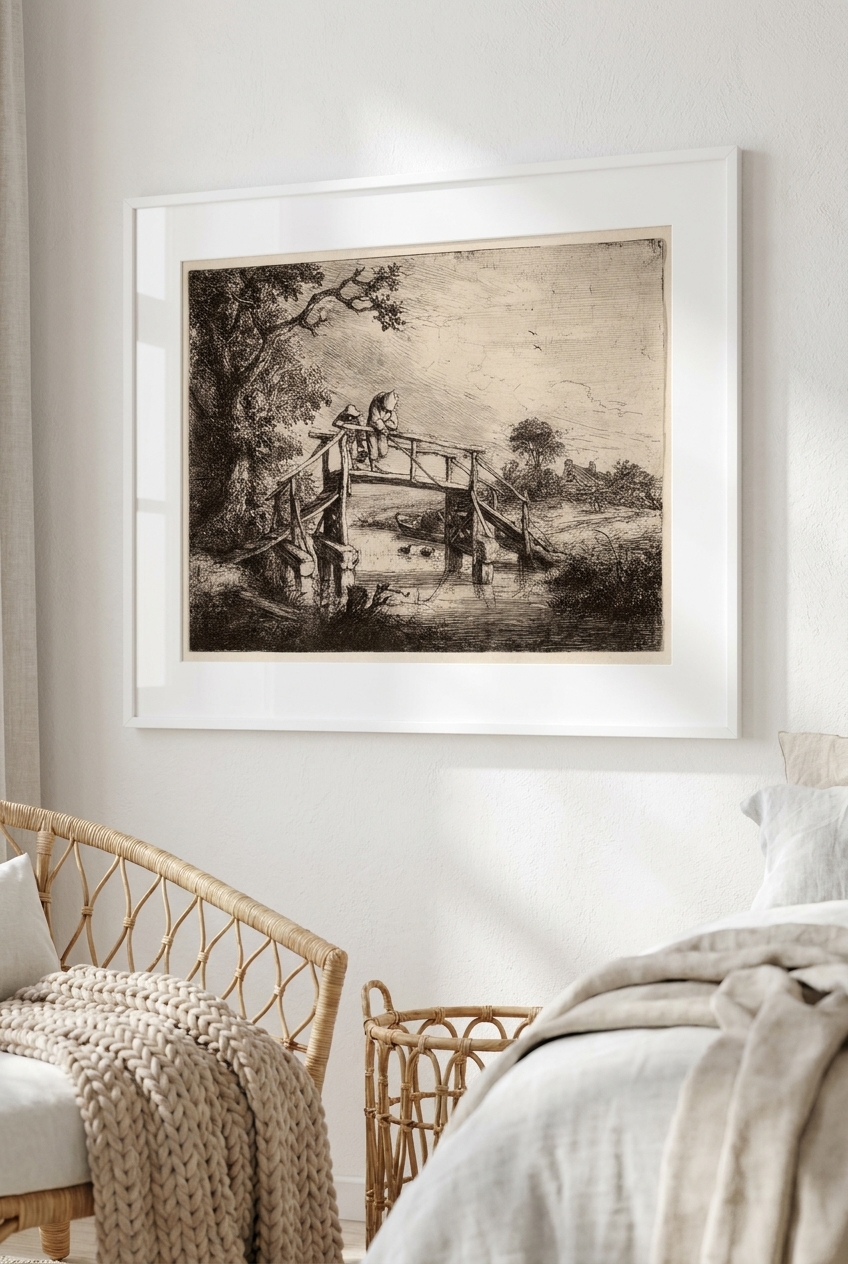
Over his career, van Ostade's lively, sometimes chaotic early compositions transitioned into beautifully balanced, serene arrangements. He embraced a rich, earthy palette of deep ochres, warm browns, and subtle blues. Even when he stepped outside the tavern walls, his sensitivity to light remained unmatched. In works like Landscape with a Bridge and Two Fishermen, we see how he could translate this same atmospheric, golden warmth to the quiet waterways of the Dutch countryside.
What to Look For in His Work
When studying a van Ostade painting, the magic is always in the details. Look closely at the faces of his subjects. Instead of blank stereotypes, you will find genuine expressions of concentration, amusement, and weary contentment. He was a master of capturing the textures of daily life: the rough weave of a wool cloak, the glaze on a clay jug, or the dusty air caught in a beam of sunlight.
His compositions are deceptively complex. What looks at first like a casual, accidental gathering is actually a carefully structured arrangement of shapes and tones designed to lead your eye through the story. The quiet domesticity he portrayed was not about poverty, but about the comfort of connection and the simple pleasures of being alive.
Bringing the Dutch Golden Age Home
There is a unique, cozy quality to van Ostade's work that makes it beautifully suited for modern living spaces. In the Netherlands, there is a word for this feeling: gezelligheid, a sense of cozy, warm togetherness. Hanging a print of his work in a living room, study, or dining area immediately introduces that exact atmosphere.
Because of his rich, earthy color palette and mastery of golden light, his pieces translate beautifully into high-quality fine-art prints and canvases. They bring a grounding, historical depth to contemporary interiors without feeling stuffy or formal. To explore more of his warm, atmospheric scenes, you can browse our complete Adriaen van Ostade collection to find the perfect piece for your home.
Frequently asked questions
Who was Adriaen van Ostade?
Adriaen van Ostade (1610–1685) was a prominent Dutch Golden Age painter and printmaker from Haarlem. He is best known for his genre paintings depicting the everyday lives of peasants, weavers, tavern-goers, and village life.
How does his style compare to Rembrandt?
Like Rembrandt, van Ostade was a master of chiaroscuro—the dramatic contrast between light and dark. He used a warm, golden light to bring depth, atmosphere, and a sense of dignity to humble, everyday scenes.
Did he only paint indoor tavern scenes?
While famous for his rustic interiors, van Ostade was also a highly skilled landscape painter and printmaker. He frequently captured outdoor village festivals, country roads, and quiet canal scenes.