What makes classical art feel so timeless?
In short: Classical art focuses on harmony, balance, and clean draftsmanship. By exploring works by Maria Catharina Prestel and Grace Halpin, we can see how these enduring principles bring a sense of calm, structured beauty to modern spaces.
The Quest for Perfect Balance
At its heart, classical art is an anchor. While other art movements thrive on rebellion, chaos, or fleeting emotion, the classical tradition seeks something deeper and more permanent: harmony, balance, and order. This dedication to proportion is why classical art feels so timeless. It does not try to surprise us; instead, it reassures us by presenting the world with a sense of calm, structured beauty.
Originating in the ideals of ancient Greece and Rome, the classical style has been reborn across the centuries. Whether in the Renaissance, the eighteenth-century Neoclassical movement, or even twentieth-century botanical studies, the core philosophy remains the same. It is the belief that art should reflect a balanced universe, using clean draftsmanship, clear light, and thoughtful composition to create an oasis of quiet contemplation.
Translating Light and Landscape
Achieving this sense of balance requires incredible technical skill, especially in the realm of printmaking. In the late eighteenth century, German artist Maria Catharina Prestel became celebrated for her ability to translate complex paintings into exquisite, tonal prints. Working with aquatint and etching, she captured the subtle play of light and shadow that defines classical landscape composition.
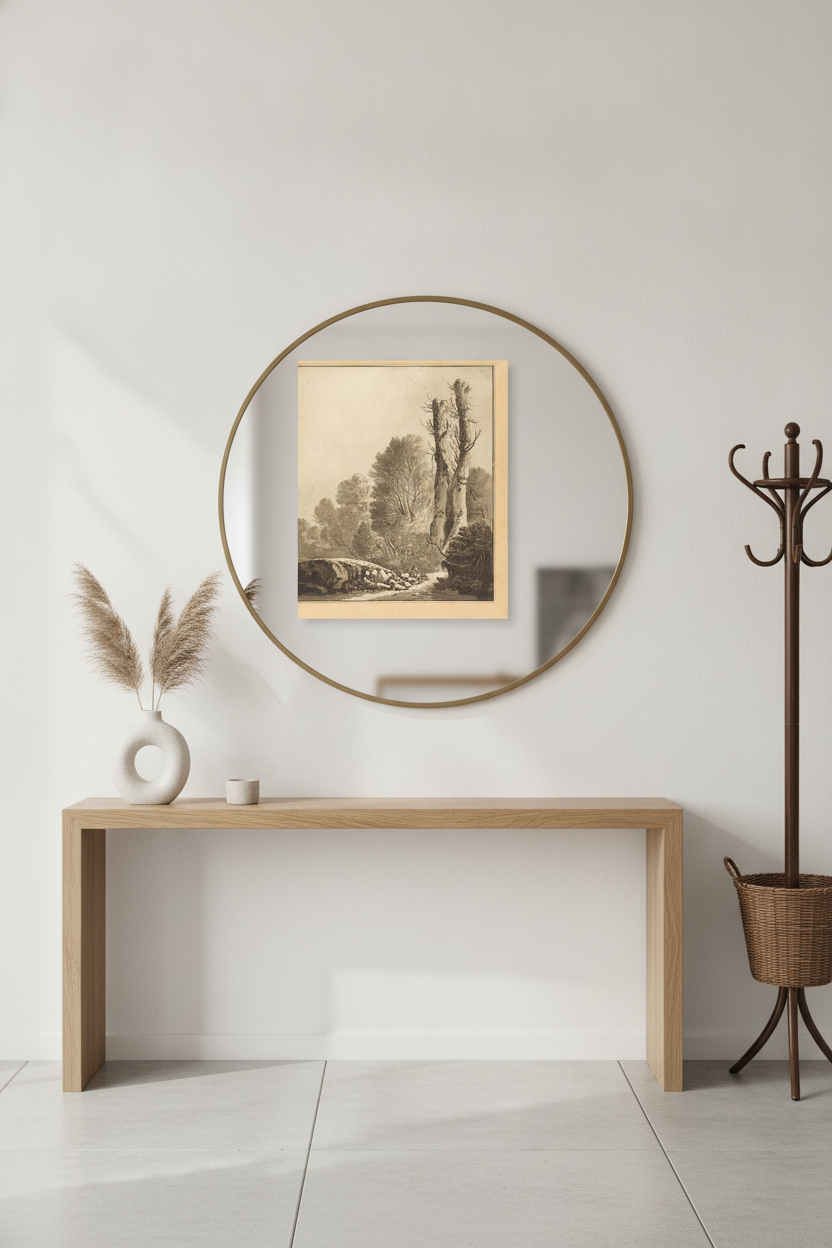
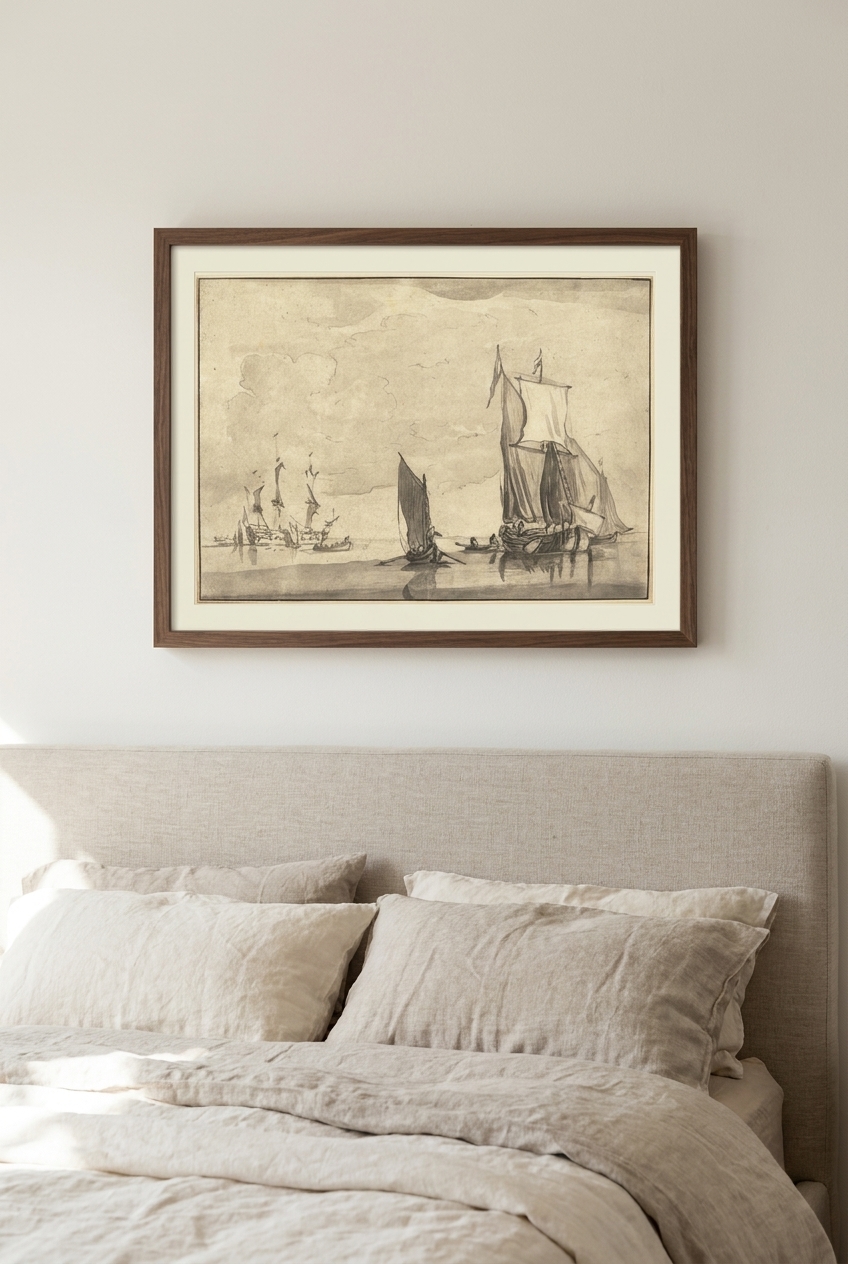
Her work after the old masters shows this brilliant control. In Landscape with Two Trees (after Herman Saftleven), she uses the classical framing device of prominent trees to guide our eyes gently through a rolling, peaceful countryside. Similarly, her print Seascape (after Willem van de Velde the Younger) balances the dramatic movement of the sea with a highly structured sky, turning a potentially chaotic maritime scene into a study of sublime order.
The Clean Lines of Botanical Study
The classical spirit is not limited to sweeping vistas. It also thrives in the close observation of nature. In the mid-twentieth century, artists like Grace Halpin carried this tradition forward through precise botanical illustrations. Her work demonstrates that classical principles of symmetry and focus can make even a single specimen feel monumental.
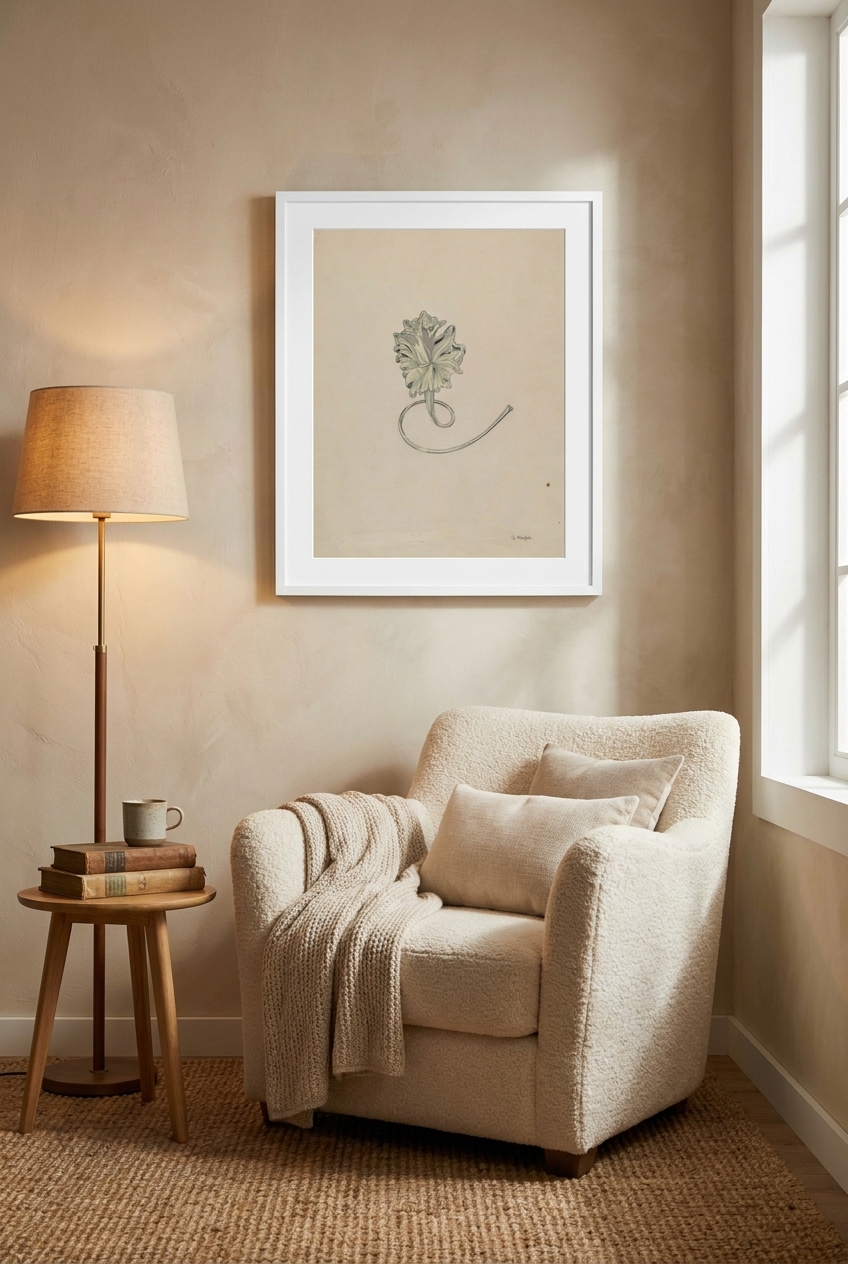
In her print Flower (Lily), Halpin strips away all distractions to focus entirely on the elegant structure of the bloom. The clean lines, soft tonal shading, and perfect balance of the composition echo the same search for ideal form that guided ancient sculptors. It is a reminder that classical beauty can be found in the smallest details of the natural world.
How to style classical prints in your home
Because classical art is rooted in balance, it is incredibly versatile when it comes to interior design. These pieces do not shout for attention; they invite quiet appreciation, making them perfect for rooms where you want to foster a sense of rest and focus, such as studies, bedrooms, or living areas.
To style these prints in your home, consider these simple tips:
- Embrace symmetry: Hang prints in pairs or balanced grids to reinforce the classical sense of order.
- Choose understated frames: Thin black, dark wood, or warm silver frames will complement the clean lines of the artwork without overpowering them.
- Mix eras: Because classical principles are timeless, a print by Maria Catharina Prestel or Grace Halpin looks just as striking in a minimalist modern apartment as it does in a traditional home.
Frequently asked questions
What is the difference between Classical and Neoclassical art?
Classical art refers to the style of ancient Greece and Rome, emphasizing harmony, symmetry, and proportion. Neoclassical art is a specific revival of these principles that occurred in the 18th and 19th centuries as a reaction against the decorative excesses of the Rococo style.
Why does classical art often feature landscapes and botanicals?
Classical philosophy views nature as a source of divine order and geometry. Artists captured landscapes and plants with careful structure and clean lines to highlight the underlying harmony of the natural world rather than its wild, untamed state.
How do I choose the right frame for a classical print?
Simple, elegant frames work best. A thin black, dark wood, or muted gold frame preserves the artwork's clean lines and balanced composition without distracting the eye.