What makes classical ornament prints so captivating?
In short: Classical ornament prints from the late Renaissance are masterclasses in symmetry, combining ancient Roman motifs with incredible engraving techniques. Today, their monochrome precision makes them perfect for modern, sophisticated spaces.
The Allure of the Intricate
At first glance, classical ornament prints are dizzying mazes of ink—symmetrical webs of leaves, fruits, mythical beasts, and sweeping strapwork. But look closer, and you will find they are the ultimate expression of Renaissance discipline and imagination. Emerging in the 16th century, these prints were not meant to be mere background decoration. They were a celebration of human ingenuity, designed to show how raw nature could be tamed, ordered, and elevated by art.
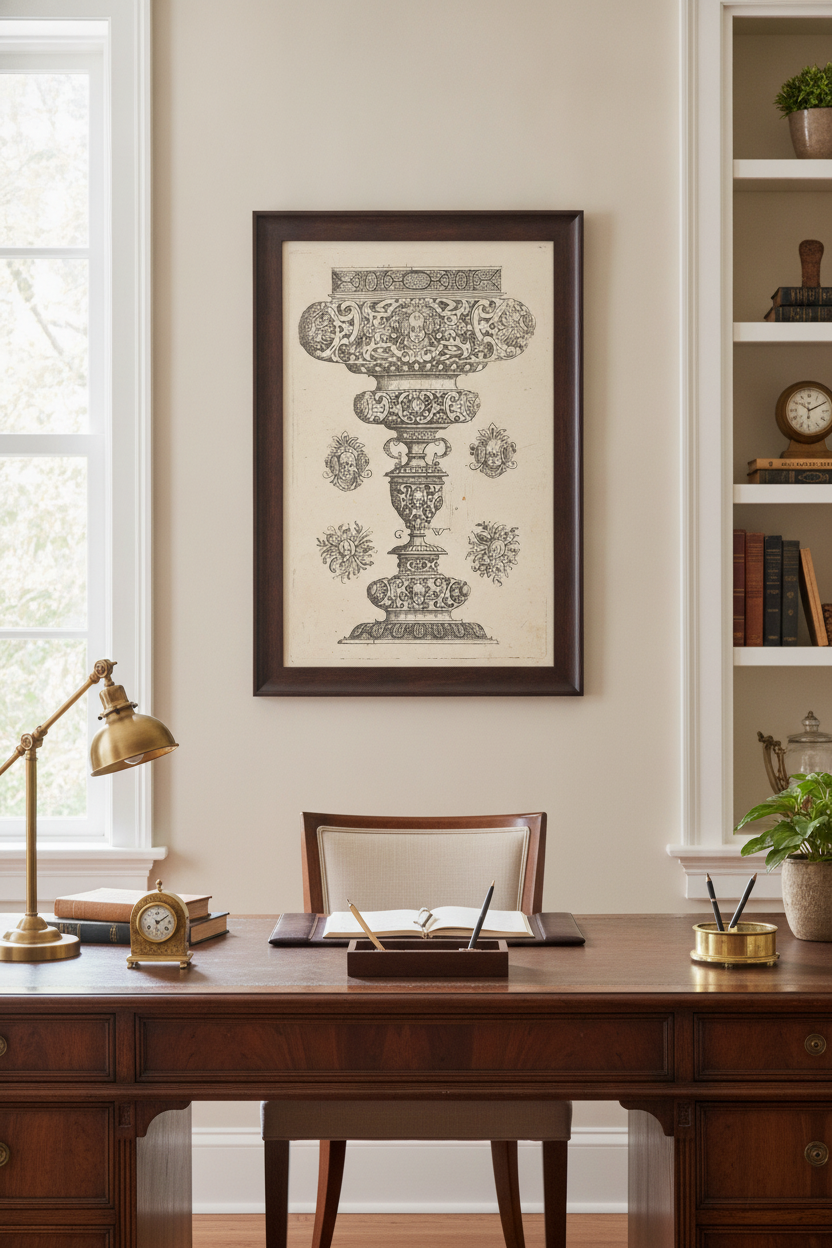
These works, known as ornament prints, served as a shared visual language across Europe. Goldsmiths, architects, and cabinetmakers used them as pattern books. Yet, master printmakers elevated these patterns into standalone masterpieces. When you hang a print like Georg Wechter I's Goblet, rim decorated with masque and bouquet of fruit on your wall, you are not just looking at a design for a silver vessel; you are looking at a masterclass in perspective, geometry, and whimsy.
The Masters of the Engraved Pattern
To understand this movement, we must look to the bustling artistic hubs of Germany in the late 1500s. Nuremberg and Augsburg were centers of luxury trade, where goldsmiths and engravers worked hand-in-hand. Georg Wechter I was a master of Nuremberg, renowned for his ability to wrap complex, three-dimensional forms around the curved surfaces of imaginary tableware. His work is characterized by a bold, structural confidence.
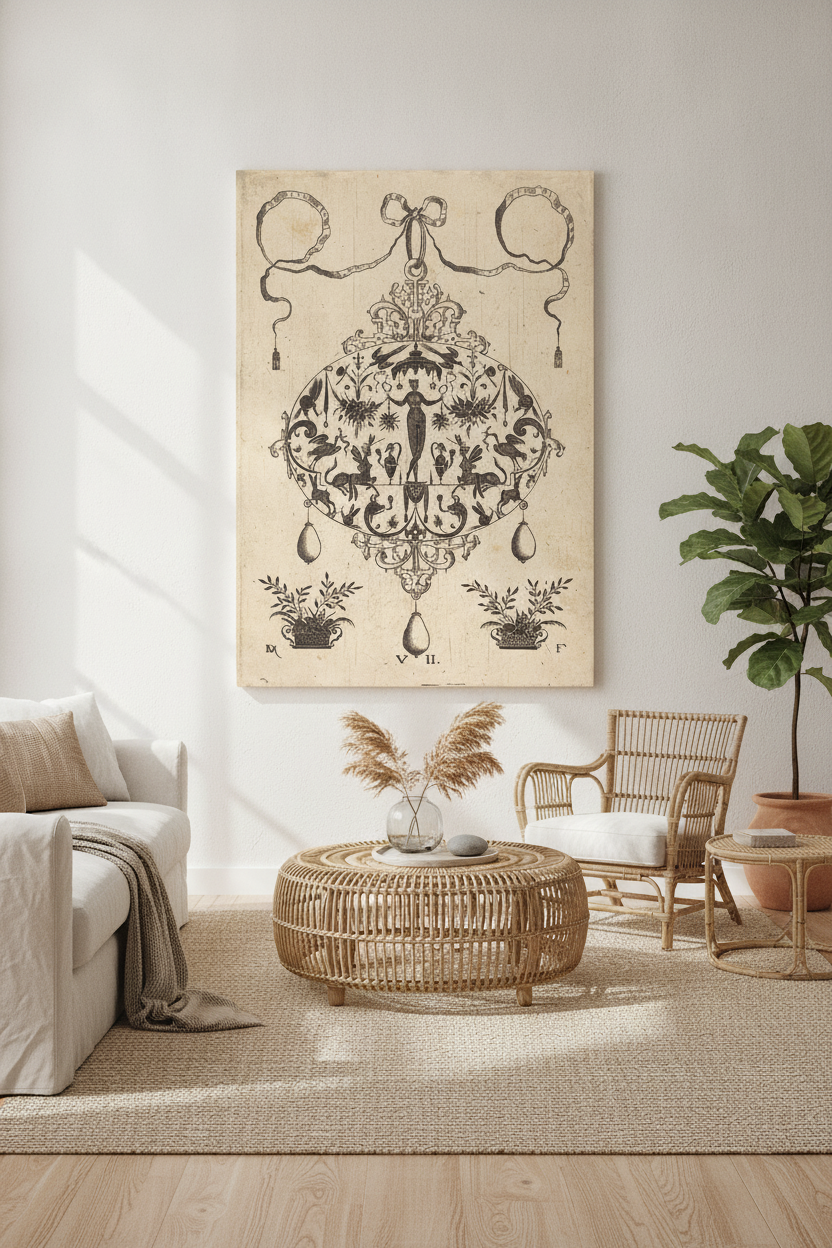
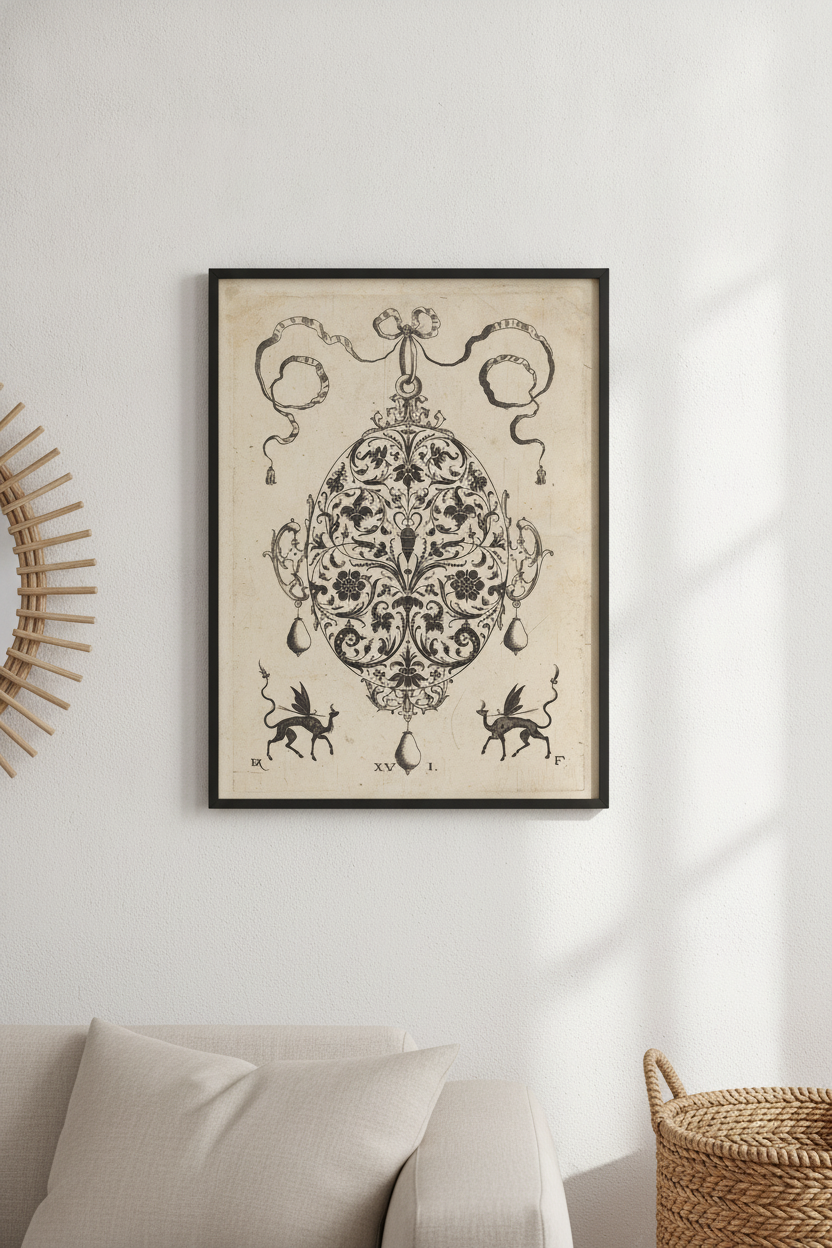
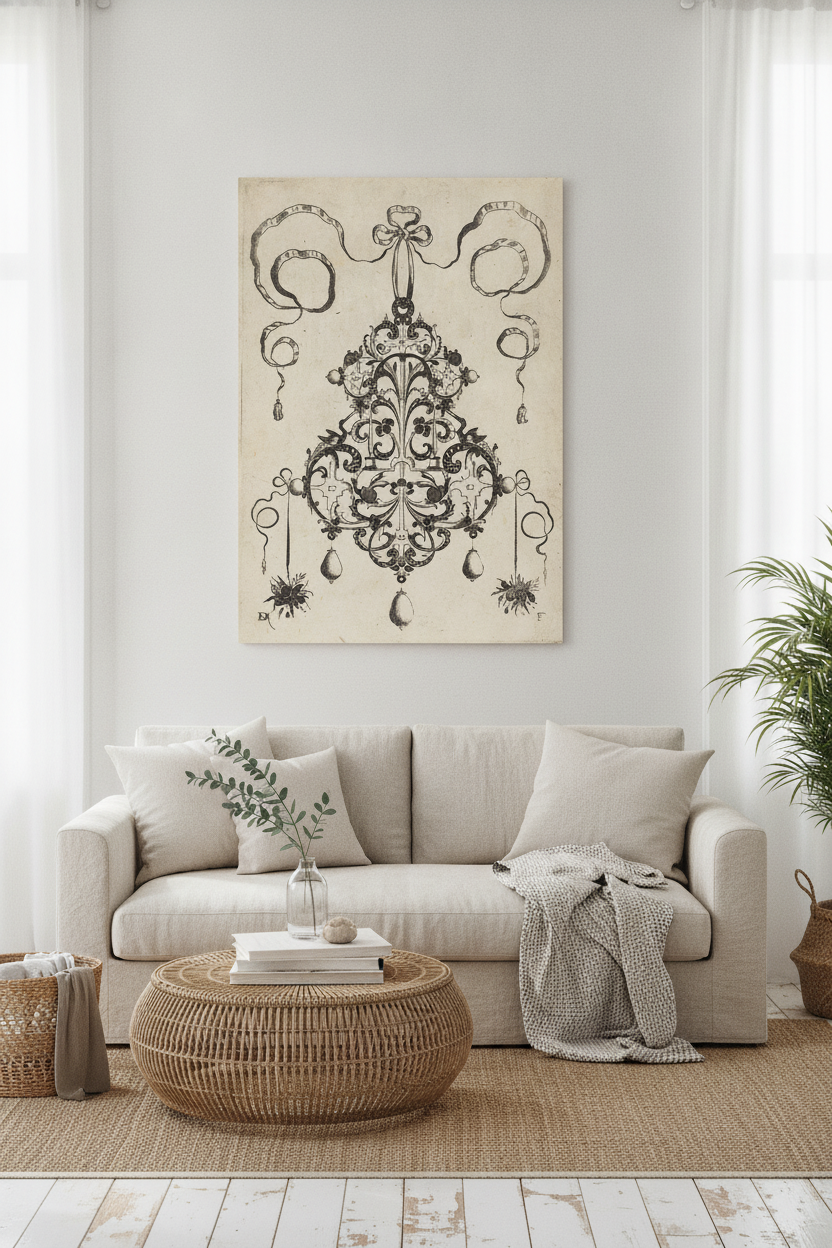
In contrast, Daniel Mignot, a French Huguenot craftsman who found refuge in Augsburg, brought an exquisite, jewel-like delicacy to the genre. Mignot specialized in designs for pendants, brooches, and shoulder-pieces. His engravings, such as the Large Pendant, Flora Standing, Holding a Fruit Garland, are marvels of micro-engraving. He suspended tiny figures within architectural frameworks of astonishing complexity, surrounding them with delicate natural elements. Another stunning example of his precision is the Large Pendant, Upright Oval with Floral Ornament, which showcases his ability to balance dense, dark shadows with brilliant, untouched paper highlights.
Deciphering the Visual Language
To truly appreciate classical ornamentation, it helps to understand its unique vocabulary. The artists of this era were obsessed with "grotesques"—a style of ornament discovered in the excavated ruins of ancient Roman palaces. This style mixed human, animal, and plant forms in playful, impossible ways.
In these prints, you will find several key elements:
- Strapwork (Rollwerk): Interlacing bands that look like cut leather or metal strips, curling at the edges.
- Garlands and Festoons: Heavy bunches of fruit, flowers, and foliage, symbolizing abundance and the fertility of nature.
- Masques: Stylized, often theatrical faces that peer out from the foliage, adding a touch of drama or mystery.
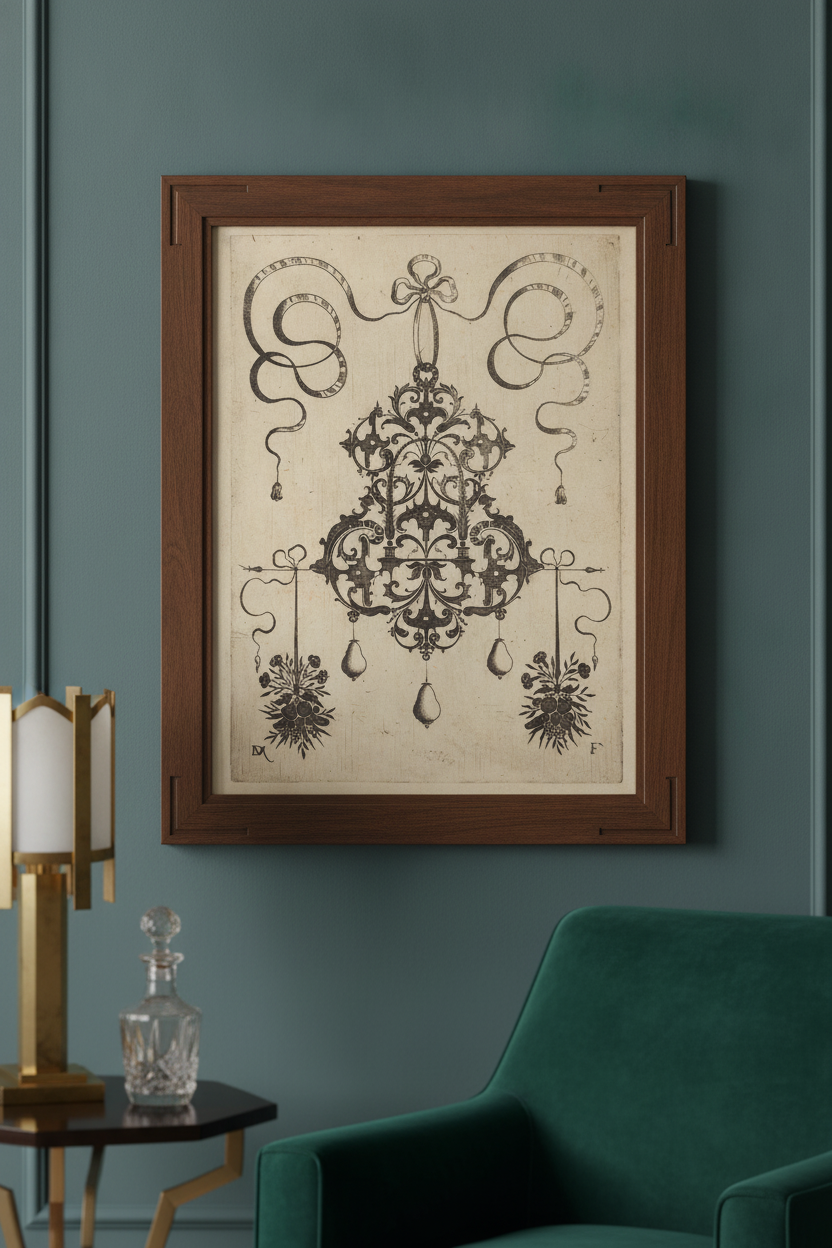
We see this vocabulary executed perfectly in Mignot's Large Pendant, Lower Left and Right Two Bunches of Grass, Flowers, and Fruit. Here, the organic chaos of grass and botanical life is held in check by a rigid, elegant geometric framework. It is this very tension—between the wildness of nature and the mathematical precision of the human mind—that gives these prints their enduring power.
Designing with Detail in the Modern Home
Why do these 16th-century engravings feel so surprisingly modern today? The answer lies in their graphic clarity. Because these prints were created using copperplate engraving, they rely entirely on line, cross-hatching, and negative space to convey depth and texture. This monochrome palette makes them incredibly versatile for contemporary interiors.
While a colorful painting might dominate a room, an ornament print invites quiet observation. They are intellectual pieces that reward close-up viewing. Hanging a pair of Mignot's pendant designs in a minimalist hallway, or placing Wechter's goblet print above a modern sideboard, creates a sophisticated dialogue between historic craftsmanship and clean, contemporary design. They offer a sense of history, texture, and quiet luxury without overwhelming your space.
Frequently asked questions
What was the original purpose of ornament prints?
They were primarily created as pattern books and design templates for goldsmiths, jewelers, sculptors, and architects to copy or draw inspiration from. Over time, they became highly sought-after collector's items in their own right due to their incredible detail and artistry.
Who are the most famous artists of classical ornamentation?
Key figures include German masters like Georg Wechter I, French-born engraver Daniel Mignot, and other Northern Renaissance and Mannerist printmakers who specialized in intricate, symmetrical decorative designs.
How do these prints fit into modern interior design?
Because they are monochrome engravings, they offer a clean, graphic aesthetic that pairs beautifully with minimalist, mid-century, or industrial decor. They provide rich historical texture and intellectual depth without clashing with modern color schemes.