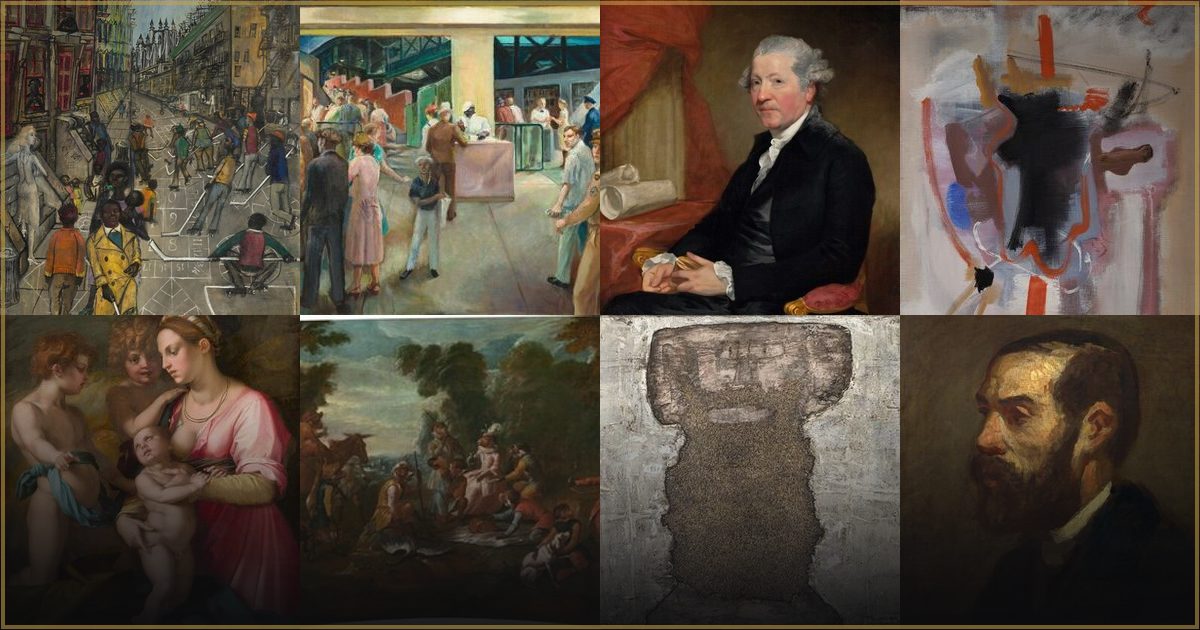
What makes Classical Renaissance art so timeless?
In short: The Classical Renaissance brought balance, perspective, and human emotion to art. By blending mathematical precision with soft, natural beauty, masters of this era created works that still bring calm and elegance to our walls today.
The Search for Perfect Harmony
The Classical Renaissance was a period of profound rediscovery. Between the late fifteenth and early sixteenth centuries, artists turned away from the flat, stylized forms of the Middle Ages and looked back to the balance and beauty of ancient Greece and Rome. They sought to capture the world not just as a spiritual symbol, but as it actually looked, felt, and breathed.
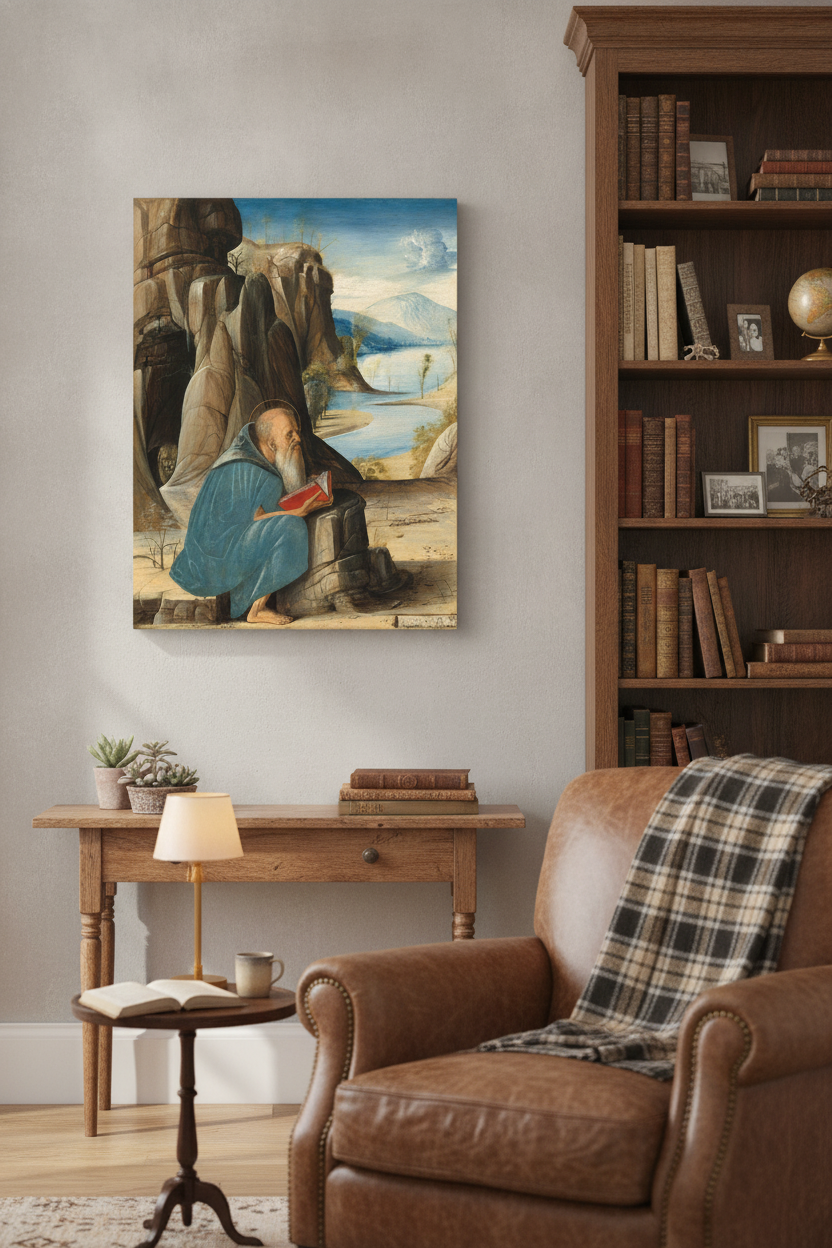
What makes this art so timeless is its perfect marriage of science and soul. Artists mastered linear perspective to create the illusion of deep space on a flat surface. They studied anatomy to make human figures look weightier and more lifelike. Yet, they never lost touch with mystery and emotion. In works like Alvise Vivarini's Saint Jerome Reading (c. 1476), we see this balance beautifully. The space is quiet and structured, but the saint's posture feels entirely human, caught in a moment of genuine, quiet concentration.
![Double-headed Eagle, Charged with Shield [reverse]](https://pub-13a1a0fce6b84e01bbb44f17cde61fc9.r2.dev/social/lifestyle/f2ebdc6dc397d99e/1.jpg)
The Masters of Balance and Emotion
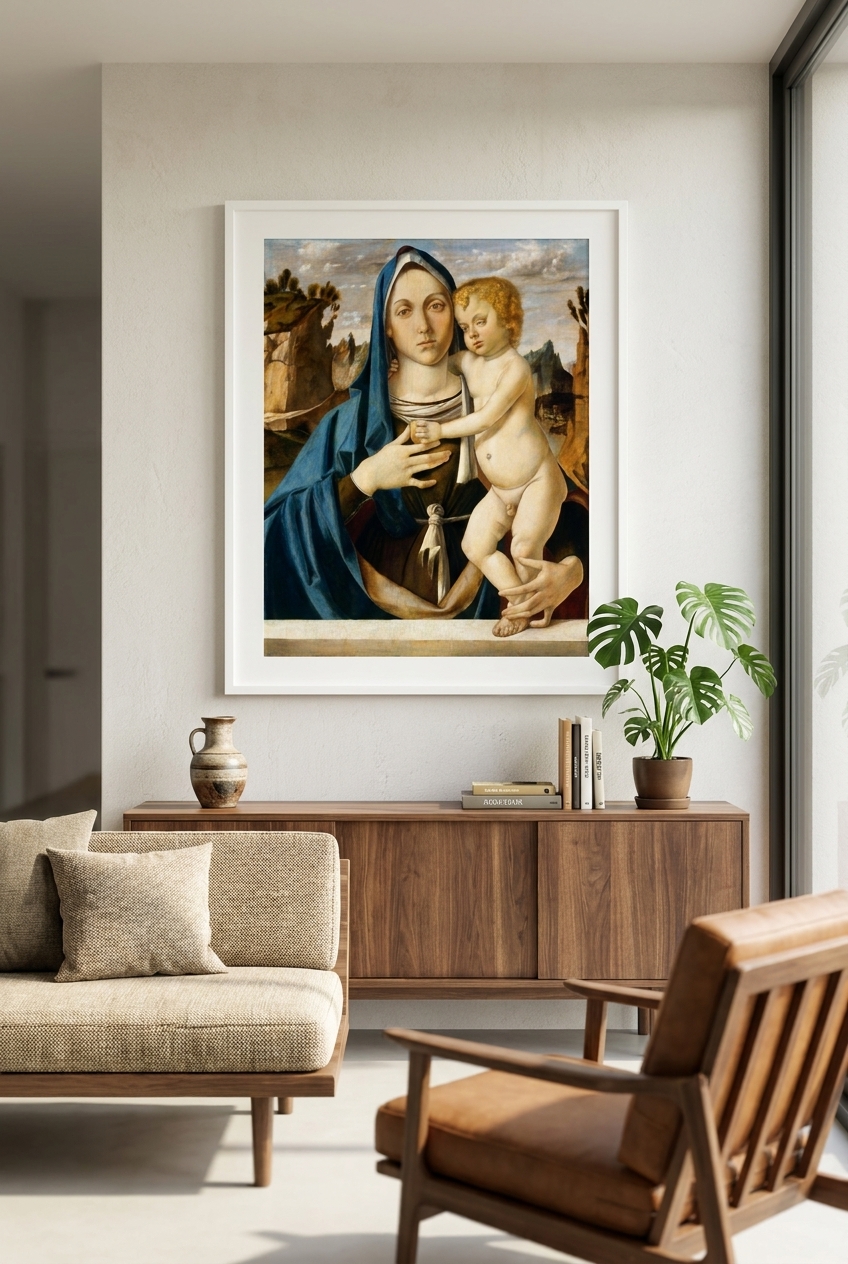
During this golden age, different regions developed their own unique flavors of the Renaissance. In Venice and northern Italy, artists like Bartolomeo Montagna infused religious scenes with a warm, sculptural dignity. In Montagna's Madonna and Child (c. 1490), the figures possess a quiet, solid presence, set against soft backgrounds that invite the viewer into a peaceful, reflective state.
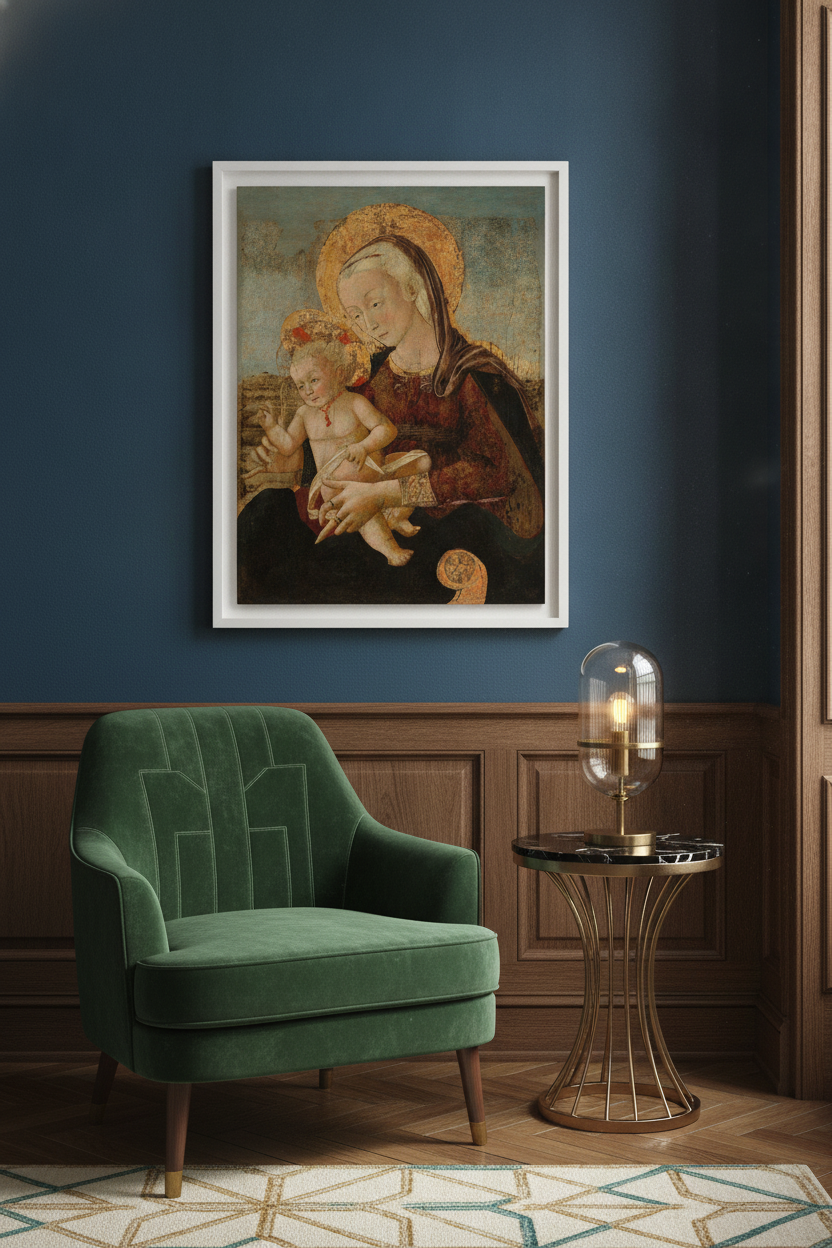
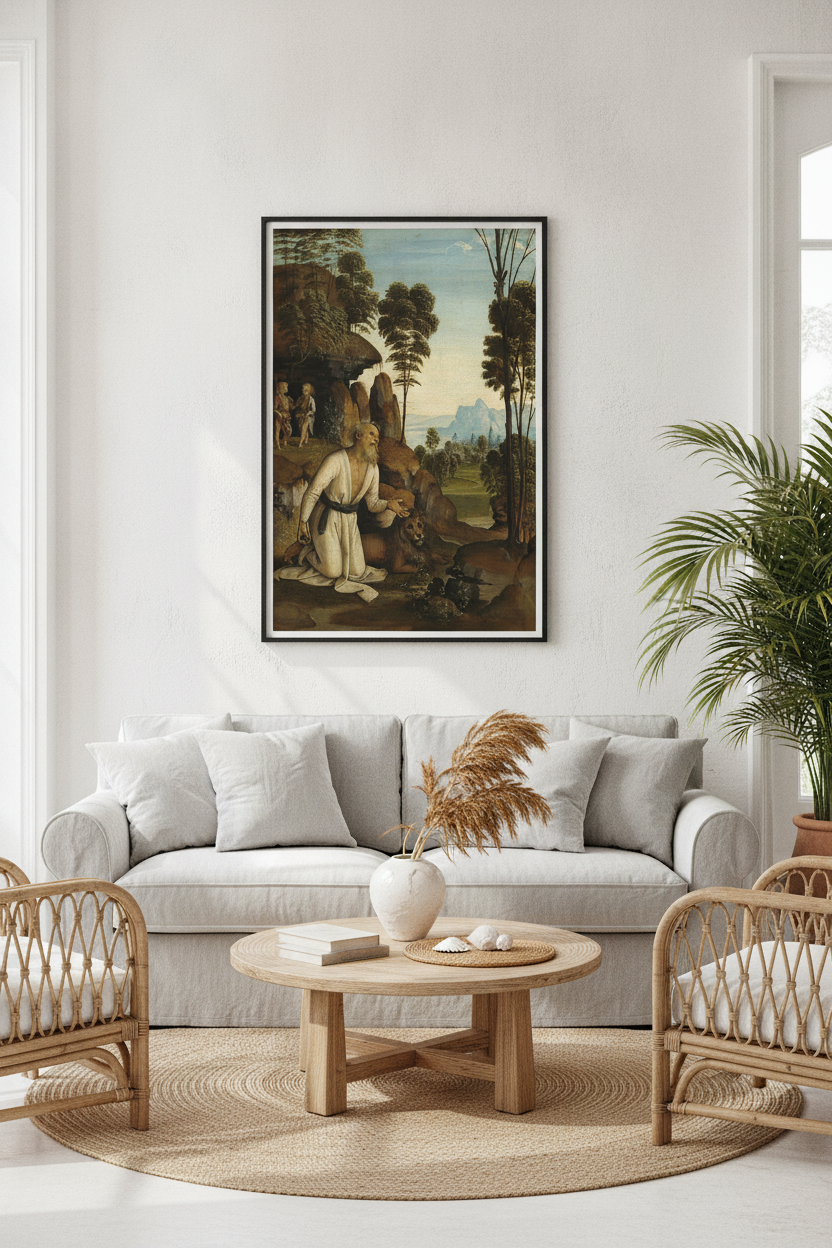
Meanwhile, the Circle of Andrea Mantegna (Possibility Correggio) experimented with dramatic angles and classical architectural details, while Florentine painters like Pier Francesco Fiorentino kept a love for decorative gold backgrounds while embracing the new, tender humanism of the era. Further south, the influence of Pietro Perugino spread a style of gentle grace and vast, airy landscapes. A work by a Follower of Pietro Perugino (c. 1490/1500) showcases this beautifully, placing the penitent saint in an expansive, atmospheric wilderness that feels more like a poetic dream than a harsh desert.
Beyond the Canvas: Sculpture, Engraving, and Northern Innovation
The Renaissance was not limited to paint on wood. Sculptors of the era, such as the master Probably Gasparo Cairano, carved stone with a classical purity that rivaled ancient Roman ruins, bringing a new sense of physical weight and movement to public monuments. At the same time, printmakers like Marcantonio Raimondi revolutionized how art was shared. By translating paintings into exquisite copperplate engravings, Raimondi allowed classical designs to travel across borders, inspiring artists hundreds of miles away.
In northern Europe, this classical impulse took on a highly detailed, tactile quality. German master goldsmiths like Hans Reinhart the Elder created intricate medals and reliefs that captured complex heraldry and biblical scenes in miniature, proving that the Renaissance spirit could thrive on any scale.
Bringing the Renaissance into Your Home
Why do these centuries-old works still feel so at home on modern walls? The secret lies in their inherent sense of order and calm. In a fast-paced digital world, a Renaissance print acts as a visual anchor. The soft, atmospheric landscapes of the Perugino circle bring a sense of quiet breathing room to a bedroom or study. The structured, architectural clarity of Vivarini or Montagna works wonderfully in a living room or entryway, offering a sense of stability and historical depth.
To complement these prints, look for classic framing options. Dark, warm wood frames or subtle gold leaf finishes mirror the materials of the era, helping these museum-quality reproductions feel grounded, authentic, and utterly timeless.
Frequently asked questions
What is the difference between the Early Renaissance and the High Renaissance?
The Early Renaissance focused on pioneering perspective and anatomy, often retaining some decorative, flat elements. The High Renaissance perfected these techniques, achieving ultimate harmony, grand scale, and effortless grace.
How should I frame a Classical Renaissance print?
Renaissance art looks best in frames that reflect its historic origins. Dark, rich wood tones like walnut or mahogany, or distressed gold-leaf frames, beautifully complement the warm undertones and classical compositions of these works.
Why are religious subjects so dominant in this era of art?
During the Renaissance, the Church was the primary patron of the arts. However, artists used these religious narratives as a canvas to explore human emotion, natural landscapes, and classical geometry, making the paintings deeply humanistic.