What makes Sienese Gothic art so enchanting?
In short: Sienese Gothic art traded Florentine realism for poetic grace, golden backgrounds, and rich emotion. It remains one of the most beautiful eras in art history.
What makes Sienese Gothic art so enchanting?
In the fourteenth century, while Florence was busy developing the mathematical rules of perspective and solid form, its rival city, Siena, took a different path. Sienese artists chose to paint the human soul. Sienese Gothic art is enchanting because it prioritizes emotion, lyricism, and decorative beauty over strict, cold realism.
Instead of rigid, geometric spaces, Sienese painters wrapped their subjects in shimmering gold leaf, brilliant tempera colors, and sweeping, rhythmic lines. It is an art style that feels like a whispered prayer or a courtly love poem. It invites you to look closely at the tender tilt of a head, the delicate curl of a finger, and the rich patterns etched directly into the gold backgrounds.
By blending Byzantine majesty with a new, gentle humanism, Sienese Gothic art created a bridge between the medieval heaven and the earthly world. It was a style designed not just to instruct the faithful, but to move them deeply through sheer visual poetry.
The Masters of Line and Light
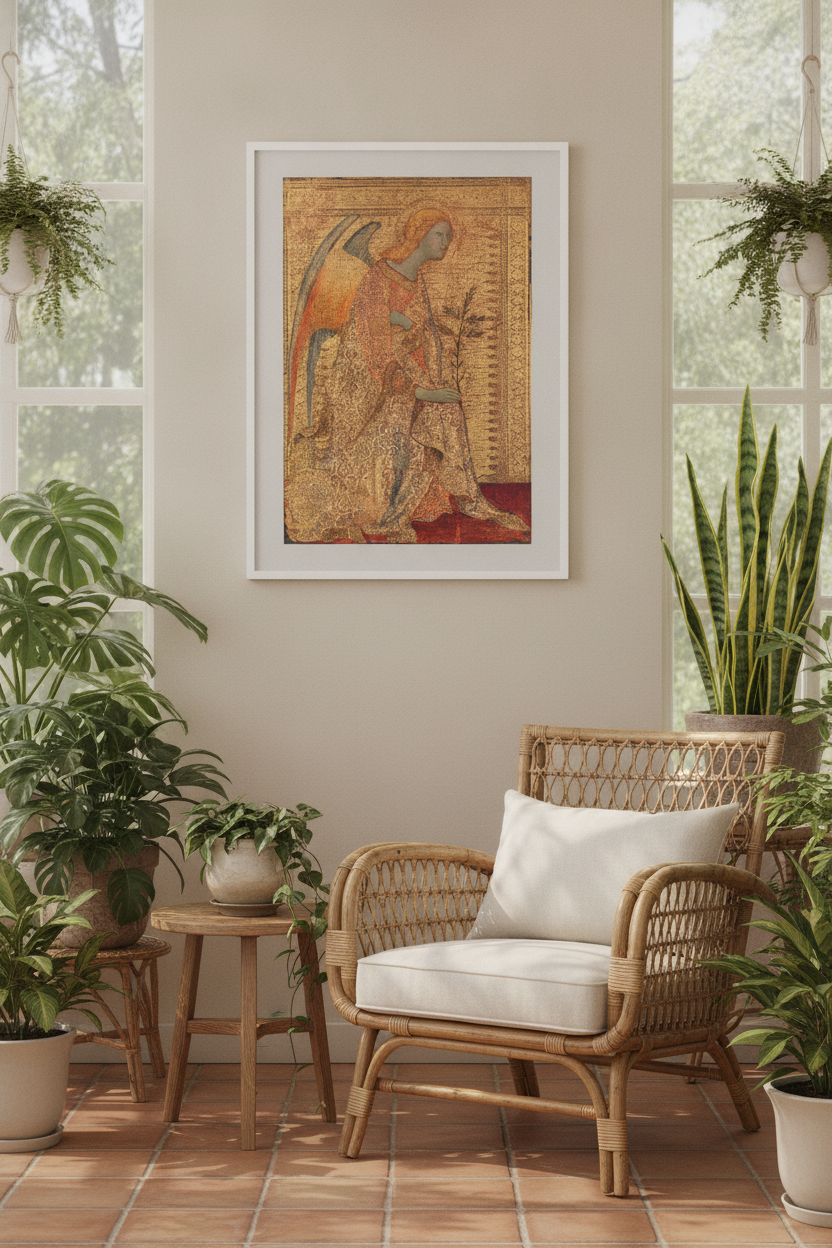
Simone Martini was perhaps the ultimate poet of the Sienese style. His figures do not merely stand; they sway with an otherworldly elegance. In The Angel of the Annunciation, we see this grace in full effect. The angel's cloak seems to flutter as if he has just landed from the heavens, his posture delicate yet charged with divine energy.
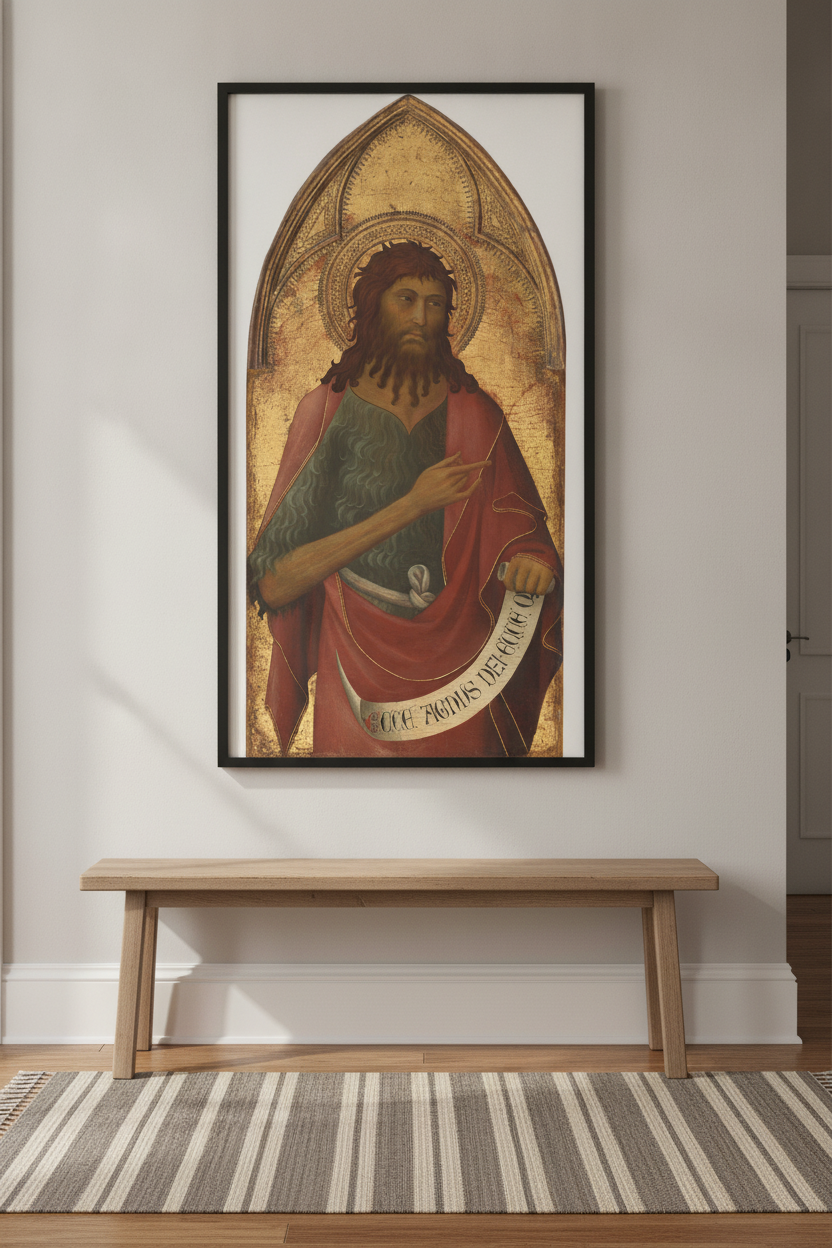
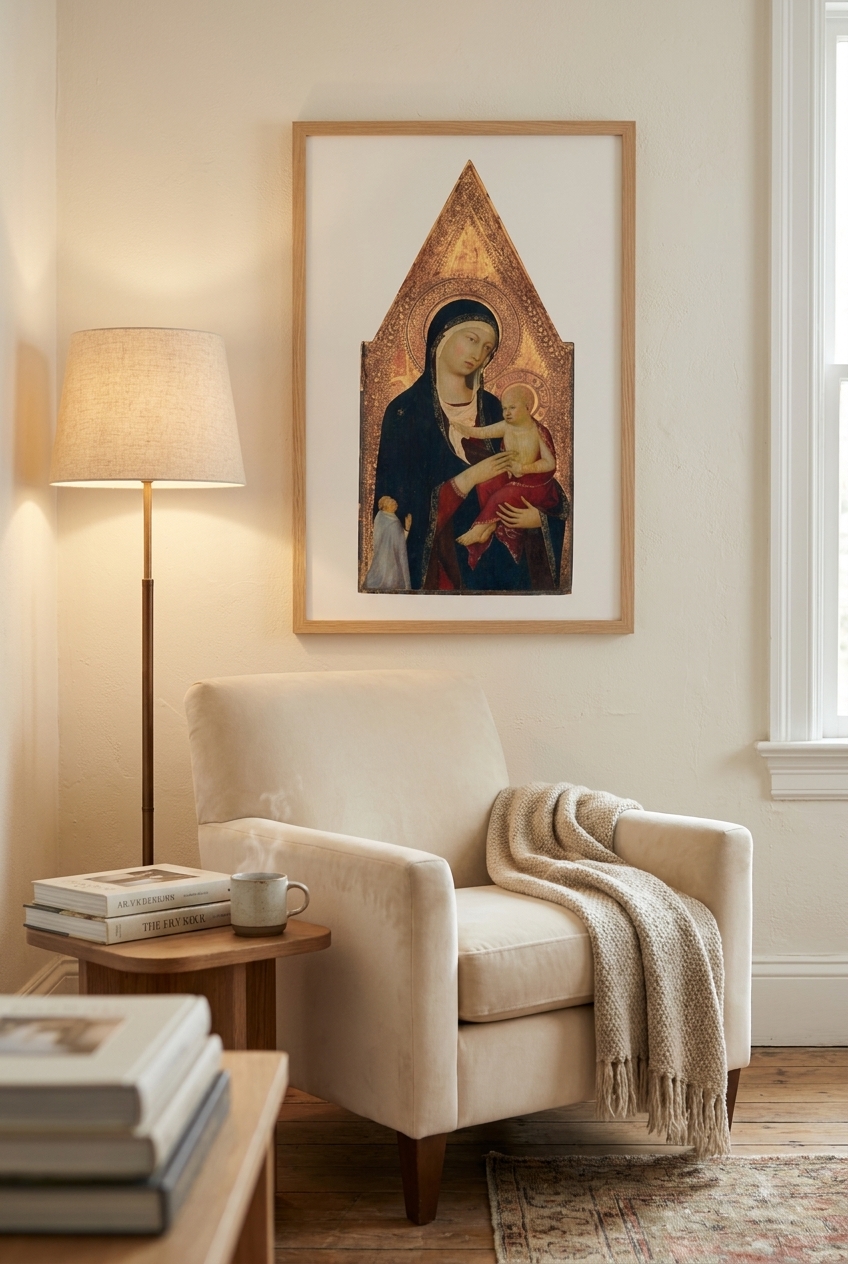
Martini’s brother-in-law, Lippo Memmi, brought a similar refinement but added a striking, quiet gravity to his subjects. Memmi's work, such as the Madonna and Child with Donor, showcases an incredible tenderness, where the sacred figures feel both monumental and deeply personal. In another exquisite panel, Saint John the Baptist, Memmi uses long, elegant lines and a rich, warm color palette to capture a sense of quiet devotion and spiritual intensity.
The Secrets Behind the Gold and Pigment
To truly appreciate these works, it helps to understand how they were made. These were not quick sketches; they were intense, physical labors of love. Artists painted on wooden panels, usually poplar, which were meticulously prepared with layers of plaster-like gesso to create a marble-smooth surface.
The glowing backgrounds were made of actual gold leaf. Artists applied thin sheets of gold and then used tiny metal stamps to punch intricate patterns—halos, borders, and fabric textures—directly into the surface. This technique, called punchwork, made the gold catch the candlelight of medieval churches in dazzling, unpredictable ways.
The colors themselves were ground from natural minerals. Ultramarine, made from crushed lapis lazuli imported from Afghanistan, created the deep, heavenly blues of the Virgin Mary's robes. Vermilion gave a brilliant red, while earth pigments provided warm, grounding ochres. When you hang a reproduction of a Sienese painting, you are bringing these rich, historical harmonies into your space.
Styling Medieval Masterpieces in Modern Homes
There is a common misconception that medieval art only belongs in stone cathedrals or dark museums. In truth, the warm gold tones and intimate scale of Sienese Gothic paintings make them exceptionally beautiful additions to modern living spaces.
Because these works rely so heavily on line and pattern, they possess a graphic quality that pairs surprisingly well with clean, minimalist decor. A single, richly colored Sienese print can act as a warm focal point in a room dominated by neutral tones, wood, and natural textures.
Consider placing a framed print in an entryway or a quiet reading nook. The reflective quality of the gold-toned backgrounds and the gentle, contemplative expressions of the figures create an atmosphere of peace and historical depth. They remind us to slow down and appreciate the quiet beauty of craftsmanship.
Frequently asked questions
What is the main difference between Florentine and Sienese Gothic art?
While Florentine art focused on volume, three-dimensional space, and anatomical realism, Sienese art prioritized decorative beauty, elegant lines, emotional expression, and rich gold ornamentation.
Why is there so much gold in Sienese Gothic paintings?
Gold leaf was used to represent the divine, unearthly light of heaven. It also served a practical purpose: in dimly lit medieval churches, the gold would catch and reflect candlelight, making the paintings appear to glow from within.
What medium did Sienese artists use?
They primarily used egg tempera on wooden panels. Pigments ground from natural minerals and earth were mixed with egg yolk, which dried quickly to a durable, brilliant finish.