Why are Albert Bierstadt's landscapes so dramatic?
In short: Albert Bierstadt defined the American sublime through Luminism, using glowing golden light and massive scale to turn wild landscapes into deeply spiritual experiences.
The Quest for the American Sublime
In the mid-nineteenth century, the American West was a place of mythic proportions. To the average city dweller on the East Coast, the Rocky Mountains and Yosemite Valley were as remote as the moon. Enter Albert Bierstadt, a German-born painter who joined overland expeditions to capture these untamed territories. His works became the ultimate expression of Classical Romanticism and the Hudson River School.
But why are these paintings so incredibly dramatic? Bierstadt did not just document geography; he painted the sublime. This was an aesthetic concept where nature is presented as so vast, powerful, and magnificent that it evokes a sense of quiet reverence and awe. By exploring the after Albert Bierstadt collection, you can see how these compositions translate wild, open spaces into deeply emotional experiences.
The Magic of Luminism and Golden Light
The secret to Bierstadt's drama lies in a style known as Luminism. This technique focuses on the precise manipulation of light to create a glowing, atmospheric effect. Instead of uniform daylight, Bierstadt painted the golden hour—the moments when the sun filters through heavy storm clouds, strikes the rugged peak of a mountain, or reflects off a tranquil lake.
By contrasting brilliant, almost divine illumination with deep, cool shadows, he created an illusion of immense depth. The air itself seems thick with mist and dust, making the distant cliffs dissolve into an ethereal haze. This play of light makes the landscapes feel alive, moving, and sacred.
Scale, Detail, and the Changing Frontier
Bierstadt's compositions are masterclasses in scale. He often placed tiny figures—wild animals, indigenous people, or lone travelers—in the foreground to emphasize the colossal size of the surrounding cliffs and ancient forests. This meticulous attention to detail draws the viewer in, while the vast background opens up the horizon.
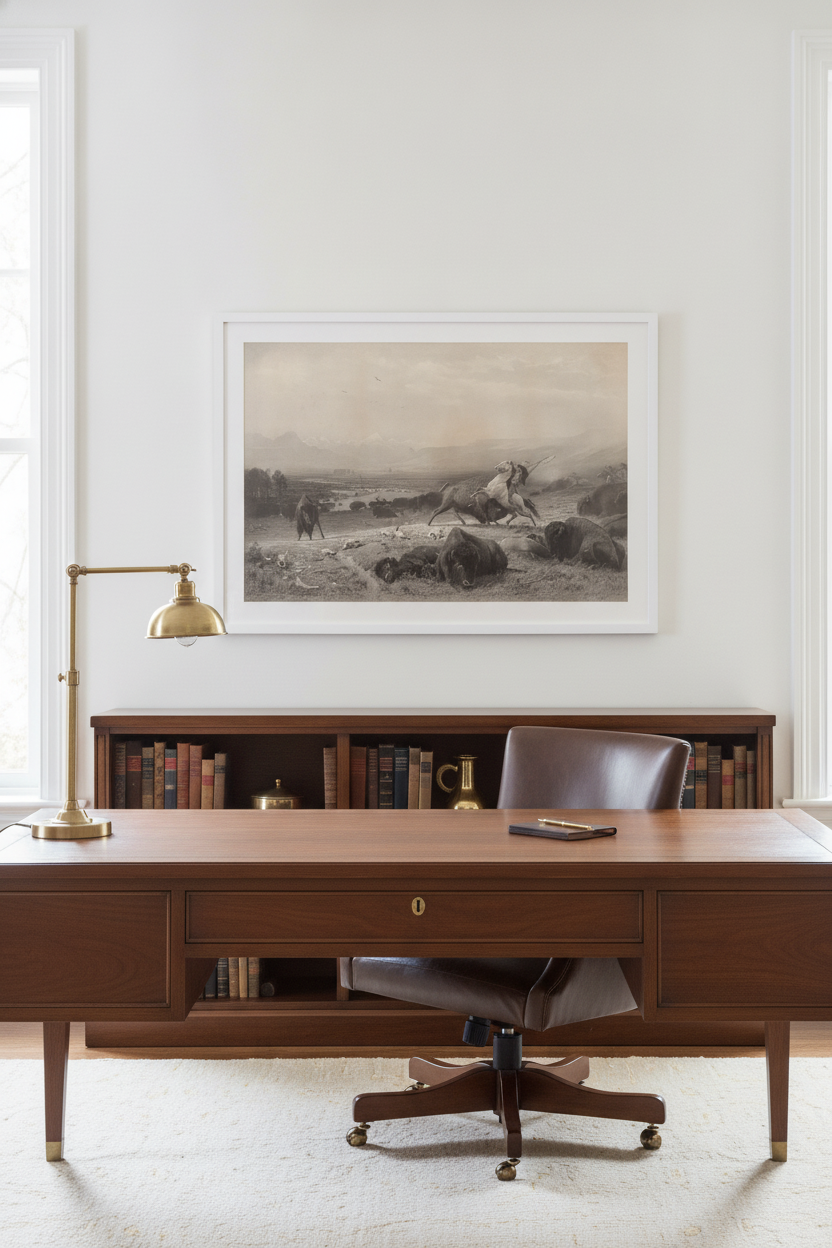
A prime example of this narrative power is The Last of the Buffalo (1891). This poignant work combines his signature dramatic light with a powerful commentary on the changing American frontier, capturing a sweeping, tragic beauty that still resonates today.
Why These Wild Landscapes Suit Modern Homes
While these paintings were originally designed for grand Victorian parlors, they possess a timeless quality that makes them perfect for modern homes. In a minimalist or contemporary space, a large-scale Bierstadt reproduction acts as a visual anchor. The warm, golden tones of his light bring organic warmth to neutral color palettes, while the deep perspective creates the illusion of a window opening up a small room.
Whether printed on textured canvas or framed behind glass, these works offer a daily escape into the wild, reminding us of the enduring power and beauty of the natural world.
Frequently asked questions
What is Luminism in Albert Bierstadt's work?
Luminism is a nineteenth-century style of landscape painting characterized by the effects of light on landscapes, using hidden brushstrokes and a glowing, atmospheric haze to create a sense of tranquility and spiritual awe.
Did Bierstadt paint these scenes exactly as they looked in real life?
Not exactly. Bierstadt was known for taking creative liberties. He combined sketches from different locations, exaggerated the heights of mountains, and intensified the lighting to emphasize the emotional and sublime qualities of the American wilderness rather than strict geographical accuracy.
Why do these prints look so good on canvas?
The rich, dramatic contrasts of light and shadow (chiaroscuro) in Bierstadt's work, along with his soft, atmospheric brushwork, translate beautifully onto canvas. The texture of the canvas mimics the original oil paintings, enhancing the depth and warmth of the golden light.