Why are Martin Johnson Heade's landscapes so peaceful?
In short: Martin Johnson Heade captured the quiet majesty of nature through low horizons, subtle light, and exquisite botanical details, making his work timeless.
The Master of Quiet Light
Martin Johnson Heade was a nineteenth-century American painter who chose a distinctly different path from his peers. While contemporaries like Albert Bierstadt painted grand, theatrical mountain ranges, Heade turned his gaze to the quiet, horizontal beauty of salt marshes, coastal waters, and tropical flora. His landscapes feel incredibly peaceful because of his mastery of light and atmosphere—a style art historians now call Luminism.
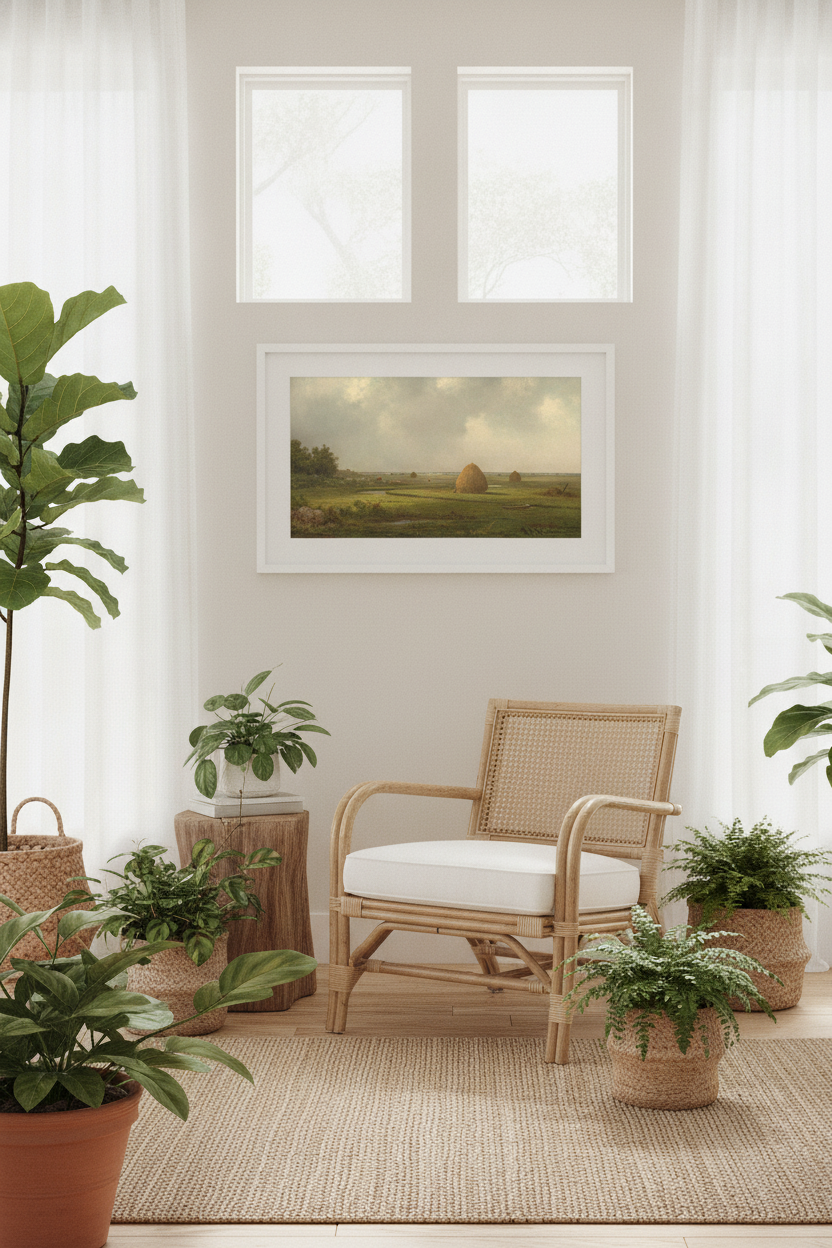
By using low, sweeping horizons and hiding his brushstrokes, Heade achieved a sense of profound stillness. In works like View of Marshfield, the quiet harmony of nature takes center stage, inviting the viewer to slow down and breathe. Heade's art is defined by this delicate tension: a scientific precision in detail combined with a deeply poetic, almost spiritual interpretation of the physical world.
From Salt Marshes to Tropical Jungles
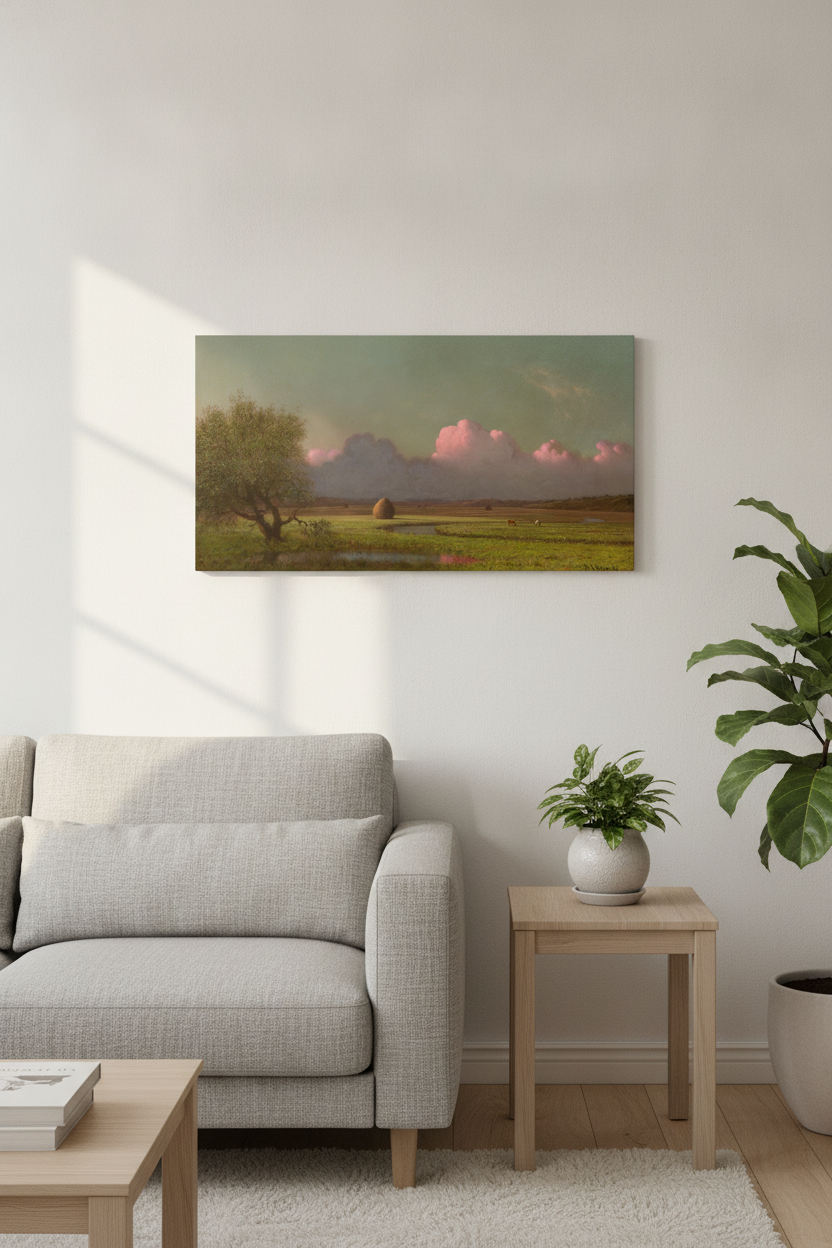
Heade’s work is a fascinating mix of quiet observation and exotic drama. He was obsessed with the weather, frequently capturing the heavy, electric atmosphere just before a coastal thunderstorm. But he is perhaps most famous for his marshlands. In paintings like Sunlight and Shadow: The Newbury Marshes, he captured the shifting patterns of light and cloud shadows across flat, watery grasslands with unparalleled sensitivity.
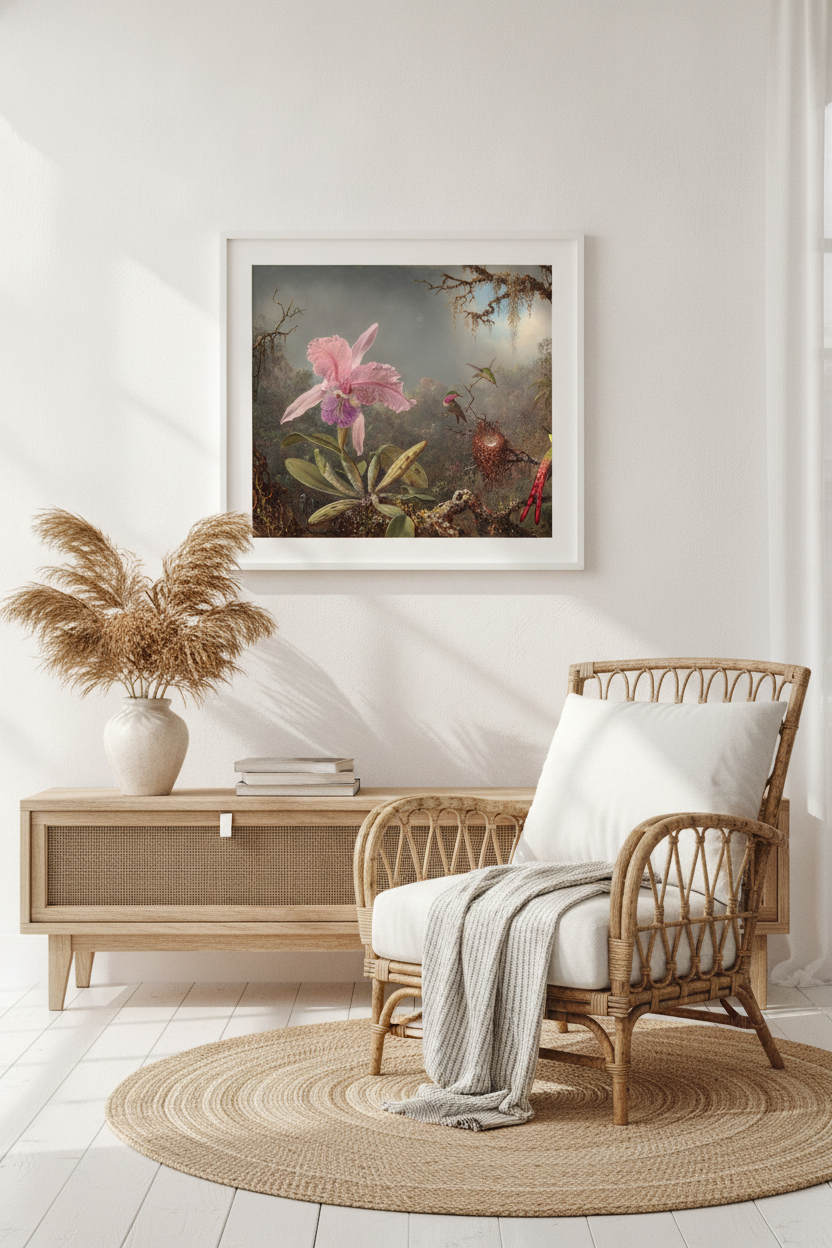
Later in life, travels to Brazil inspired him to paint lush, tropical subjects. He combined delicate hummingbirds with velvety orchids, as seen in Cattleya Orchid and Three Hummingbirds. He rendered the velvet textures of the petals and the iridescent feathers of the birds with a level of detail that feels both intimate and alive.
Bringing Heade's Luminous Art Into Your Home
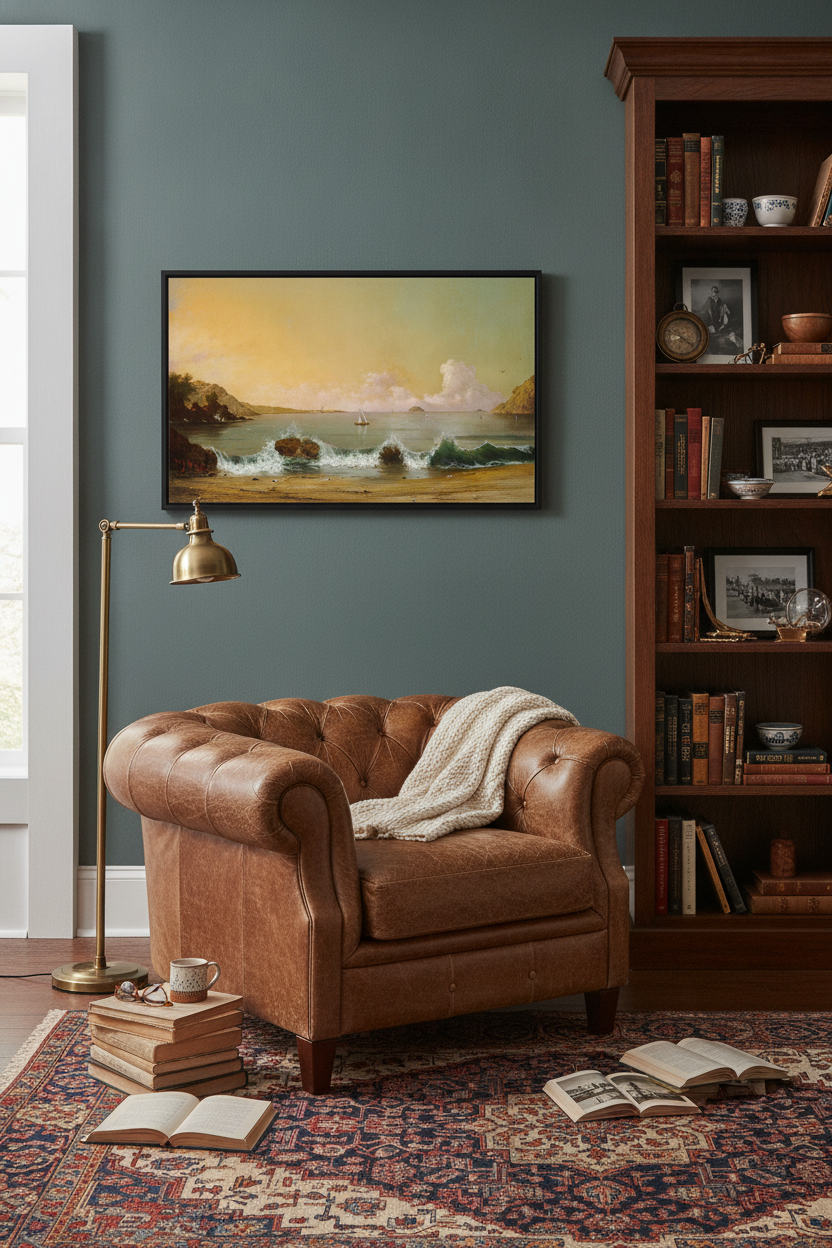
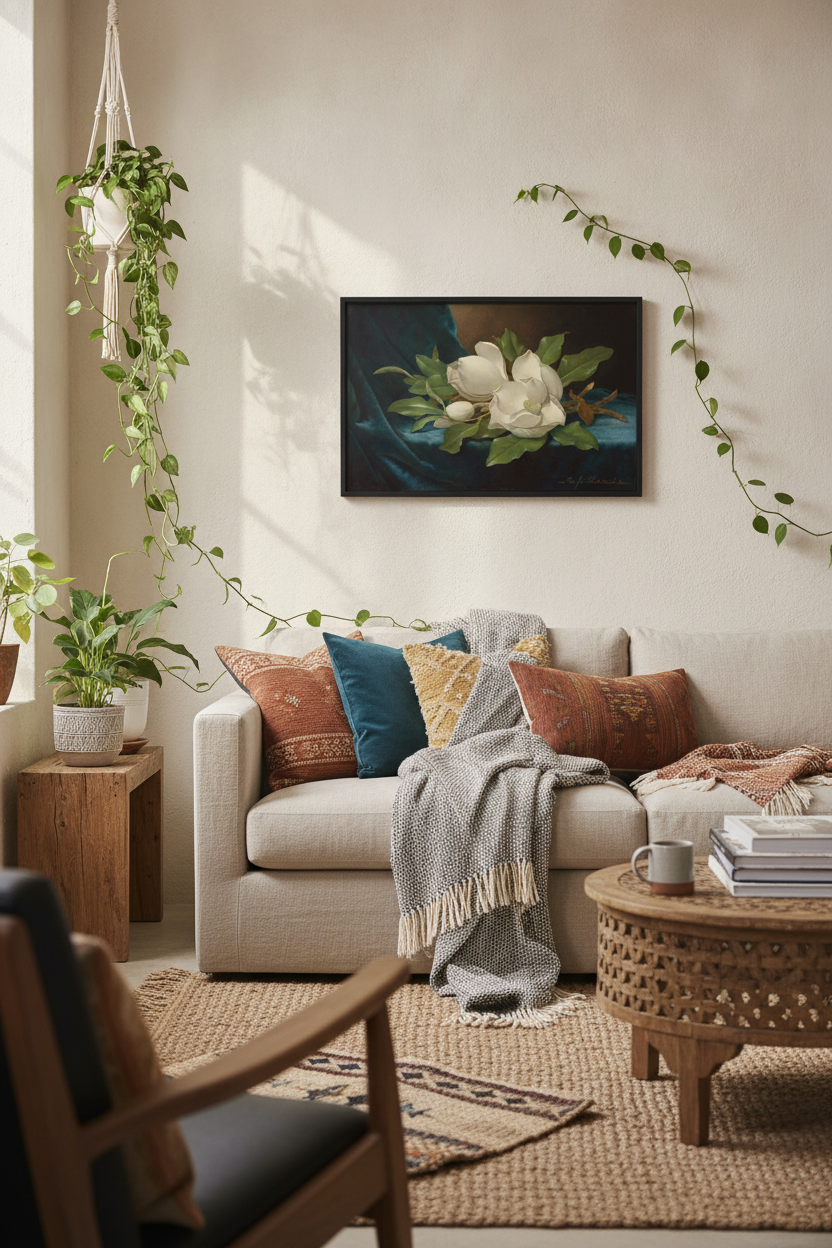
Why do Heade's paintings work so beautifully as fine-art prints or canvases in a modern home? The secret lies in their structure and color. His low, wide horizontal compositions are incredibly versatile, fitting perfectly over modern sofas, mantels, or headboards, where they visually expand the feeling of space in a room.
Furthermore, the soft, diffused light he captured acts as a visual balm. In our busy, screen-filled lives, a Heade print brings a calming, meditative energy to a living space. Whether you prefer a moody coastal scene or a vibrant botanical study, his work bridges the gap between classic elegance and clean, modern design. You can explore his peaceful atmospheres in our Full Martin Johnson Heade collection.
Frequently asked questions
What art movement did Martin Johnson Heade belong to?
Heade is closely associated with Luminism, a 19th-century American landscape art style characterized by the effects of light on landscapes, hidden brushstrokes, and tranquil compositions that evoke a sense of quiet spirituality.
Why did Heade paint so many haystacks and marshes?
Heade was fascinated by the subtle shifts in weather, light, and season. The flat, open landscape of salt marshes allowed him to study how light and shadow interacted with water and land over different times of day without the distraction of dramatic topography.
Did Heade paint from real life or imagination?
Heade combined both. He made detailed, scientifically accurate sketches of plants, birds, and landscapes in the field, then composed his finished oil paintings in his studio, infusing them with a poetic, atmospheric mood that went beyond simple documentation.