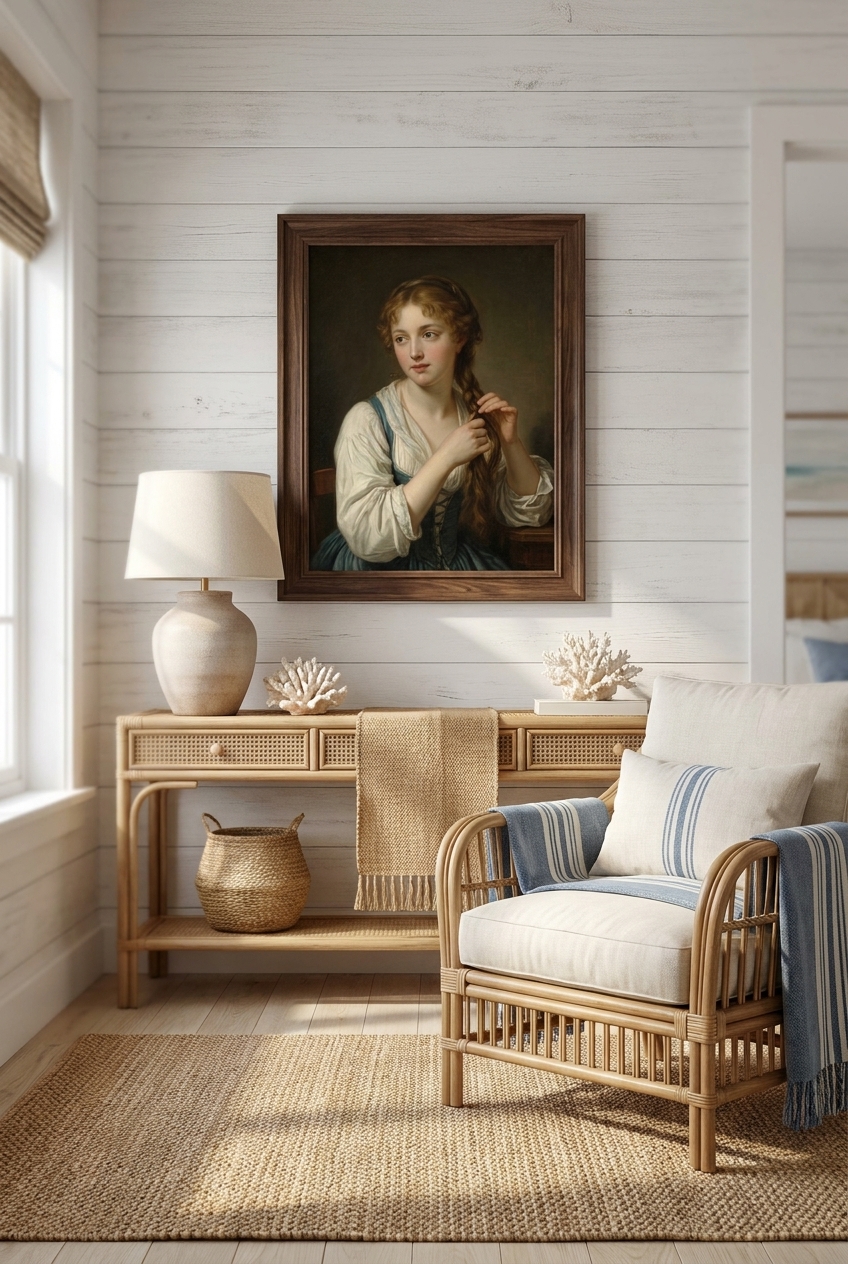
Why are Pietro Rotari's portraits so modern?
In short: Pietro Rotari bypassed stiff, formal royal portraiture to capture fleeting human emotions. His soft, porcelain-toned 'character heads' blend Rococo elegance with a psychological depth that feels remarkably contemporary.
The Master of the Fleeting Glance
In an era dominated by stiff, formal state portraits designed to project power and wealth, the Veronese painter Pietro Rotari did something revolutionary. He looked closer. Instead of painting distant monarchs draped in heavy ermine, Rotari captured the quiet, fleeting moments of the human soul—a half-smile, a sideways glance, or a momentary daydream.
Today, these portraits feel incredibly modern. While other eighteenth-century art can feel remote or overly theatrical, Rotari’s work speaks to us directly. By exploring the Full Pietro Rotari collection, you can see how he bridged the gap between the grand drama of the late Baroque and the refined, quiet grace of the early Classical era, leaving behind a gallery of faces that feel like people we might meet today.
The Intimacy of the Testine
Rotari’s greatest contribution to art history was his mastery of the testine, or "character heads." These were not traditional portraits commissioned by wealthy patrons to show off their status. Instead, they were intimate, small-scale studies of emotion. Rotari painted hundreds of them, depicting young men and women experiencing quiet introspection, subtle coquetry, or a touch of gentle melancholy.
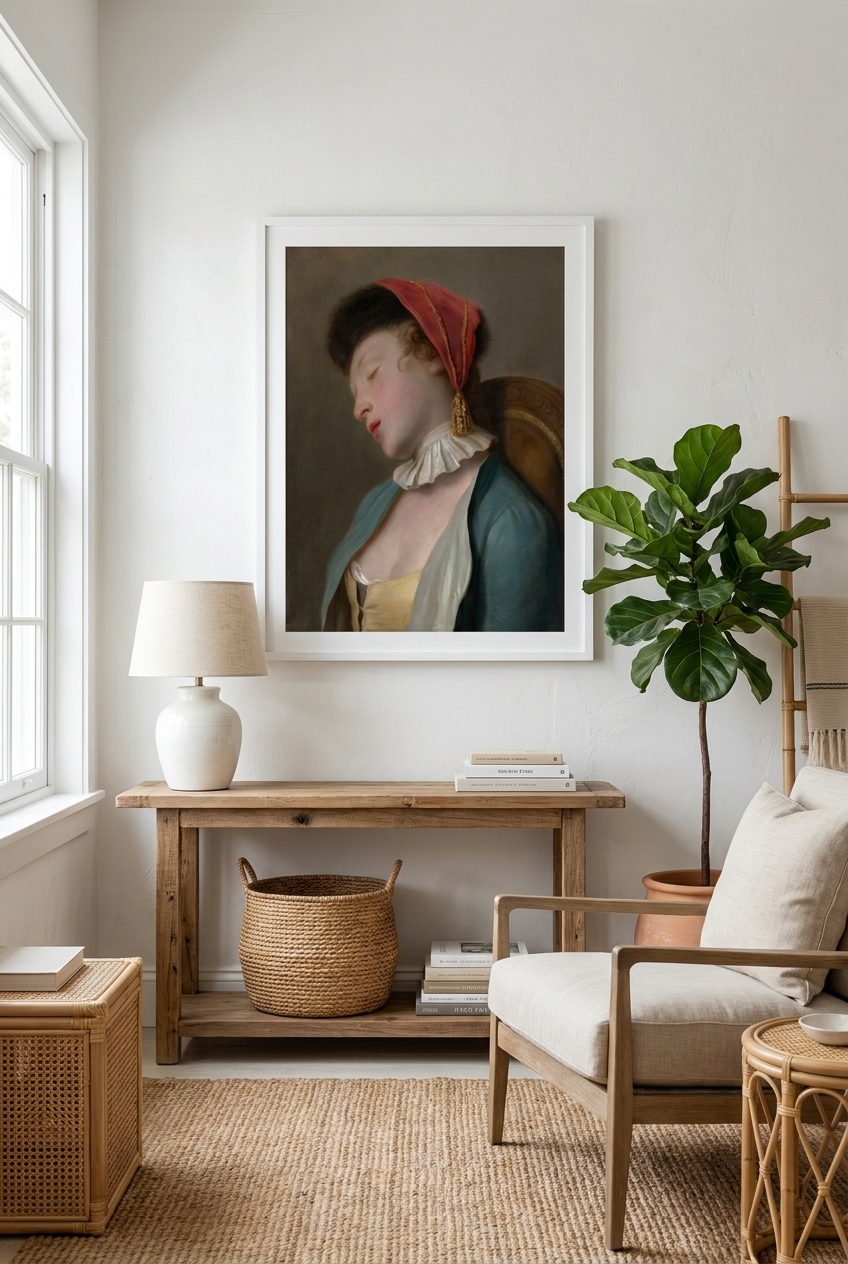
His talent took him across the royal courts of Europe, from Vienna to Dresden, and eventually to St. Petersburg, where he became the court painter to Empress Elizabeth. The Russian court was so enchanted by these expressive faces that hundreds of them were purchased to cover the walls of the Peterhof Palace. Pieces like "A Sleeping Girl" demonstrate this perfectly, capturing a vulnerable, quiet moment with an extraordinary sense of peace and tenderness.
Porcelain Skin and Shimmering Silk
Visually, Rotari’s style is instantly recognizable. He painted with a remarkably soft, cool palette of pastel pinks, muted blues, and delicate greys. His brushwork was so fine that the skin of his subjects took on a luminous, porcelain-like finish, glowing gently against soft-focus backgrounds.
But the real magic lies in the contrast between this smooth skin and his meticulous rendering of textures. Rotari had an incredible eye for detail, capturing the crisp fold of a linen collar, the intricate weave of lace, or the shimmering sheen of silk. In "A Girl with a Flower in Her Hair", the delicate petals and the soft texture of her hair contrast beautifully with her luminous skin, creating a sensory richness that draws the viewer in.
Bringing Rotari’s Grace into the Modern Home
Why do Rotari's works make such exceptional fine-art prints and canvases for contemporary spaces? It comes down to their scale, color, and emotional warmth. Unlike massive, overwhelming historical canvases, Rotari’s portraits are intimate. They do not dominate a room; instead, they invite you to step closer.
Their soft, neutral-adjacent color palettes make them incredibly versatile. Whether hung in a minimalist bedroom, a quiet reading nook, or as part of a curated gallery wall in a living room, these pieces bring a sense of calm sophistication. They offer the perfect blend of historical depth and clean, classical beauty, making any space feel instantly more thoughtful and serene.
Frequently asked questions
What is a 'testine' in Pietro Rotari's work?
Testine translates to 'little heads' or 'character heads.' These were small, intimate bust-length portraits painted by Rotari that focused on capturing specific, fleeting human emotions and expressions rather than formal, posed portraiture.
Which art movement does Pietro Rotari belong to?
Rotari is a key figure of the Classical Rococo period. His work bridges the theatricality and dramatic lighting of the late Baroque with the soft, refined grace and balanced compositions of early Neoclassicism.
Why did Rotari paint so many of these character portraits?
Rotari found great success with these studies across European courts. Empress Elizabeth of Russia was so fond of them that she purchased hundreds to create a 'Cabinet of Modes and Graces' at Peterhof Palace, celebrating the diverse beauty and expressions of young women.