Why do J. Herman McCollum's landscapes feel so peaceful?
In short: J. Herman McCollum's landscapes achieve deep serenity through the Classical Landscape Tradition, using balanced compositions, soft dawn-and-dusk tones, and structured depth to create visual sanctuaries.
The Secret to Classical Serenity
At first glance, a landscape by J. Herman McCollum feels like a deep, quiet breath. Why does this work have such a calming effect? The answer lies in his devotion to the Classical Landscape Tradition. Rather than painting the chaotic reality of nature, McCollum organized it. Drawing inspiration from classical academic masters, he prioritized harmony, balance, and order. His paintings are not mere documentations of fields and trees; they are carefully constructed sanctuaries designed to offer the viewer a poetic space for quiet contemplation.
The Anatomy of a McCollum Landscape
To understand McCollum's quiet power, look closely at his handling of light and color. He avoided harsh contrasts and jarring transitions, opting instead for a highly disciplined and sophisticated tonal palette. Through incredibly soft gradations of color, his canvases capture the fleeting, tender moments of dawn and dusk. He anchors each scene with classical principles of perspective, guiding your eyes gently across layered horizons that stretch into the distance. This structured approach to depth makes each scene feel incredibly grounded, yet elevated by a dreamlike, poetic imagination.
Beyond the Horizon: A Surprising Versatility
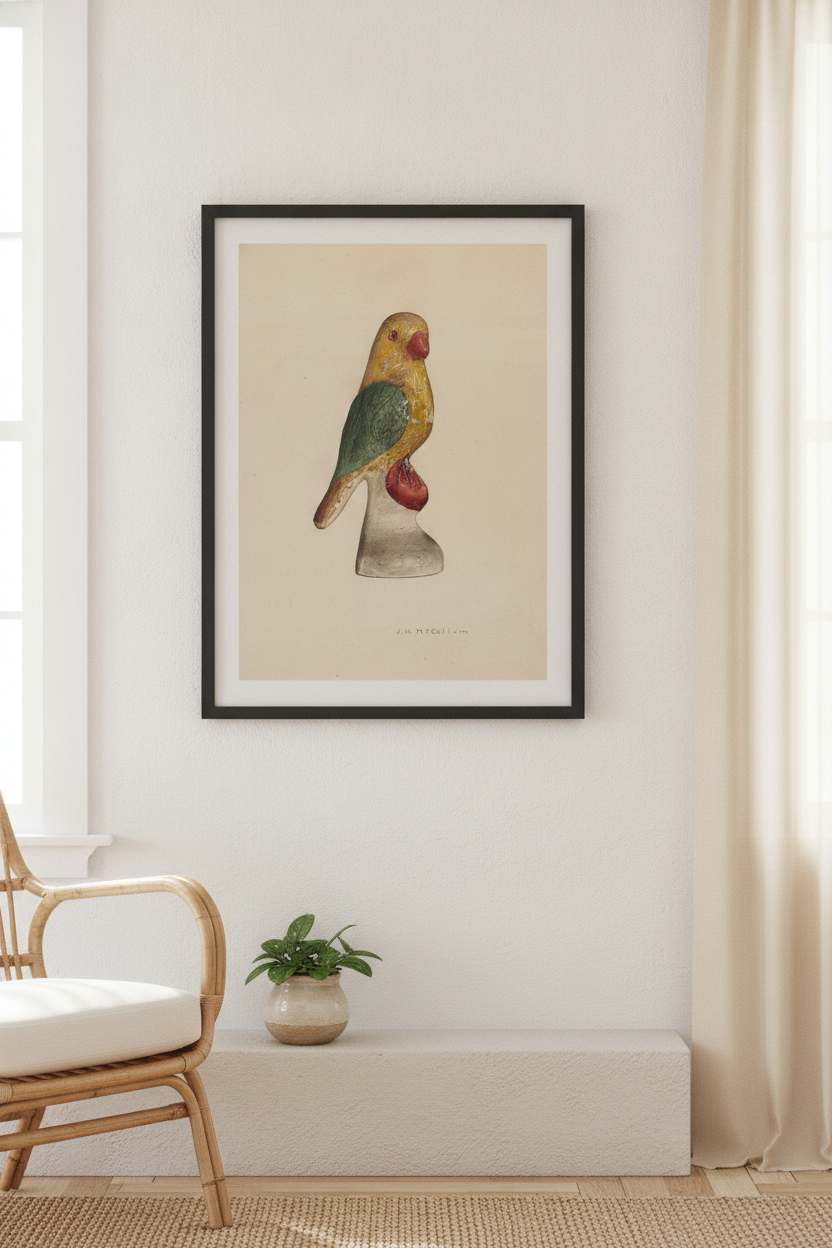
While McCollum is best known for his sweeping, atmospheric vistas, his disciplined eye for form also translated into simpler, intimate subjects. A striking example of this range is his Chalkware Bird (c. 1940), which highlights his ability to capture clean lines and balanced forms in a more folk-art-inspired style. Whether exploring grand natural horizons or quiet, singular subjects, his work maintains an unmistakable sense of poise. You can explore his diverse range of styles in our Full J. Herman McCollum collection.
Bringing the Sublime into the Modern Home
Why do these classical reproductions work so beautifully in contemporary spaces? Modern interiors often need a counterweight to the busyness of daily life. McCollum's landscapes offer a window of pure stillness. His muted, earthy color palettes and soft golden tones blend seamlessly with modern neutral decor, while his deep, layered horizons create an illusion of space, making a room feel larger and more open. Hanging a high-quality print or canvas of his work brings a sense of timeless elegance and natural harmony to any wall.
Frequently asked questions
What is the Classical Landscape Tradition?
It is an artistic style rooted in academic principles that prioritizes harmony, balance, and idealized natural beauty over raw, chaotic realism. Artists use structured perspective and atmospheric light to create serene, poetic vistas.
What color palettes did J. Herman McCollum use?
McCollum favored a sophisticated, muted tonal palette. He used soft gradations of earth tones, gentle pastels, and warm golds to capture the subtle transitions of dawn and dusk.
How do these art prints fit into modern home decor?
Because of their balanced compositions and subtle, natural colors, McCollum's landscapes bring a sense of calm and spaciousness to modern rooms. They pair beautifully with minimalist, transitional, or traditional interior styles.