Why do Lionel Ritchey's classical designs feel so modern?
In short: Lionel Ritchey combined rigorous classical draftsmanship with an understated palette, transforming simple subjects into enduring studies of grace and symmetry.
The Quiet Majesty of Classical Order
In a world often dominated by loud, chaotic imagery, the art of Lionel Ritchey offers a breath of cool, structured air. Rooted deeply in the rigorous traditions of classical draftsmanship, Ritchey’s work epitomizes a lifelong pursuit of ideal beauty, symmetry, and formal order. But who was the hand behind these serene compositions, and why does his work continue to captivate us today?
Working in the mid-20th century, Ritchey became known for his contributions to documenting historic American design. Yet, his approach went far beyond mere illustration. Drawing inspiration from the grand academic style, his compositions prioritize structural clarity and a harmonious balance of light and shadow. He looked at historical crafts and saw the timeless aesthetic of the classical revival, translating humble objects into monumental statements of form.
A Style Defined by Disciplined Restraint
When you look at a Ritchey print, the first thing you notice is the profound sense of calm. This is no accident. The artist’s hand is defined by a disciplined restraint, where fluid contours meet carefully modulated tones. Rather than overwhelming the viewer with vibrant, saturated colors, Ritchey chose a deliberately understated palette. This restraint allows the purity of line and form to command your quiet contemplation.
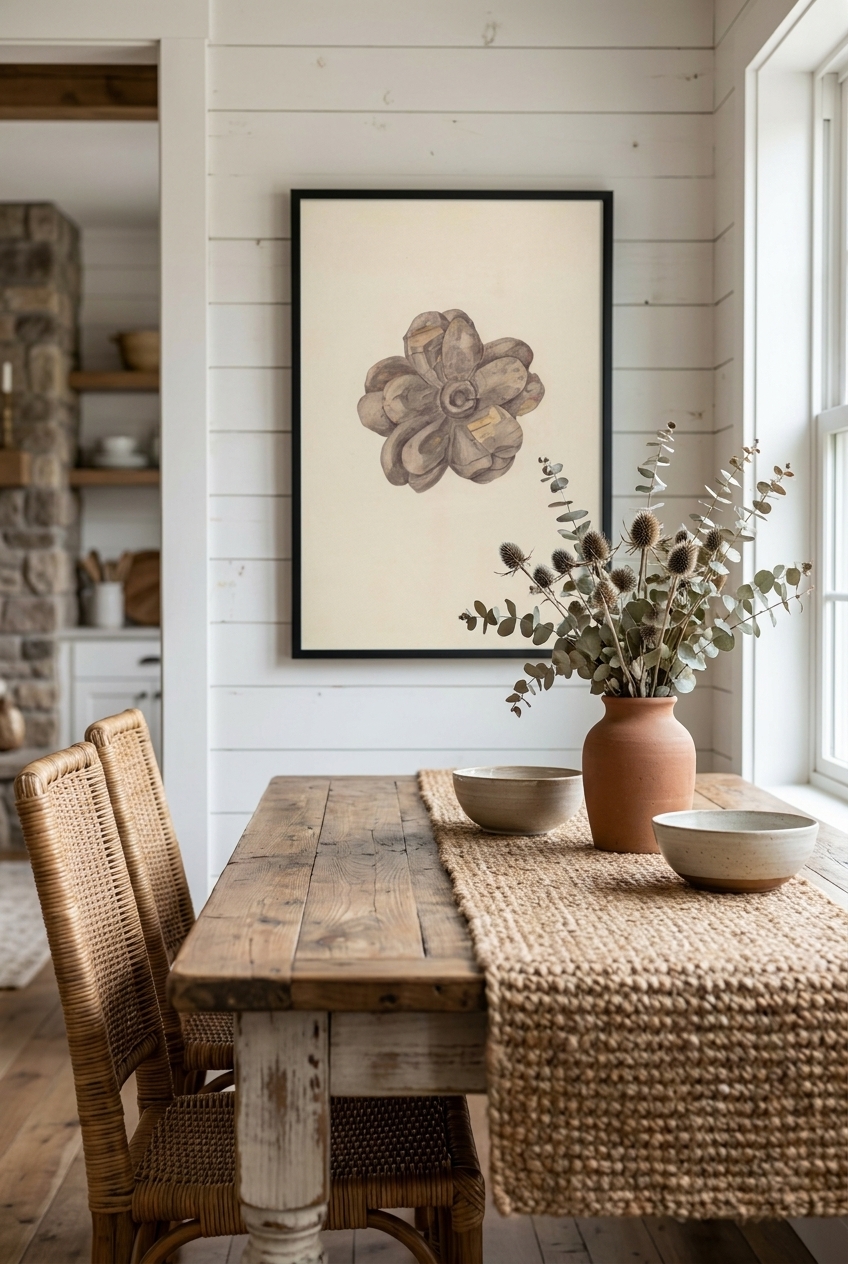
Every subject Ritchey tackled is rendered with a sculptural permanence. He had a rare ability to transform fleeting, delicate moments into enduring studies of grace and proportion. A perfect example of this is his famous Wood Carving - Flower (c. 1939). In this piece, a simple floral motif carved in wood is elevated into a masterclass of symmetry and depth, where every petal feels heavy, real, and eternal.
How to Live with Ritchey’s Art Today
Because Ritchey’s work focuses so heavily on balance, line, and neutral tones, it transitions effortlessly into contemporary interiors. Whether you are decorating a minimalist urban loft or a warm, transitional living room, these pieces bring a grounding element to a space. They do not shout for attention; instead, they invite you to slow down and look closer.
A high-quality canvas or framed print of Ritchey's work acts as an anchor on a gallery wall. The earthy, muted tones pair beautifully with natural wood, linen, and stone, while the clean lines complement modern furniture. To explore his full range of balanced, sculptural studies, you can browse the Full Lionel Ritchey collection and find the perfect piece of quiet classical beauty for your home.
Frequently asked questions
What artistic movement does Lionel Ritchey's work belong to?
Lionel Ritchey’s style is deeply rooted in the Classical Revival and academic draftsmanship, though his mid-20th-century work for projects like the Index of American Design bridges the gap between historic preservation and clean modernism.
What makes his depiction of everyday objects so unique?
Ritchey treated everyday historical crafts with the same reverence and technical precision as classical sculptures. By focusing on structural clarity, light, and shadow, he gave simple objects a sense of monumental weight and permanence.
How should I frame a Lionel Ritchey print for my home?
Because of his understated color palette and focus on clean lines, Ritchey's works look exceptional in simple, natural wood frames or thin black metal frames with a generous white mat. This keeps the focus entirely on the purity of his draftsmanship.