Why does Arthur Johnson's classical art feel so peaceful?
In short: Arthur Johnson's art excels in classical symmetry, meticulous draftsmanship, and a serene, diffused light that brings a sense of timeless order to any space.
The Quiet Power of Balance
In a world that often feels loud and chaotic, the art of Arthur Johnson offers a welcome breath of fresh air. Working firmly within the classical tradition, Johnson created works that celebrate order, symmetry, and the quiet beauty of the natural world. But how exactly does he achieve this sense of profound peace?
The answer lies in his restraint. Instead of chasing dramatic, fleeting emotions or chaotic action, Johnson focused on harmony. He believed that true beauty comes from balance. By carefully arranging his subjects and using a soft, diffused light, he created compositions that feel completely still, yet vibrantly alive. His pieces do not demand your attention with loud colors or jarring contrasts; instead, they invite you to step into a calm, contemplative space where everything is exactly where it belongs. This dedication to the classical ideal makes his work feel incredibly stable and comforting.
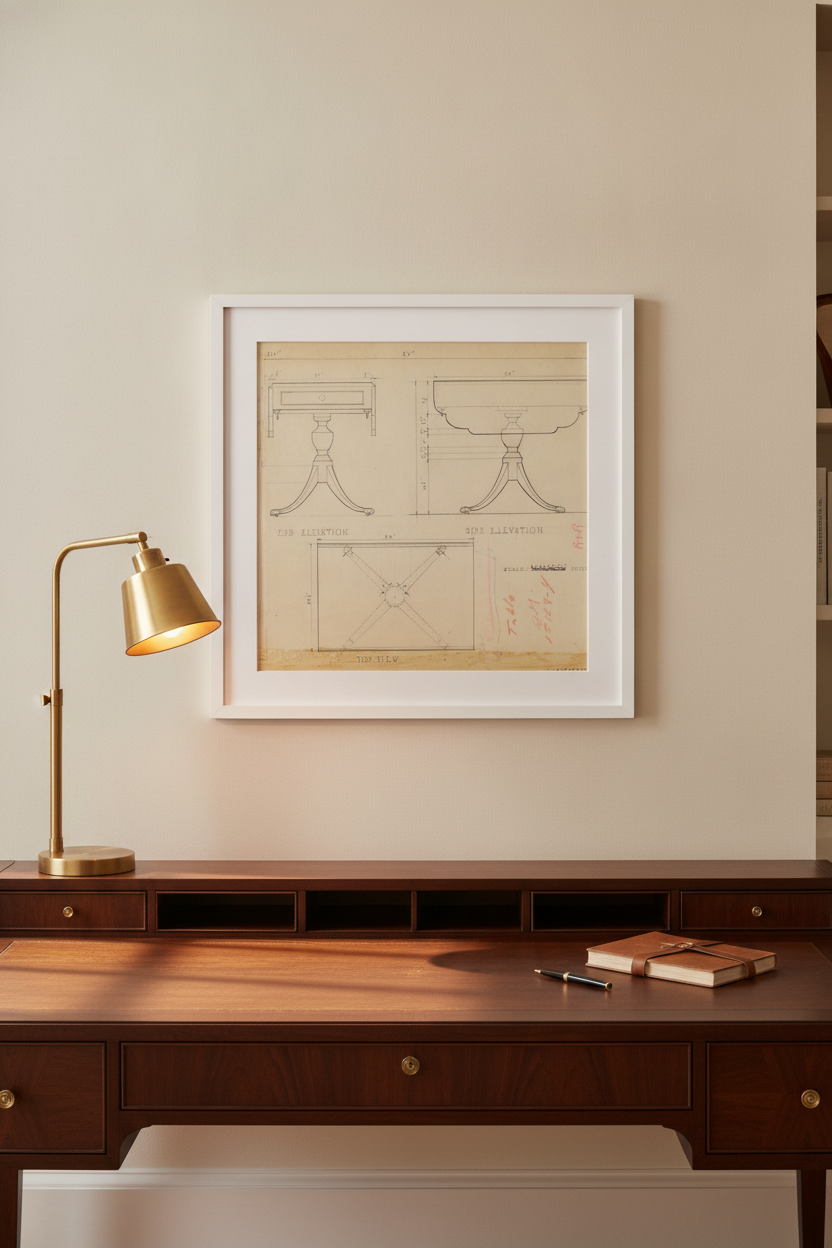
Sculptural Clarity and Meticulous Detail
At the heart of Johnson’s style is an extraordinary commitment to draftsmanship. Every line is deliberate, and every form is rendered with a clean, sculptural clarity. This academic precision means that whether he was depicting a sweeping landscape or a simple everyday object, he treated his subject with immense dignity and respect. He avoided the messy, expressive brushstrokes of his contemporaries, opting instead for a smooth, polished finish that highlights the pure geometry of his subjects.
A perfect example of this meticulous approach can be seen in his rendering of the Drop Leaf, Pedestal Table. Created as part of a historic effort to document American design, this work showcases Johnson's ability to find extraordinary beauty in clean lines and functional form. The soft play of light and shadow on the wood grain turns a simple piece of furniture into a quiet monument of classical design, proving that classical principles can elevate the most humble subjects. It is this ability to capture the essence of an object with absolute clarity that defines his genius.
A Timeless Addition to the Modern Home
Why do these classical compositions work so beautifully in contemporary spaces? Modern interior design often favors clean lines, open spaces, and a sense of minimalism. Johnson's work, with its emphasis on structure and naturalistic light, complements these modern aesthetics perfectly without overwhelming them. His art bridges the gap between the historic and the contemporary, offering a sense of depth and history that purely modern art sometimes lacks.
Whether you choose a framed print for a quiet study or a large canvas as a focal point in a living room, his art acts as a visual anchor. The gentle tones and balanced structures bring a grounding energy to any room. If you are looking to introduce a sense of enduring elegance and academic precision to your walls, exploring the full Arthur Johnson collection is a wonderful place to start. His works are not merely decorative; they are daily invitations to slow down and appreciate the beauty of balance.
Frequently asked questions
What defines Arthur Johnson's artistic style?
Arthur Johnson's style is defined by classical precision, order, and symmetry. He focused on clean draftsmanship, sculptural clarity, and a soft, naturalistic light that brings a sense of calm and timelessness to his subjects.
How does classical art fit into modern home decor?
Classical art fits beautifully into modern homes by providing a sense of balance and grounding. Its clean lines, harmonious compositions, and muted, natural tones complement contemporary minimalism and add a touch of historic sophistication.
What was the purpose behind works like the Drop Leaf, Pedestal Table?
This work was part of a meticulous effort to document and preserve classic American design. Johnson used his classical training to render everyday objects with incredible precision, turning functional items into works of fine art.