Why does Bernard Gussow's classical style feel so modern?
In short: Bernard Gussow used academic precision and a restrained palette to turn everyday objects into timeless studies of form, making his art perfect for modern, minimalist spaces.
The Quiet Power of Structure
Bernard Gussow was an artist who looked past the fleeting trends of his era to find something permanent. In a world of loud, fast-changing art movements, Gussow anchored himself in the enduring principles of classical representation. His work does not shout; it whispers with a quiet, structural authority. By stripping away unnecessary ornamentation, he revealed the clean geometries of his subjects, making his classical pieces feel surprisingly modern and minimalist.
Today, art lovers are rediscovering his work for this exact reason. The full Bernard Gussow collection showcases an artist obsessed with balance, form, and the silent dignity of everyday life. Whether depicting the human figure or a simple piece of wooden furniture, Gussow applied a rigorous draftsmanship that elevates the ordinary into the extraordinary.
Finding Geometry in the Everyday
Gussow’s genius lay in his ability to find beauty in what others might overlook. He did not need grand, dramatic historical scenes to capture our attention. Instead, he turned his eye toward the domestic world, finding deep satisfaction in the subtle geometries of the natural and man-made environment. During his career, he contributed to projects documenting historic American design, which allowed his precise style to shine.
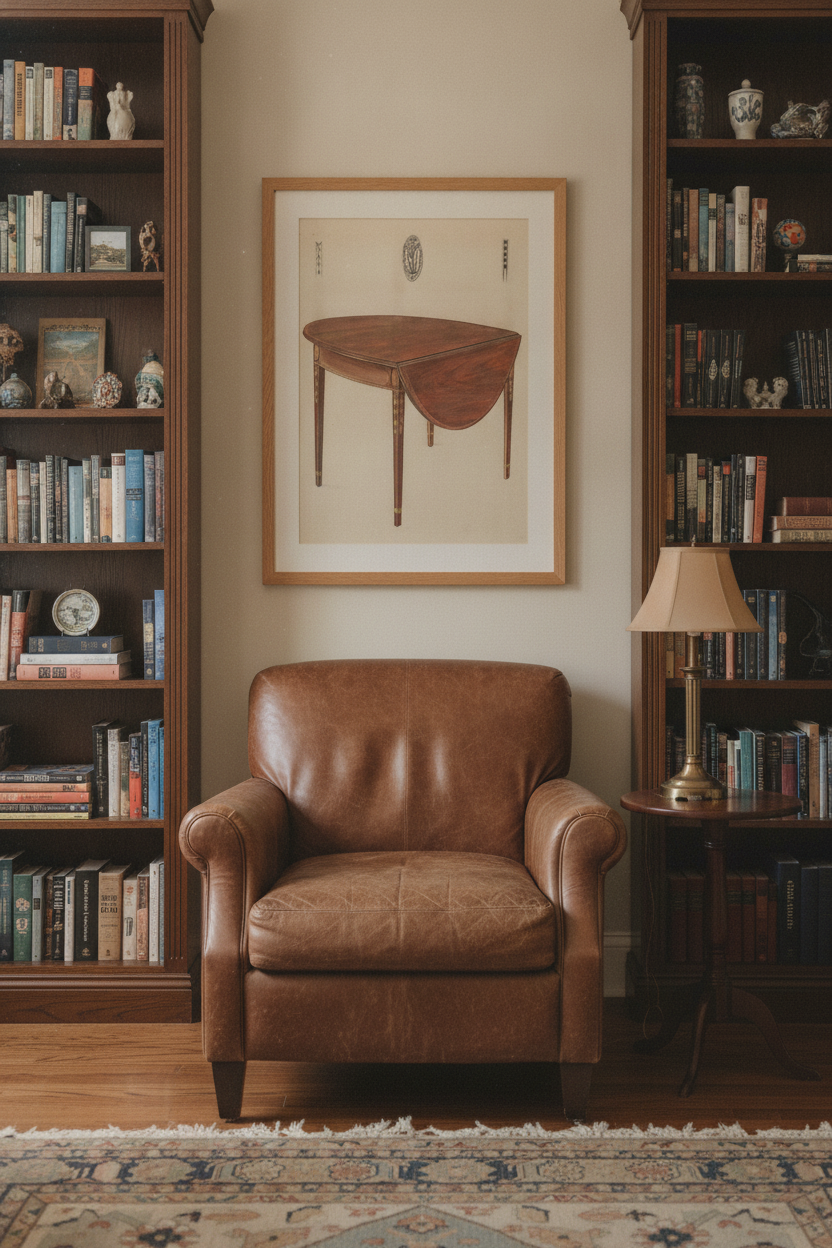
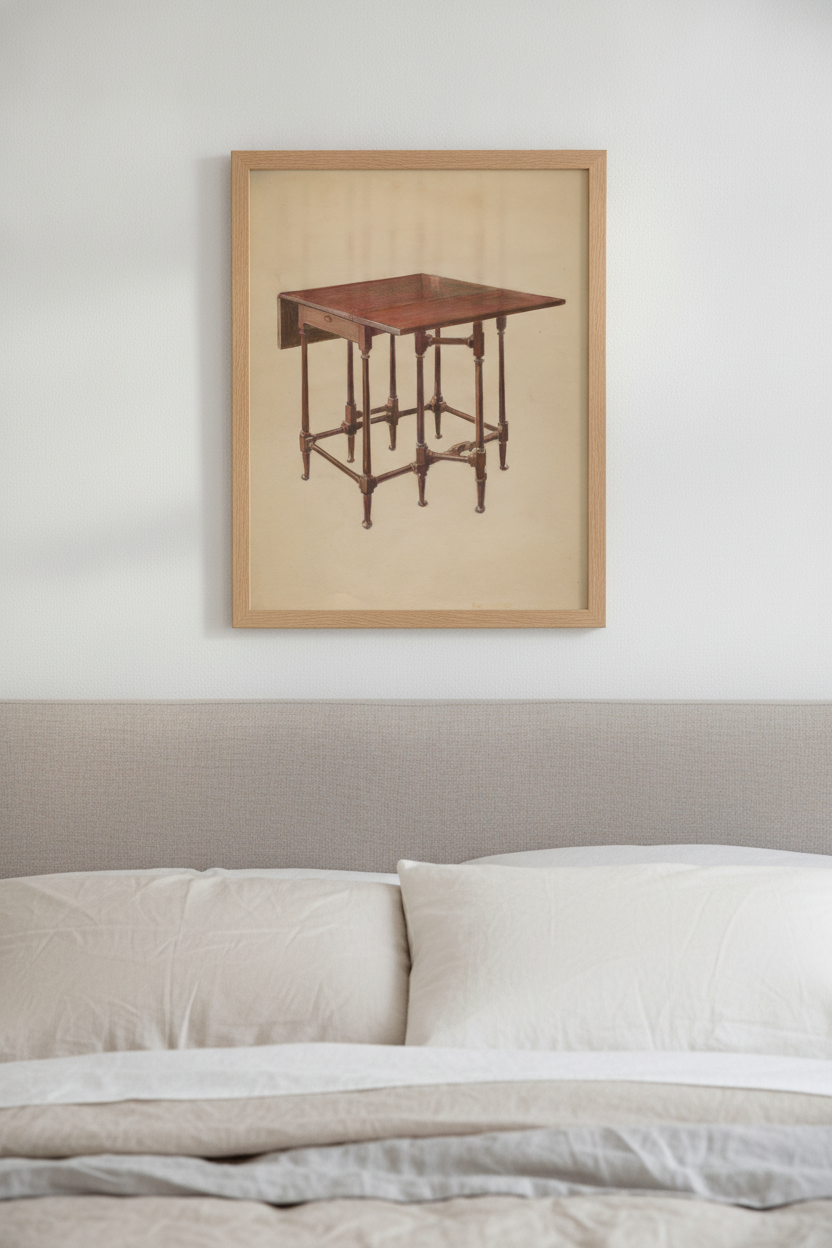
His paintings of historic furniture are masterclasses in balance and form. When you look at his depiction of a Drop-leaf Table from 1936, you are not just looking at wood and hinges; you are looking at a careful study of light, shadow, and weight. He treated these humble objects with the same academic precision and reverence that classical masters reserved for grand portraits.
The Art of Restraint
To achieve this level of calm, Gussow relied on a highly measured application of line and tone. Nothing in his compositions is accidental. His technique prioritizes structural clarity over fleeting decorative flourishes, ensuring that every line has a purpose. His palette is intentionally restrained, favoring earthy, muted tones that allow the physical presence of the object to take center stage.
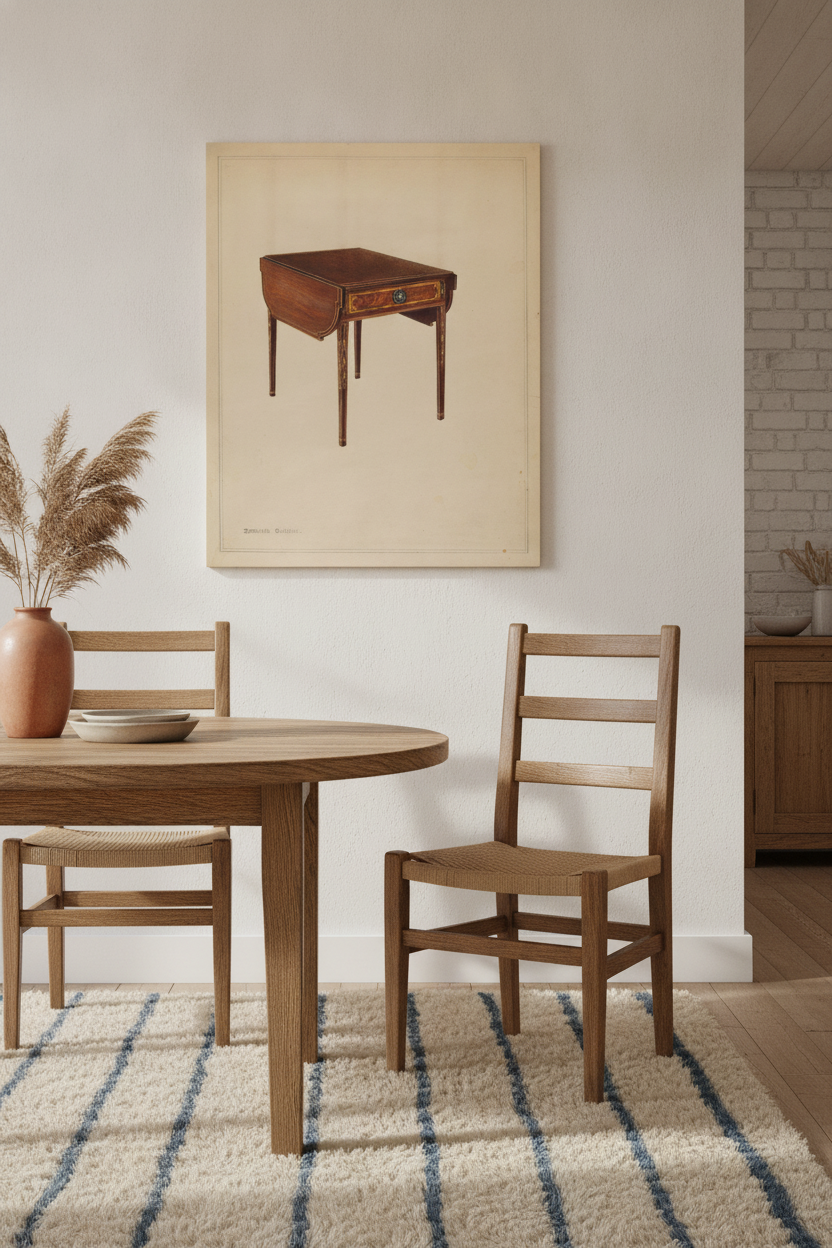
In his watercolor Pembroke Table (Drop Leaf), we see this delicate balance in action. The soft washes of color define the table’s shape without overwhelming it, creating a harmonious spatial relationship that feels incredibly soothing to look at. Another variation, his Table (Drop-leaf) from around 1936, showcases how he could return to the same subject and find new geometric harmonies each time, proving that true art lies in the depth of observation rather than the novelty of the subject.
Why Gussow Belongs on Your Wall
Because Gussow’s work is so deeply rooted in structure and balance, it makes for exceptionally versatile home decor. In a modern home, where clean lines, neutral tones, and uncluttered spaces are prized, a Gussow print acts as a perfect visual anchor. His art does not compete with your furniture; instead, it complements it, adding a layer of historical depth and quiet sophistication.
Whether styled as a framed print in a quiet study, a canvas in a dining room, or a focal piece in a minimalist living room, Gussow’s work brings a sense of order and contemplative quiet to a room. It is art that invites you to slow down, breathe, and appreciate the subtle, enduring beauty of form.
Frequently asked questions
What art movement is Bernard Gussow associated with?
Bernard Gussow is closely associated with Classical Realism. His work is defined by rigorous draftsmanship, academic precision, and a focus on harmonious composition, drawing on centuries-old artistic traditions to capture the quiet dignity of his subjects.
Why did Gussow paint so many everyday objects like tables?
Gussow participated in projects like the Index of American Design, a Depression-era initiative aimed at documenting historic American material culture. His precise, structural style was perfectly suited to capturing the clean lines and craftsmanship of early American furniture.
How do Gussow's prints fit into modern home decor?
Gussow's prints are highly versatile due to their restrained color palettes and strong geometric compositions. They bring a sense of calm, structure, and understated elegance to modern, minimalist, or traditional spaces alike.
What mediums did Bernard Gussow typically use?
Gussow worked across various mediums, including watercolor, oil painting, and drawing media. His technique always emphasized a deliberate, measured application of line and tone to achieve structural clarity.