Why does Charlotte Angus's quiet art feel so modern?
In short: Charlotte Angus used classical principles of symmetry, restraint, and precise draftsmanship to turn everyday historical designs into quiet, enduring works of art that bring a sense of calm balance to modern spaces.
Who was Charlotte Angus and why does her work endure?
In a world that often values loud, chaotic self-expression, the quiet art of Charlotte Angus offers a refreshing breath of stillness. Working during the mid-20th century, Angus became a key figure in documenting the soul of American craft. Yet, her work goes far beyond mere documentation; she transformed historical objects into studies of timeless permanence.
Angus approached her subjects with a deeply classical sensibility. By applying the foundational principles of order, symmetry, and quiet observation to everyday historical designs, she elevated domestic crafts into high art. Today, her pieces resonate because they strip away the noise of modern life, leaving us with the comforting, intrinsic beauty of structure and light. She answers our modern craving for calm by showing us how to find extraordinary grace in the most ordinary things.
The classical principles behind her style
At first glance, Angus’s work feels incredibly clean, almost minimalist. But look closer, and you will see the hand of an artist obsessed with classical harmony. Her compositions are anchored by a sophisticated, muted palette that relies on soft earth tones, gentle creams, and quiet blues. This restraint allows the viewer to focus entirely on the relationship between the subject and the space it occupies, creating a sense of quiet contemplation.
Her draftsmanship is remarkably precise. Whether she was rendering the intricate geometry of a hand-stitched quilt or the simple curves of a ceramic vessel, Angus treated every line with reverence. There are no flashy brushstrokes or dramatic flourishes here. Instead, she used a quiet, steady hand to reveal the underlying geometry of her subjects, giving them a sense of permanent, architectural grace that feels both ancient and incredibly fresh.
Finding extraordinary beauty in the ordinary
Angus’s genius lay in her ability to find classical dignity in the ordinary. During her time with the Index of American Design, she documented historical American textiles and decorative arts. In her hands, a functional household item became a profound study in balance and form, capturing the essence of historical form with a reverent touch.
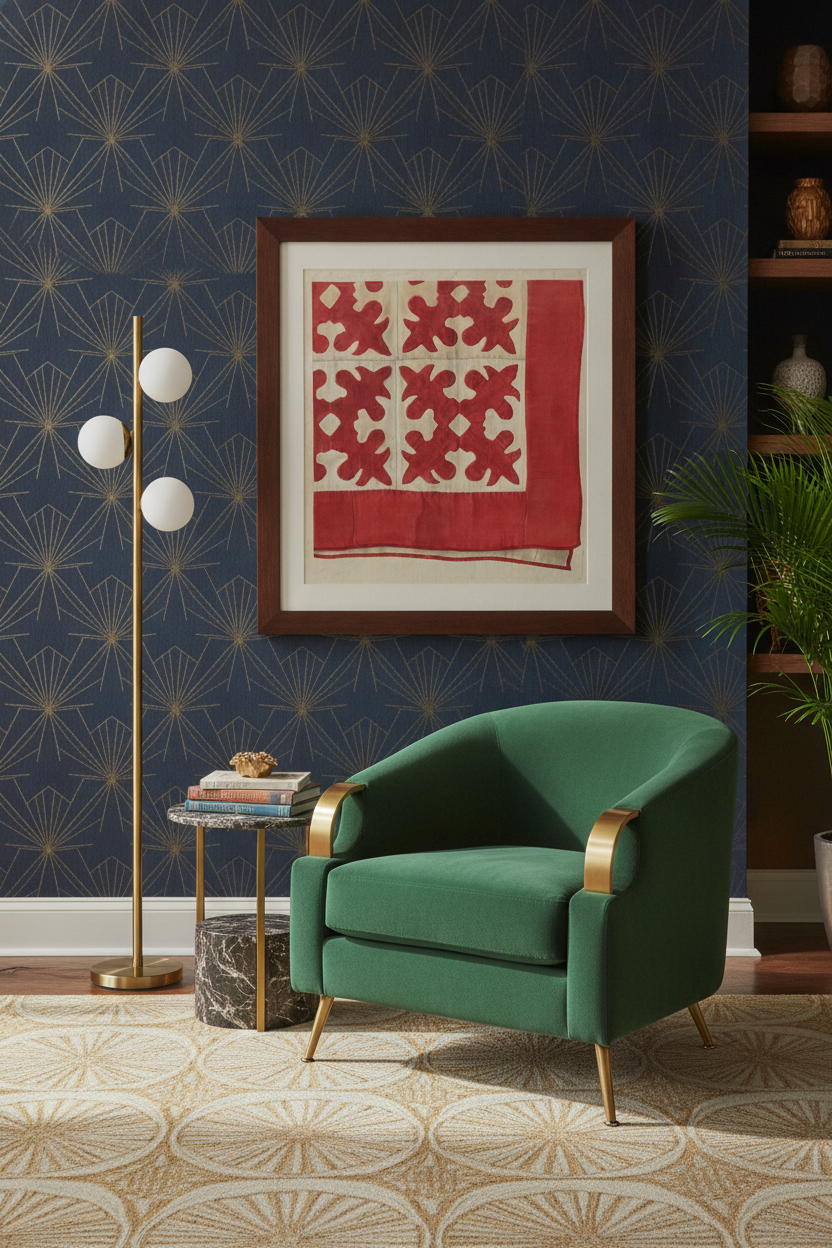
A perfect example of this is her rendering of the Oak Leaf Pattern Quilt. Rather than treating the quilt as a simple piece of folk craft, Angus captures the rhythmic symmetry of the leaves with the precision of a classical frieze. The muted green and cream tones feel incredibly grounded, turning a piece of domestic history into a timeless graphic masterpiece. You can explore her unique approach to these historical forms in the full Charlotte Angus collection, where each piece carries an archival quality that honors the past.
Why her art belongs in the modern home
Modern interiors often struggle to find the right balance between warmth and minimalism. This is exactly why Charlotte Angus’s work translates so beautifully onto fine-art prints and canvases today. Her pieces offer the clean lines and geometric order that modern design loves, but they are wrapped in a soft, organic texture that keeps them from feeling cold or sterile.
Hanging one of her works in a living room, study, or bedroom acts as a visual anchor. The symmetry naturally draws the eye and calms the mind, while the historical depth of the subject matter adds a layer of quiet storytelling to your walls. It is art that does not demand your attention, but quietly rewards it every time you look, making it a perfect fit for a home designed around comfort and thoughtful design.
Frequently asked questions
What artistic movement is Charlotte Angus associated with?
Charlotte Angus is best known for her work with the Index of American Design, a New Deal WPA project during the late 1930s and early 1940s. The project aimed to create a visual archive of American folk art and material culture, which Angus executed with a highly refined, classical precision.
What makes her style "classical" if she painted everyday crafts?
Her style is classical because of her adherence to principles of symmetry, balance, and restraint. Rather than painting with loose, expressive strokes, she used precise draftsmanship, a muted and sophisticated color palette, and a careful arrangement of space to give humble everyday objects a sense of timeless dignity and order.
How do Charlotte Angus prints look in contemporary interiors?
They look exceptionally elegant. Because her work combines clean geometric structures with warm, historic subjects, her prints bridge the gap between modern minimalism and traditional warmth. They work particularly well in spaces designed for relaxation, like bedrooms, reading nooks, or quiet dining areas.