Why does Classical Academic art feel so timeless?
In short: Classical Academicism is defined by rigorous draftsmanship, invisible brushwork, and perfect balance. Born in European academies, its timeless principles of order and harmony make it a grounding addition to modern home decor.
The Quest for Perfect Order
At its heart, Classical Academicism is an art of discipline, rules, and quiet majesty. Born in the prestigious art academies of Europe—most notably the French Académie des Beaux-Arts—during the seventeenth through nineteenth centuries, this movement sought to establish a universal standard of beauty. Instead of chasing fleeting trends or raw, unfiltered emotion, academic artists believed that great art could be studied, perfected, and taught through rigorous, systematic training.
Why does this style still captivate us today? The answer lies in its search for perfect order. In a chaotic world, Classical Academic art offers a visual sanctuary. It relies on mathematical balance, idealized forms, and a deep respect for the masters of the High Renaissance. When you look at an academic piece, you are looking at a work where nothing is left to chance—every shadow, curve, and highlight is placed with deliberate, thoughtful intent. It is this unwavering commitment to structure that gives the style its timeless, calming quality.
The Hallmarks of Academic Precision
To recognize Classical Academicism, you only need to look for a few distinct visual signatures. First and foremost is the absolute mastery of draftsmanship. Before an academic painter ever picked up a color palette, they spent years drawing from plaster casts of classical sculptures and live models. This rigorous practice results in incredibly crisp, defined edges and a sense of solid, three-dimensional weight in every object depicted.
Other key hallmarks of the style include:
- Invisible brushwork: The surface of the canvas is often smooth and highly finished, hiding the hand of the artist to let the subject shine with photographic clarity.
- Chiaroscuro: A dramatic contrast between light and dark that guides your eye directly to the focal point and creates a theatrical sense of depth.
- Harmonious color: Palettes are carefully balanced and restrained, avoiding jarring or clashing tones in favor of natural, rich, and cohesive hues.
Historically, the academies enforced a strict hierarchy of genres, placing grand historical and mythological scenes at the top and still-life painting near the bottom. However, as the centuries progressed, the incredible technical discipline of the academies began to merge with everyday subjects. By the early twentieth century, artists were using these same exacting standards to capture the quiet, dignified beauty of domestic life and simple botanical arrangements.
Masters of the Still Life: Mace and Boehmer
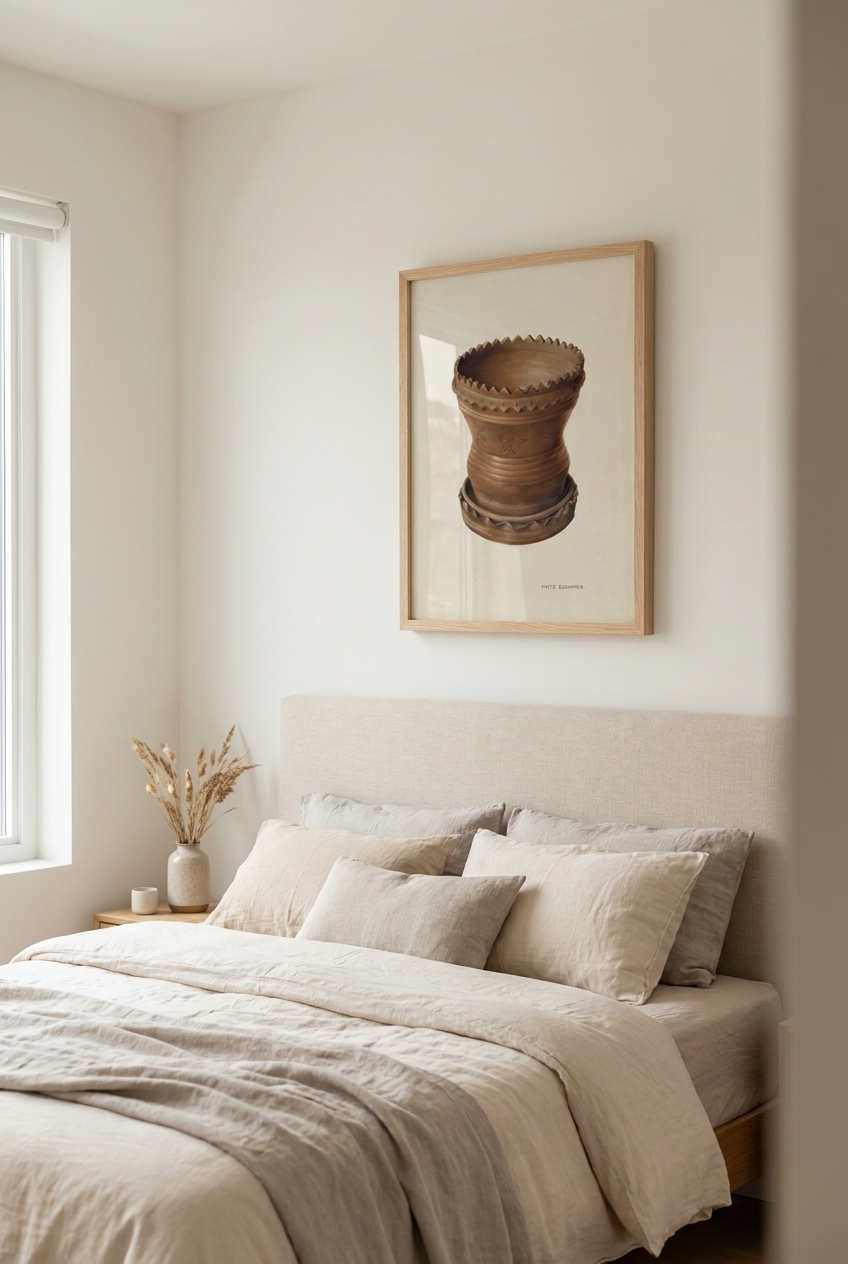
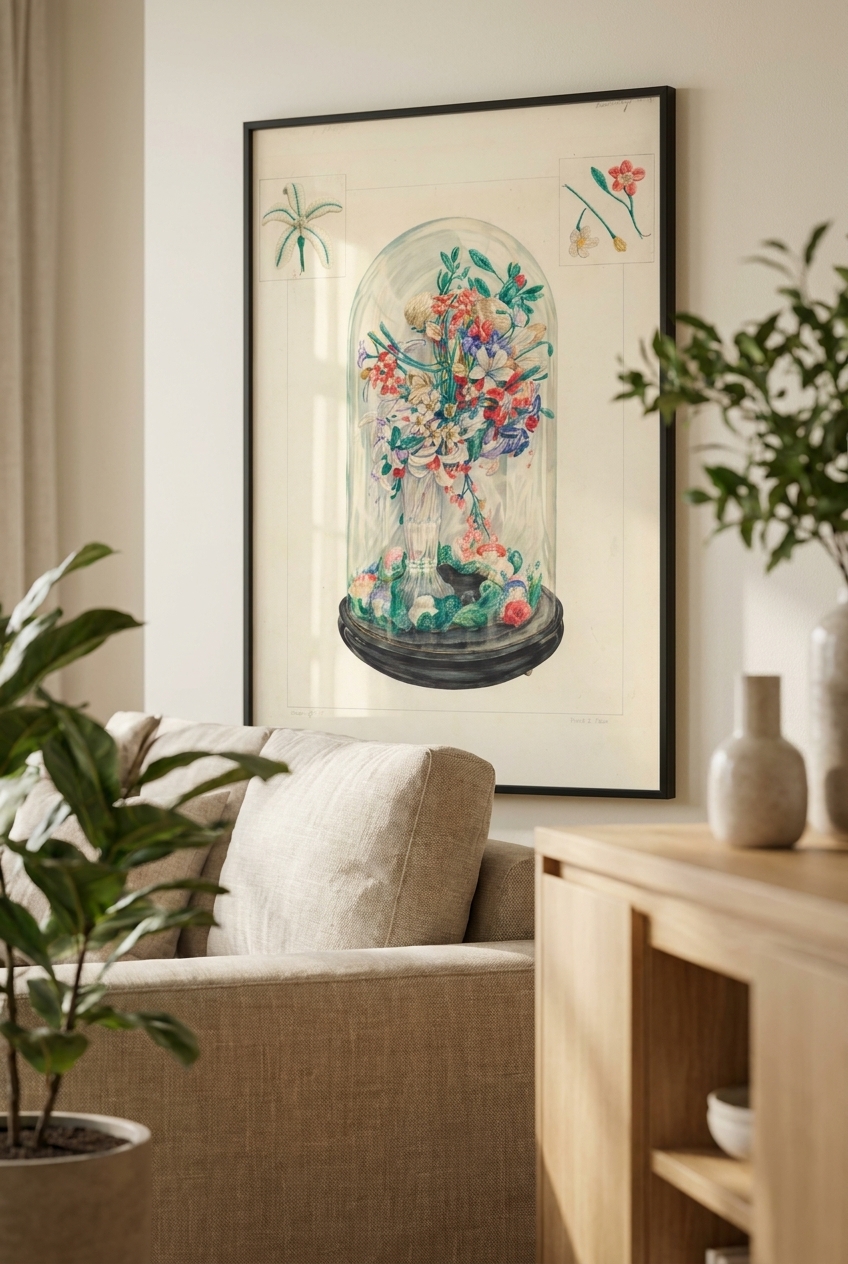
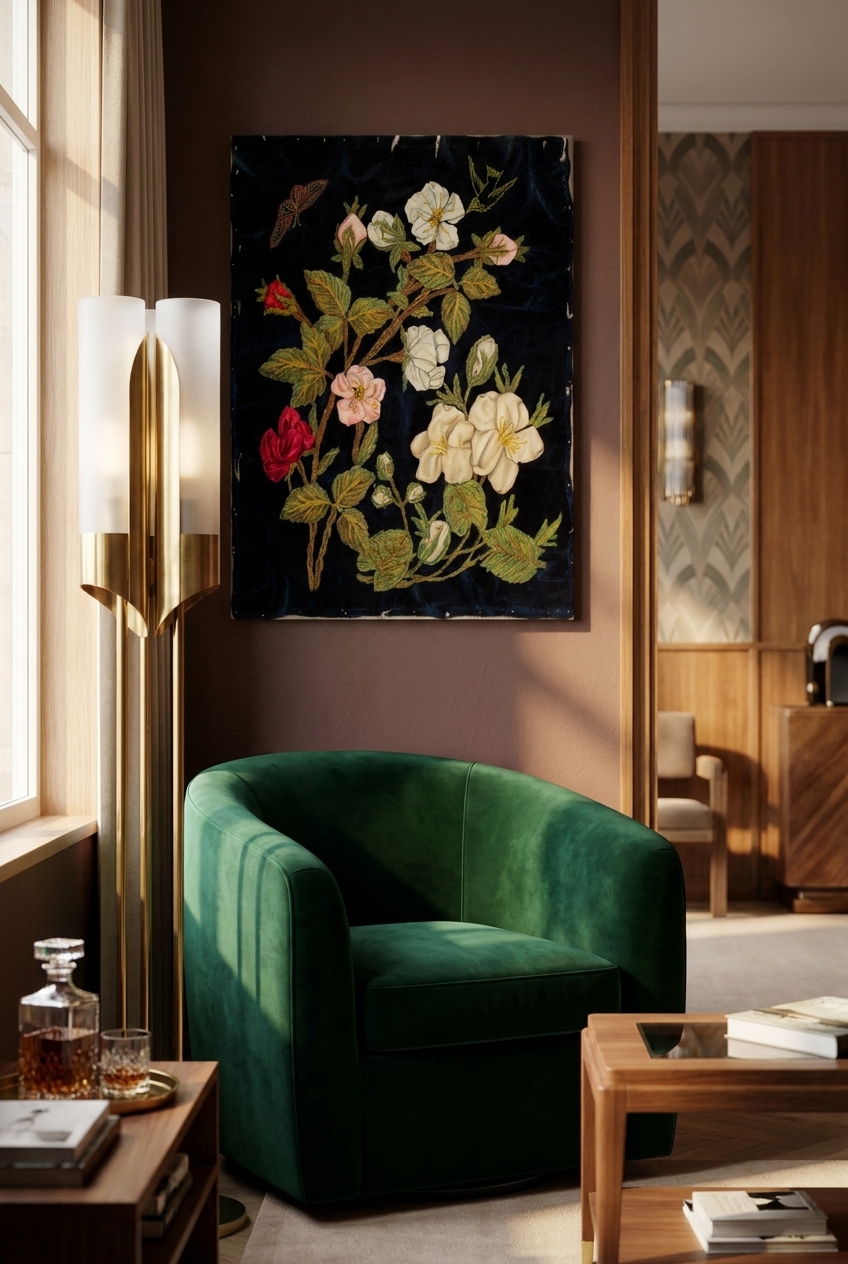
Some of the most enchanting modern examples of this disciplined approach can be found in the mid-twentieth-century still-life works of American artists like Frank J. Mace and Fritz Boehmer. These artists applied the uncompromising precision of the academic tradition to simple, elegant botanical subjects, creating works that feel both historic and surprisingly fresh.
Consider Frank J. Mace's striking composition, Handmade Flowers on Black. By placing delicate, stylized blossoms against a deep, velvety dark background, Mace utilizes classic chiaroscuro to make the colors sing. The level of detail is so sharp that you can almost feel the texture of the petals, demonstrating how academic precision can turn a simple decorative arrangement into a powerful visual statement.
Similarly, Fritz Boehmer’s Flower Pot demonstrates the academic love for geometric harmony and balanced light. The soft, raking light reveals the subtle textures of the clay pot and the gentle curves of the leaves, turning a humble household object into a monument of quiet dignity. Mace explores this meticulous preservation of detail further in Wool Flowers Under Glass, where the glass dome acts as a metaphor for the academic urge to capture, protect, and immortalize fleeting beauty under perfect conditions.
Styling Academic Prints in a Modern Home
Because of their structured compositions and balanced palettes, Classical Academic prints make magnificent additions to contemporary homes. They act as visual anchors, bringing a sense of history, calm, and permanence to any room they inhabit.
If your home features clean, minimalist lines or mid-century modern furniture, a highly detailed academic still life can provide a warm, organic contrast without disrupting your home's sense of order. For rooms with darker walls or rich wood tones, pieces with deep, dramatic backgrounds will create a cozy, library-like atmosphere. When framing these prints, opt for clean-lined wooden frames to keep the focus entirely on the exquisite draftsmanship of the artwork itself, allowing the timeless craftsmanship to speak for itself.
Frequently asked questions
What is the difference between Classicism and Academicism?
Classicism refers broadly to art inspired by the harmony, symmetry, and proportion of ancient Greek and Roman antiquity. Academicism is the formal system of art education and aesthetic standards upheld by European academies, which adopted classical rules as the essential foundation for all artistic training.
Why do many Classical Academic paintings have dark backgrounds?
Academic artists frequently used dark, simplified backgrounds to employ chiaroscuro—the dramatic contrast between light and dark. By minimizing background distractions, they could use a focused light source to make the main subject pop, creating an intense sense of three-dimensional depth and realism.
How do I choose the right frame for a Classical Academic print?
To honor the historic, timeless feel of the artwork, classic dark wood frames or antiqued gold frames work beautifully. If you prefer a more contemporary aesthetic, a simple, thin black frame will highlight the clean lines and meticulous draftsmanship of the piece without overwhelming it.