Why does classical folk art feel so modern?
In short: Classical folk art strips away academic rules to deliver pure, heartfelt expression. Its flat perspectives, vibrant colors, and honest storytelling make it a timeless choice for modern homes.
What is Classical Folk Art?
Folk art is often defined by what it lacks: formal academic training, perspective, and anatomical perfection. But look closer, and you will find that these omissions are precisely what give classical folk art its extraordinary power. Originating from everyday craftspeople, sign painters, and self-taught visionaries, this movement captures the heart of community life, rural landscapes, and domestic beauty. It is an art style that values direct communication over complex theory, offering a window into the lived experiences of ordinary people from the eighteenth through the mid-twentieth centuries. By stripping away the rigid rules of the European academies, folk artists created a visual language that is remarkably honest, deeply comforting, and surprisingly modern.
The Visual Hallmarks of the Self-Taught Eye
To appreciate classical folk art, one must unlearn the traditional rules of fine art. Where a Renaissance master used atmospheric perspective to create depth, the folk artist laid elements flat. This flat perspective is not a mistake; it is a stylistic choice that emphasizes pattern, shape, and narrative. You will often see figures and objects rendered with bold outlines, filled with saturated, unblended colors. Scale is frequently determined by importance rather than physical reality—a beloved family home might loom larger than the surrounding hills, or a prized flower might dwarf the table it sits upon. This decorative sensibility turns everyday scenes into mesmerizing tapestries of form and color, making them endlessly engaging to look at.
Key Voices: From Pennsylvania Dutch to Pioneer Life
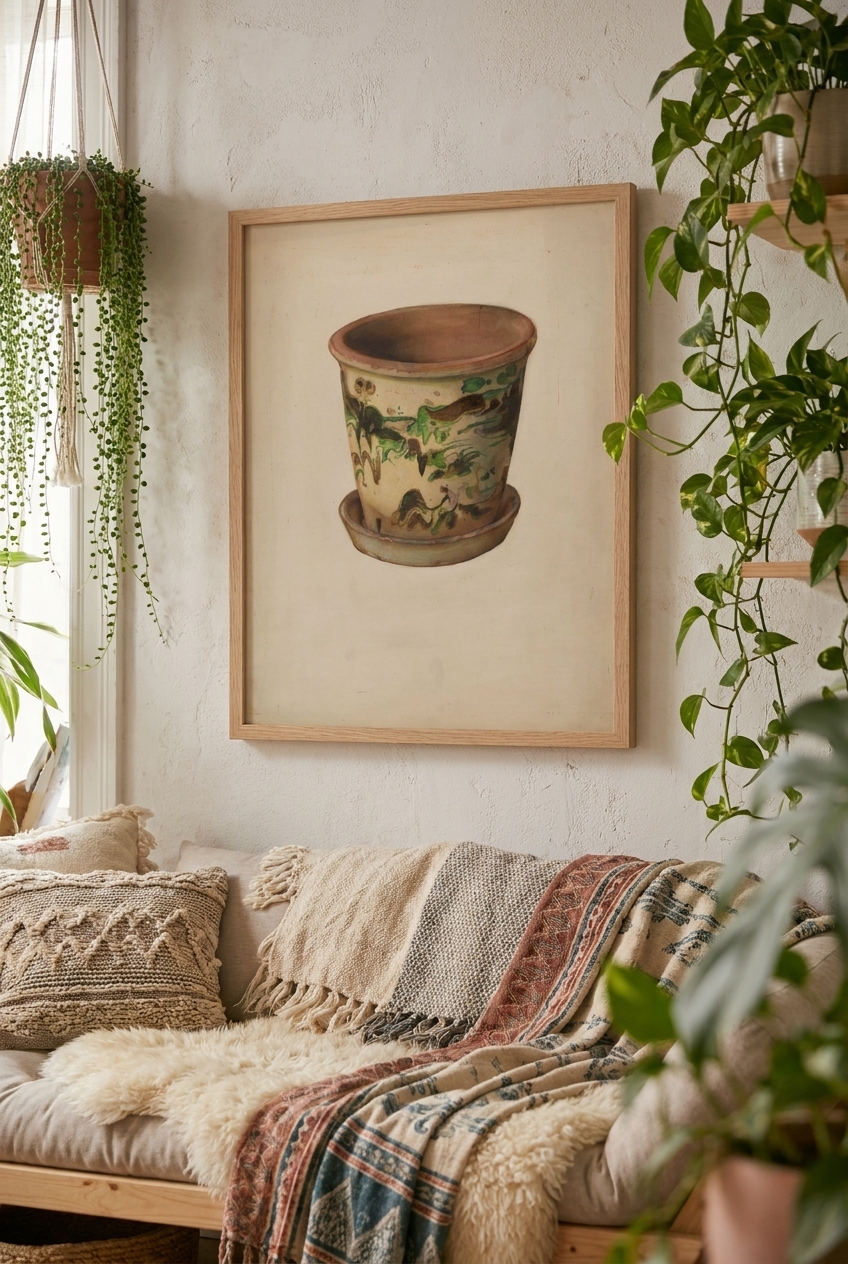
Among the celebrated figures of this tradition is David Ellinger, a twentieth-century artist who dedicated his life to preserving and reviving the traditional motifs of the Pennsylvania Dutch. His work is celebrated for its delicate balance of rustic simplicity and intricate design. A perfect example of his mastery is the charming watercolor Flower Pot with Saucer, which showcases his ability to turn a simple domestic subject into a vibrant celebration of pattern and symmetry.
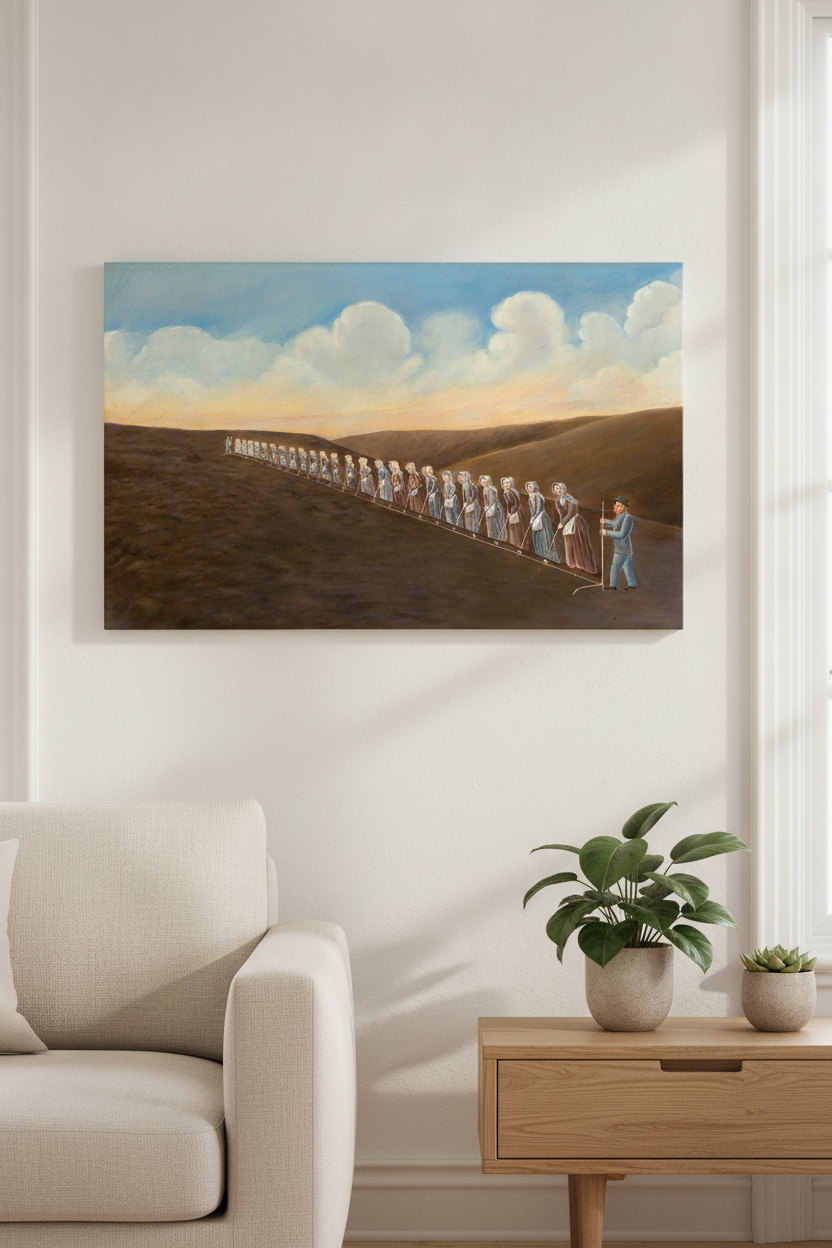
Another vital thread in this tapestry is the documentation of early American pioneer life. Olof Krans, a Swedish-born folk artist who settled in the Bishop Hill colony in Illinois, painted vivid scenes of communal farming. His legacy was beautifully preserved during the Great Depression by artists like Stanley Mazur, whose rendering of Planting Corn captures the rhythmic, cooperative labor of the early settlers with striking graphic clarity.
Why Folk Art Belongs in the Modern Home
There is a common misconception that folk art only belongs in rustic cabins or country cottages. In reality, the bold geometry and flat planes of classical folk art make it a spectacular fit for contemporary interiors. In a minimalist room, a folk art print acts as an anchor of warmth and character, breaking up clean lines with organic shapes and historical soul.
When choosing a piece for your home, consider the mood you wish to create. Vibrant, communal scenes bring energy to dining rooms and kitchens, while quiet botanical studies or singular portraits offer a grounding presence in bedrooms and studies. Framing these works in simple, natural wood or clean black frames helps bridge the gap between their historic origins and your modern aesthetic.
Frequently asked questions
What makes art "classical" folk art?
While "folk art" covers a vast range of utilitarian and decorative objects, "classical" folk art generally refers to the two-dimensional paintings, watercolors, and drawings created by self-taught artists from the late 18th to the mid-20th centuries. These works are highly prized for their distinct aesthetic—characterized by flat perspective, bold outlines, and a focus on community and domestic life—which laid the groundwork for modern design.
How does folk art differ from fine art?
Traditional fine art historically relied on formal academic training, emphasizing realistic anatomy, linear perspective, and complex shading. Folk art, created by self-taught individuals, bypasses these rules. Instead of trying to mimic three-dimensional reality, folk artists focus on pattern, storytelling, and emotional resonance, often resulting in flat, highly stylized compositions.
Why did folk art experience a revival in the 1930s?
During the Great Depression, projects like the Federal Art Project and the Index of American Design sought to document and celebrate native American creative traditions. Artists were commissioned to record historical folk art, quilts, and crafts, sparking a widespread public appreciation for the honest, unpretentious beauty of self-taught artists like Olof Krans.
What is the best way to frame a folk art print?
Folk art pairs beautifully with frames that reflect its organic, handcrafted nature. Simple, unadorned wood frames (like oak, maple, or walnut) complement the rustic warmth of the artwork. Alternatively, a thin, matte black frame can highlight the bold outlines and graphic quality of the piece, making it feel perfectly at home in a modern or mid-century interior.