Why does Edward A. Darby's art feel so serene?
In short: Edward A. Darby’s work brings the calm of classical revivalism into the modern home through balanced compositions, delicate light, and a profound sense of restraint.
The Quiet Harmony of Classical Revival
In a world that often feels loud, chaotic, and relentlessly fast, stepping in front of a work associated with Edward A. Darby feels like taking a long, slow breath. But why does his art carry such a profound sense of peace? The answer lies in his devotion to the disciplined traditions of the classical revival—an artistic movement that prioritizes order, balance, and the idealized beauty of the world around us. By looking back to the structured harmony of classical antiquity and the rigorous academic conventions of the nineteenth century, Darby created images that feel completely removed from modern anxiety.
Rather than capturing the wild, unpredictable energy of nature or the messy grit of daily life, Darby’s work filters reality through a lens of absolute harmony. Every element in his compositions is carefully considered, placed with a deliberate sense of proportion that feels instantly soothing to the human eye. For those looking to explore this calming aesthetic and bring a touch of historic grace into their own spaces, the full Edward A. Darby collection offers a beautiful gateway into a world of quiet contemplation and enduring design.
A Masterclass in Soft Light and Restraint
To understand Darby's unique appeal, one must look closely at his handling of light and atmosphere. His paintings and renderings do not rely on harsh contrasts or dramatic, theatrical shadows that startle the viewer. Instead, he employs a soft, refined palette and incredibly precise brushwork to create gentle, seamless tonal transitions. The light in his work seems to glow from within, bathing his subjects in a serene, timeless atmosphere that feels almost dreamlike in its clarity.
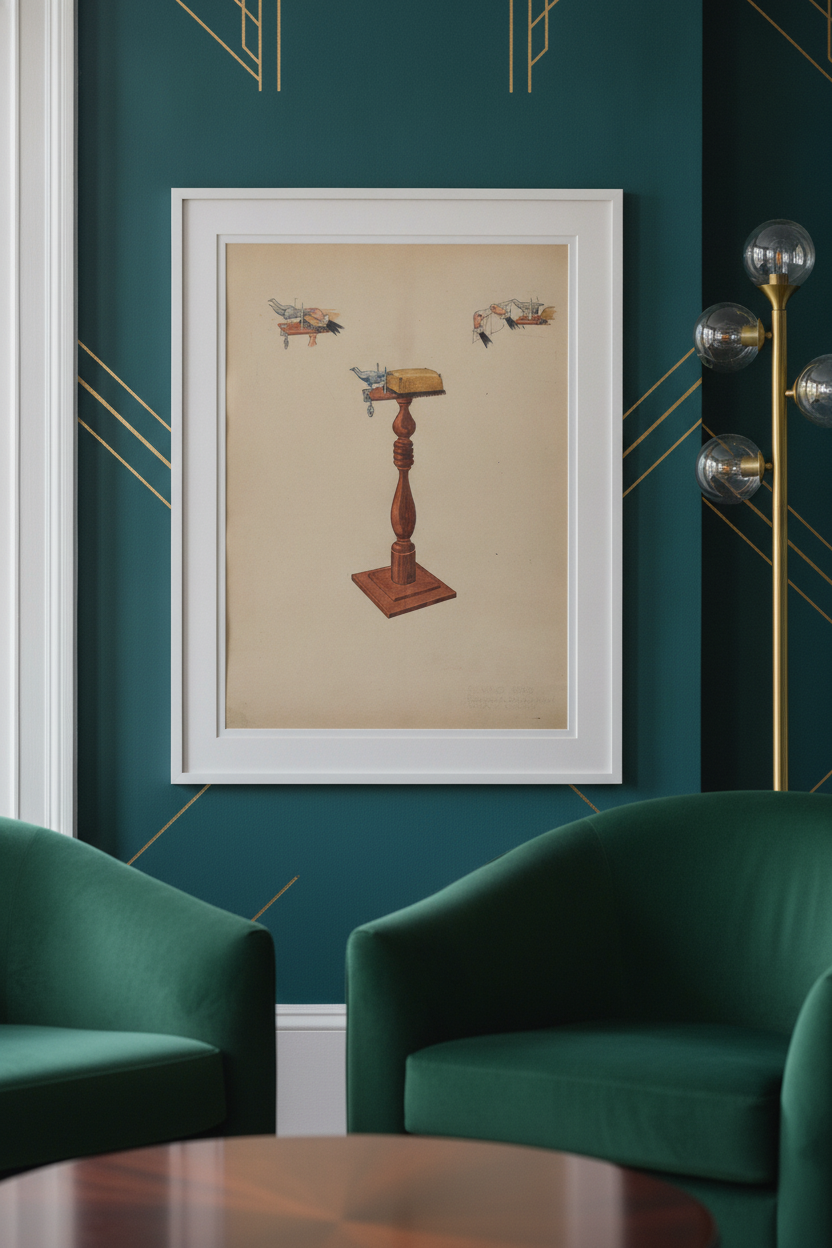
This style is deeply rooted in pastoral classicism, where the natural and material worlds are represented not as wild and untamed, but as structured, poetic, and deeply meditative. Take, for example, his rendering of the "Sewing Bird" (1935/1942). Even in documenting a humble, everyday object, Darby applies a classical discipline. The clean lines, the soft play of light on metal, and the absolute clarity of form elevate a simple historical tool into a quiet study of elegance and restraint. It reminds us that beauty can be found in the most modest corners of life when observed with patience and care.
Why These Works Belong in Modern Living Spaces
There is a unique power in art that doesn't demand your attention with loud colors or jarring subjects, but instead coaxes you into a state of quiet reflection. This is exactly why Darby’s works make such exceptional fine-art prints and canvases for contemporary homes. Modern interior design often strives for clean lines and minimalist calm, yet spaces can sometimes feel sterile without the warmth of human touch. Darby's art bridges this gap perfectly, offering historical depth without visual clutter.
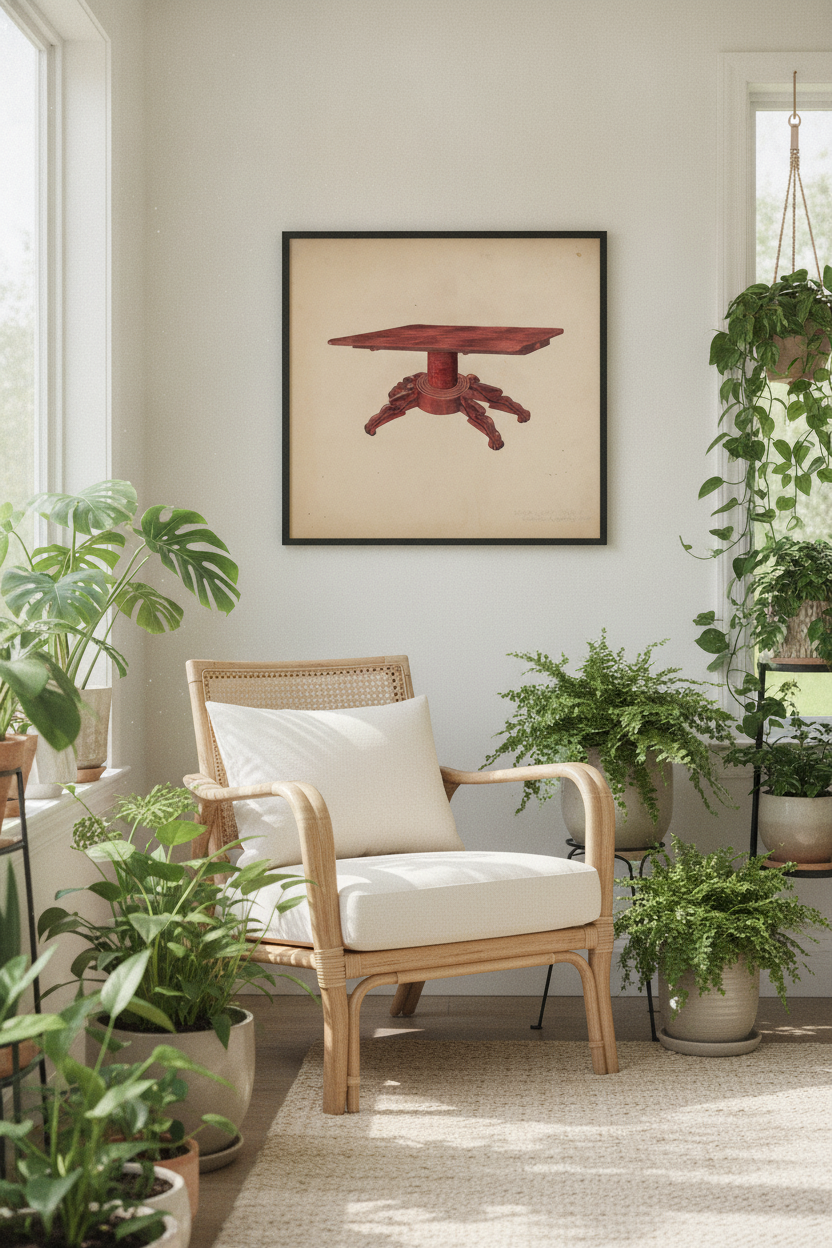
His compositions offer a "visual anchor" for busy rooms, helping to ground a space and establish a peaceful mood. Whether displayed as a large-format canvas in a living room or a framed print in a quiet study, his work introduces a sense of balanced proportion that complements modern architecture. A piece like the "Drop-leaf Table" (c. 1938), with its exquisite attention to wood grain, structure, and form, celebrates the beauty of craftsmanship and order. It is art that does not shout; it whispers, inviting you to slow down, breathe, and appreciate the subtle poetry of the everyday.
Frequently asked questions
What artistic movement is Edward A. Darby associated with?
Darby's work is closely aligned with the classical revival and academic traditions of the nineteenth century, characterized by a focus on order, balance, precise brushwork, and idealized beauty. He is also celebrated for his incredibly detailed renderings of American material culture.
How does Darby's style differ from other landscape or still-life artists?
Unlike artists who emphasize the wild, untamed aspects of nature or dramatic emotional expression, Darby focuses on restraint, harmony, and structural clarity. His palette is soft and refined, creating a meditative, serene atmosphere rather than high drama.
Why do these prints work well in modern home decor?
Their balanced proportions and soft, neutral tonal palettes make them incredibly versatile. They bring a sense of tranquility and classical elegance to modern, minimalist, or traditional spaces without overwhelming the existing decor.