Why Does Edward White's Classical Art Feel So Modern?
In short: Edward White's work captures the serene, balanced essence of academic classicism. His precise draftsmanship and masterful use of light make his prints perfect for clean, modern interiors.
The Search for Perfect Balance
In a world that often feels chaotic and fast-paced, the human eye naturally craves order, symmetry, and calm. This quiet sanctuary is precisely what the works of Edward White offer. Rooted in the classical tradition of the late eighteenth and early nineteenth centuries, White’s art is a masterclass in balance and serene beauty. Rather than chasing fleeting trends, he pursued the enduring ideals of academic classicism, creating images that feel as poised and deliberate today as they did when they were first conceived.
Whether rendering a sweeping landscape or a single, delicate object, White approached his subjects with a profound respect for structure. You can explore this harmonious world yourself in the Full Edward White collection, where each piece serves as a quiet meditation on form and proportion.
Precision, Light, and Restraint
What makes White’s style so distinctive is his exceptional draftsmanship. His compositions are built on a foundation of precise linework and analytical clarity. There is no clutter here, no unnecessary drama. Instead, he relied on a restrained color palette and a delicate interplay of light and shadow to give his subjects weight and presence.
This technique allows forms to emerge gently from soft, atmospheric backgrounds. By focusing on the essential lines of a landscape or an object, White transcended mere documentation. He was not just recording what he saw; he was capturing the very essence of its structure, offering viewers a sense of stability and quiet contemplation.
The Soul of Everyday Objects
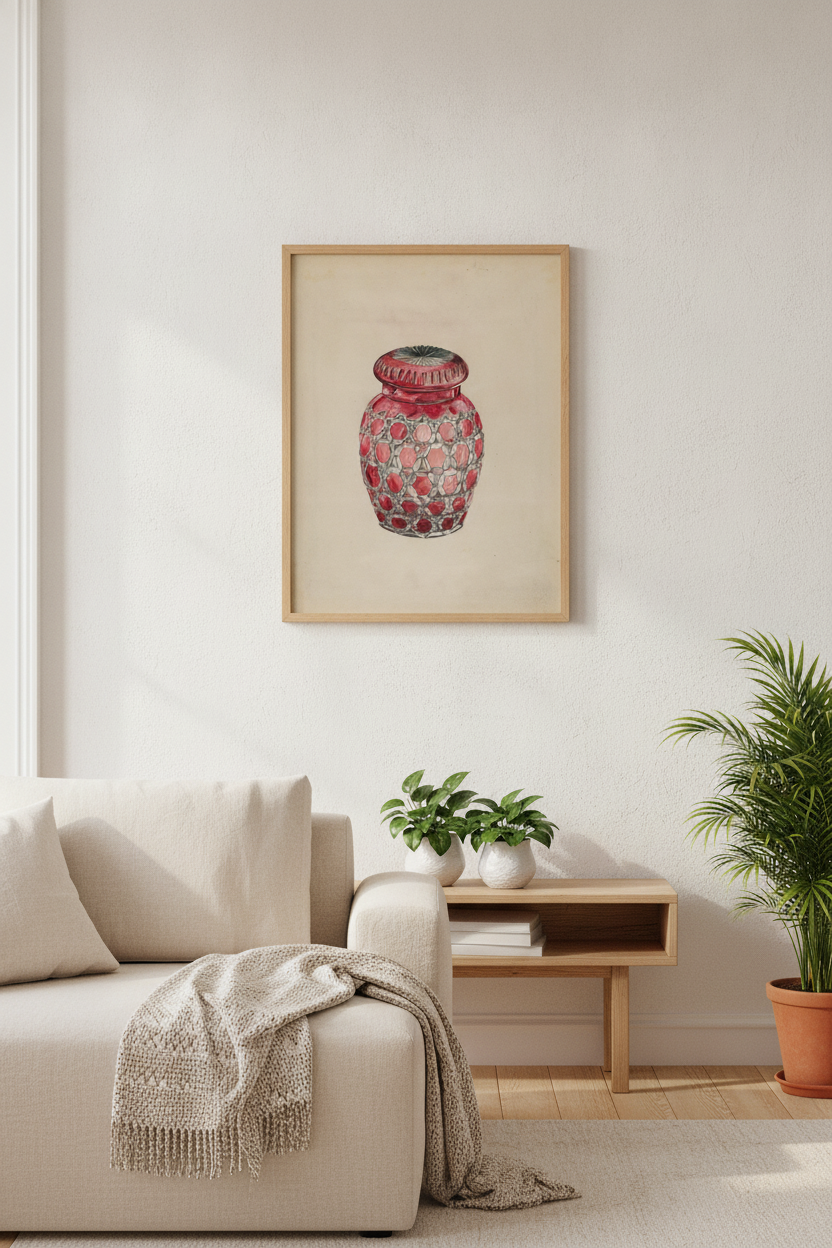
While classical artists often focused on grand historical scenes, the principles of classicism can elevate the simplest subjects into something extraordinary. A perfect example of this is White's rendering of the Ruby Case Glass Rose Jar (c. 1936). In this piece, the meticulous attention to detail transforms a decorative object into a monument of form and light.
The deep, rich tones of the glass are captured with stunning accuracy, while the subtle reflections showcase White’s mastery of atmospheric harmony. It is this ability to find monumental beauty in the quiet corners of the world that makes his work so uniquely compelling.
Bringing Classical Serenity Home
Because of their clean lines and balanced compositions, Edward White’s works are incredibly versatile in modern interior design. In a minimalist or contemporary space, a high-quality print or canvas print of his work acts as a visual anchor, bringing a sense of grounded elegance without overwhelming the room. The neutral, restrained palettes blend seamlessly with natural wood, stone, and modern textiles.
Choosing a piece by White is not just about decorating a wall; it is about inviting a moment of calm into your daily life. His timeless studies of proportion and light offer a gentle reminder of the beauty that exists in balance.
Frequently asked questions
What artistic style does Edward White's work embody?
Edward White’s style is deeply rooted in the classical tradition, emphasizing refined draftsmanship, balanced compositions, and the timeless ideals of academic classicism.
How does White use color and light in his art?
White employs a highly restrained color palette and focuses on a delicate interplay of light and shadow. This creates analytical clarity and a meditative, atmospheric harmony rather than high-contrast drama.
Why do Edward White prints work well in modern homes?
The clean lines, structured forms, and calm, neutral tones of his work make them highly versatile. They offer a sophisticated, grounding focal point that complements both contemporary minimalist and traditional interiors.