Why does Frank Wenger’s classical art feel so modern?
In short: Frank Wenger’s art uses classical academic techniques to create balanced, serene compositions. His mastery of light and structured geometry makes his work a perfect grounding element for modern spaces.
The Appeal of Quiet Order
In an era dominated by bold, abstract shapes and fast-paced digital art, there is a growing hunger for something grounded. This is where the work of Frank Wenger shines. Rooted in the enduring traditions of classical academic painting, Wenger’s art offers a sanctuary of calm. But why does an artist so dedicated to traditional techniques feel so incredibly relevant today?
The answer lies in his commitment to formal precision and harmony. Wenger did not paint to shock or disrupt; instead, he sought the quiet, intellectual rigor of balanced compositions. By exploring the Full Frank Wenger collection, you can see how his work acts as a visual anchor, bringing a sense of timeless permanence to any room it inhabits.
The Geometry of Light and Shadow
Wenger’s style is defined by a meticulous handling of light and shadow, a technique honed through rigorous academic training. Rather than scattering detail across the canvas, he focused on structured compositions and a restrained, sophisticated palette. This deliberate approach gives his subjects an atmospheric weight and depth that feel almost sculptural.
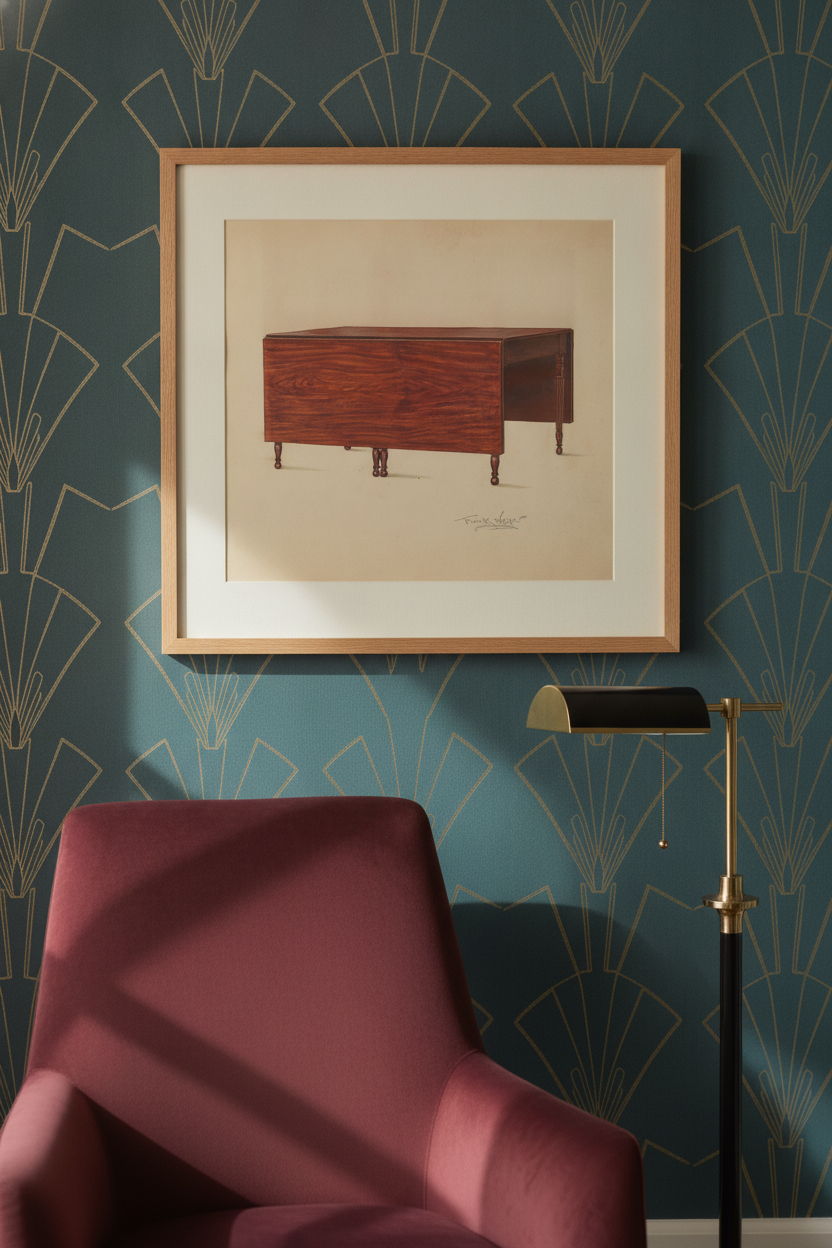
Take, for instance, his masterpiece "Drop Leaf Table" (1936). In this work, a simple domestic scene is elevated into a profound study of poise. The balanced geometry of the table, the soft fall of light across the wood, and the quiet shadows beneath it create a scene that feels both fleeting and eternal. It is this ability to capture the serene beauty of the natural world and everyday objects that makes his work so compelling.
How Classical Balance Completes a Modern Room
Modern interior design often favors clean lines, neutral colors, and open spaces. While this aesthetic is beautiful, it can sometimes feel a bit cold or sterile. A high-quality fine-art print of Wenger's work introduces the perfect counterpoint: warmth, history, and depth.
Because Wenger’s palette is so controlled and sophisticated, his prints blend seamlessly with contemporary decor. Here is why his pieces work so well on modern walls:
- Structured Balance: His strong geometric compositions mirror the clean lines of modern furniture.
- Restrained Palette: Earthy tones, muted grays, and soft ochres complement rather than compete with modern color schemes.
- Atmospheric Depth: The rich play of light and shadow adds a sense of three-dimensional space to flat, minimalist walls.
Whether displayed as a textured canvas or a framed print, Wenger's art brings a quiet, intellectual maturity to living rooms, offices, and reading nooks alike.
Frequently asked questions
What is classical academic painting?
Classical academic painting refers to the style and methods taught in European academies of art. It emphasizes formal rules of composition, precise draftsmanship, a deep understanding of human anatomy, and a masterful control of light and shadow to create realistic, harmonious works.
What makes Frank Wenger's style unique?
Wenger stands out for his ability to combine rigid academic precision with a quiet, poetic atmosphere. His work focuses on balanced geometry and a highly restrained color palette, turning everyday subjects and natural scenes into timeless, serene studies of light.
Should I choose a canvas or a framed print for Wenger's work?
Both options work beautifully, but they offer different vibes. A textured canvas highlights the rich depth of his brushwork and mimics the feel of an original gallery piece. A framed print with a wide mat emphasizes the formal, structured quality of his compositions, making it look exceptionally elegant and classic.