Why does Fred Hassebrock's quiet realism feel so modern?
In short: Fred Hassebrock championed classical realism during the height of modern abstraction, creating deeply atmospheric, light-filled works that bring timeless dignity to modern spaces.
Why does Fred Hassebrock's quiet realism feel so modern?
During the mid-20th century, the art world was swept up in a whirlwind of abstract expressionism. Splashes of wild color and chaotic forms dominated the galleries. Yet, in the middle of this modern revolution, American artist Fred Hassebrock chose a different path. He looked backward to look forward, embracing the rigorous, disciplined techniques of Classical Realism. His paintings feel remarkably modern today because they offer something our fast-paced world desperately craves: a sense of profound quiet, order, and timeless dignity. By anchoring his work in the careful study of light and form, Hassebrock created art that transcends the fleeting trends of his era, offering a serene refuge for the modern viewer.

The Magic of Chiaroscuro and Muted Palettes
Hassebrock’s style is a beautiful, unexpected bridge between two distinct worlds. On one hand, he inherited the "grand manner" of European academic painting, particularly the dramatic use of chiaroscuro—the stark, theatrical contrast between brilliant light and deep shadow. On the other hand, he possessed a quiet, understated mid-century American sensibility. His subjects do not shout for attention; instead, they emerge gently from rich, atmospheric depths.
Using a sophisticated, muted palette of earthy tones, soft greys, and deep, velvety shadows, Hassebrock captured the fleeting quality of natural light with exceptional precision. Every deliberate brushstroke feels meditative, transforming simple, domestic scenes into moments of silent contemplation and timeless dignity.
From Textiles to Still Lifes: Finding Beauty in the Everyday
While many classical realists focused solely on grand mythological or historical themes, Hassebrock found his inspiration in the familiar and the domestic. He had a remarkable gift for elevating everyday objects, finding complex geometry, rich textures, and unexpected beauty in the most ordinary places.
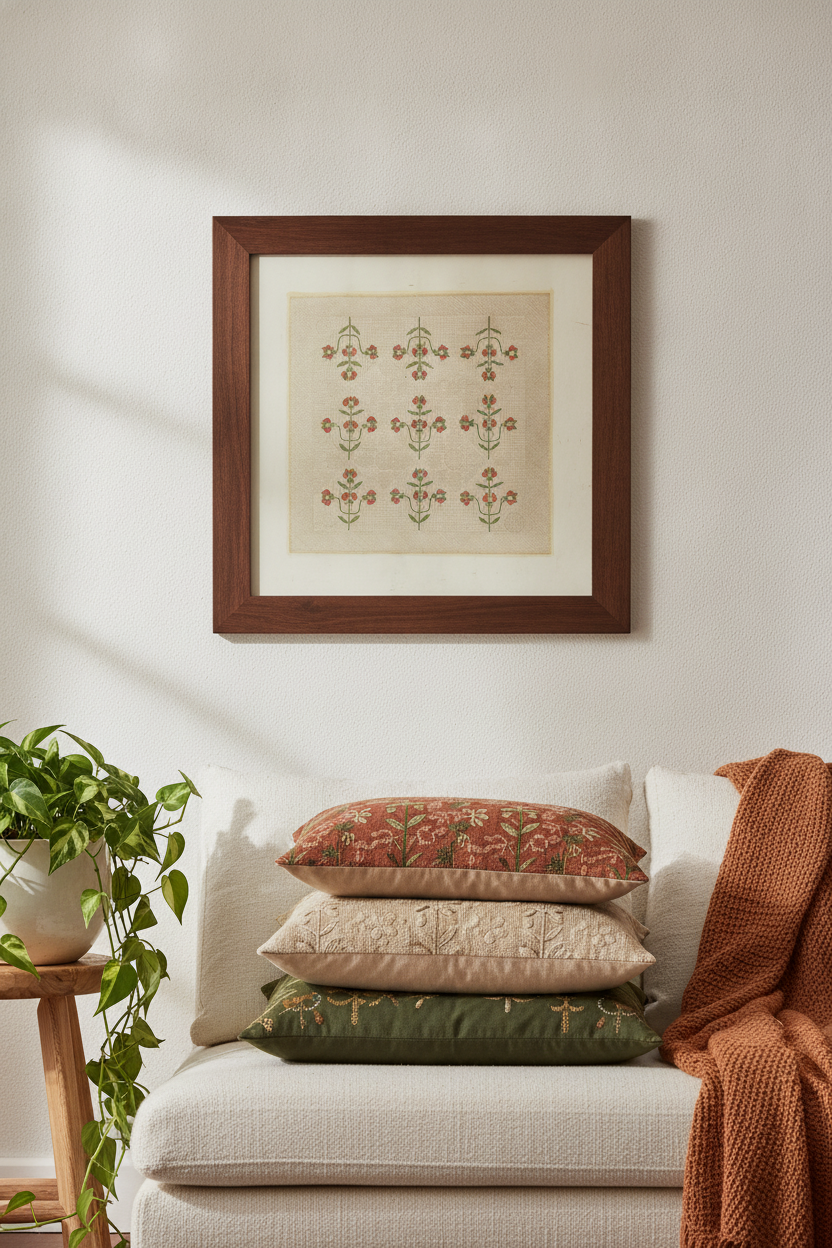
A prime example of this is his fascination with American folk craft, beautifully captured in his rendering of a Quilt - Tulip Pattern (c. 1939). In this work, and its close-up companion, the Detail of Quilt - Tulip Pattern (c. 1939), Hassebrock treats the folds, creases, and stitched patterns of a simple quilt with the same reverence and academic precision other masters might reserve for heavy silk drapery in a royal portrait. To explore more of these quiet, stunningly detailed masterpieces, you can view the Full Fred Hassebrock collection.
How Hassebrock's Art Transforms a Contemporary Home
Why do Hassebrock’s works translate so beautifully into fine-art prints and canvases for contemporary homes? Modern interiors often favor clean lines, neutral colors, and open spaces. However, these minimalist environments can sometimes feel cold or sterile. A Hassebrock reproduction introduces an instant layer of warmth, history, and intellectual depth.
His deep, atmospheric backgrounds anchor a room, while his masterful rendering of light draws the eye and invites quiet reflection. Whether framed on a living room wall or hung as a canvas in a study, his work brings a grounding presence that balances modern design with classical soul.
Frequently asked questions
What is Classical Realism, and how does Fred Hassebrock fit into it?
Classical Realism is an artistic movement that values the traditional skills, academic training, and aesthetic standards of classical antiquity and the European masters. Hassebrock championed this approach during the mid-20th century, choosing rigorous draftsmanship, precise light study, and realistic forms over the prevailing trends of abstract art.
What is "chiaroscuro" and how is it used in Hassebrock's work?
Chiaroscuro is an Italian term meaning "light-dark." It refers to the dramatic contrast between light and shadow to create a sense of three-dimensional volume. Hassebrock used this technique masterfully, allowing his subjects to emerge softly from deep, atmospheric backgrounds, which gives his paintings a quiet, mysterious depth.
Why are Hassebrock's textile paintings, like his quilt studies, so significant?
These works showcase Hassebrock's ability to apply rigorous, academic painting techniques to humble, everyday American subjects. By treating a handmade quilt with the same technical precision and dramatic lighting as classical drapery, he elevated American folk craft into the realm of high fine art.