Why does James McLellan's classical art feel so modern?
In short: James McLellan’s classical art offers a sanctuary of order, symmetry, and quiet light—making his timeless architectural and landscape prints a perfect fit for modern, peaceful homes.
The Quiet Power of Order and Light
James McLellan was an artist who understood that true beauty doesn't need to shout. Working firmly within the classical tradition, McLellan created works that feel like a deep, calming breath. While many of his contemporaries chased the fleeting energy of modernism, McLellan looked back to the enduring principles of symmetry, balance, and idealized form.
Why does his work feel so remarkably modern today? The answer lies in his restraint. In an age of constant digital distraction, McLellan’s quiet compositions offer a visual sanctuary. By stripping away the unnecessary and focusing on structural clarity, his art speaks directly to our contemporary desire for minimalism and peace. He reminds us that order is not cold; rather, it is a framework that allows beauty to shine clearly.
Mastering the Architecture of Light
To look at a piece by McLellan is to witness a masterclass in light and shadow. Rather than capturing fleeting, momentary impressions of a scene, he sought the permanent essence of his subjects. His brushwork is deliberate and refined, building up deep tonal layers that give his subjects a sense of weight and quiet monumentality.
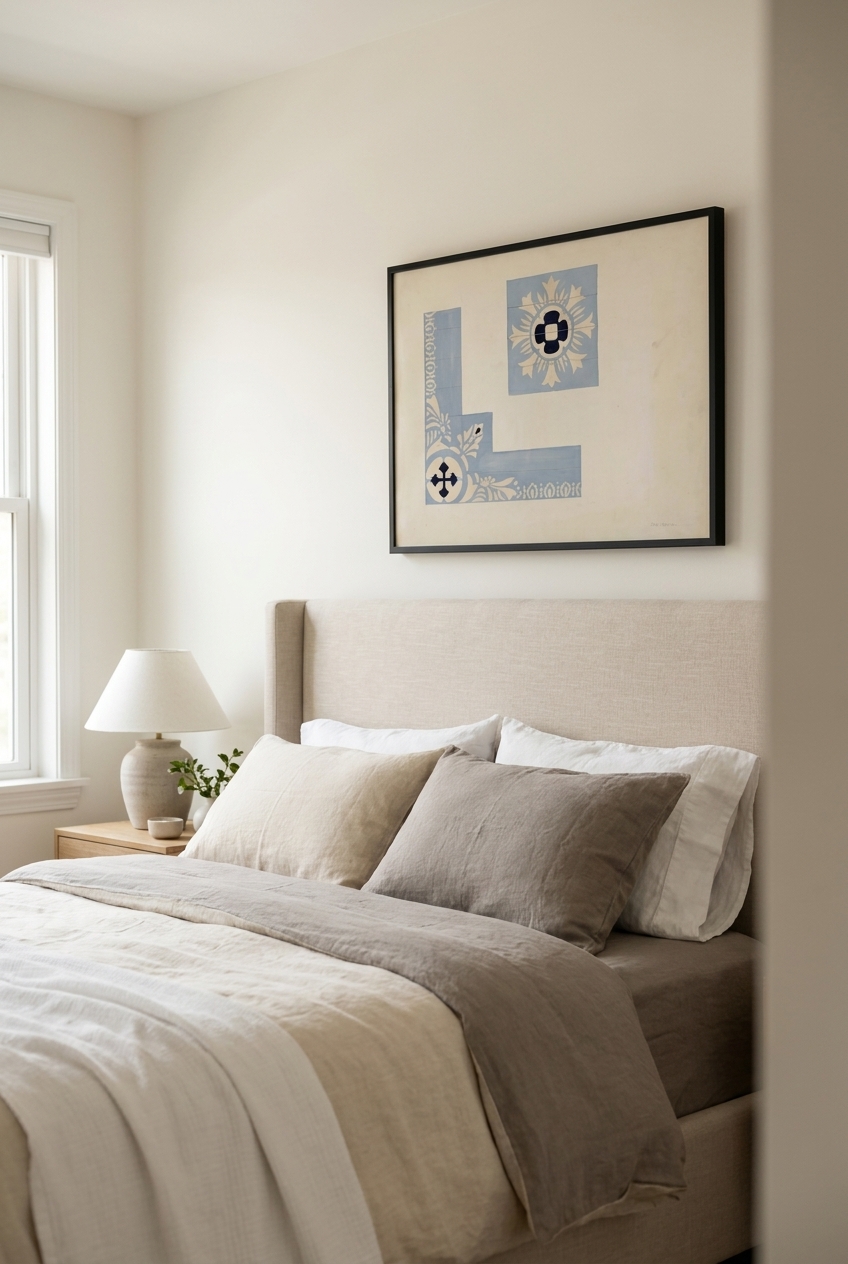
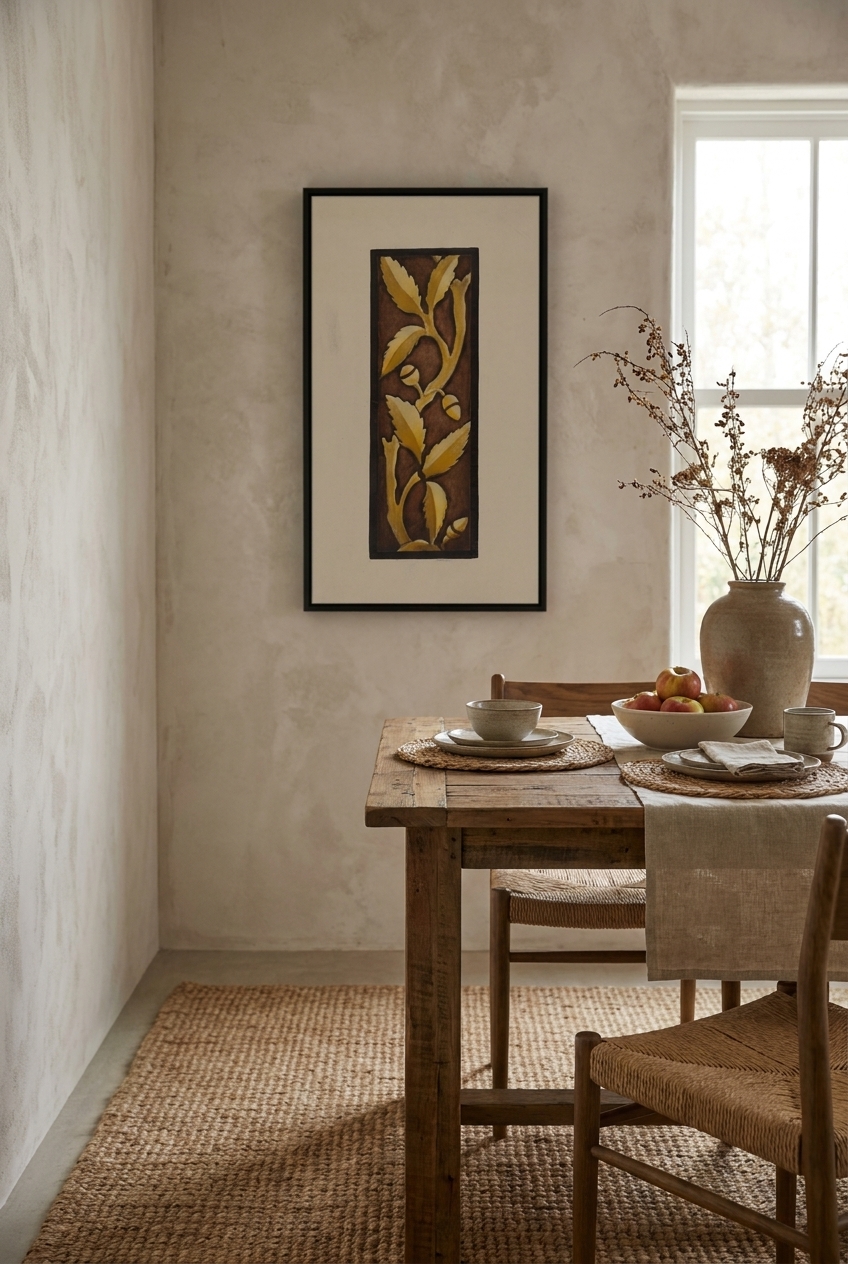
This approach is beautifully evident in his architectural studies, which find the sublime in quiet corners. In his work Painted Glass - Mariner's Church (c. 1937), he captures the delicate, almost sacred play of light filtering through historic glass, turning a simple architectural detail into a poetic meditation. Similarly, his Stencil of Ceiling (Mariner's Church) (c. 1937) showcases his obsession with symmetry and geometric harmony, rendering a complex decorative pattern with clean, classical precision. In both pieces, we see an artist who looks at the built world not just as wood and stone, but as a canvas for harmony.
The Sublime in the Everyday
Beyond his architectural works, McLellan’s portfolio takes viewers on an atmospheric journey through serene landscapes and poised subjects. He applied the same rigorous academic standards to a simple tree line or a quiet horizon as he did to grand structures.
By balancing rigorous draftsmanship with a deeply poetic sensibility, McLellan avoided the stiffness that sometimes plagues academic art. His landscapes feel alive, yet perfectly still. There is no wind blowing through his trees, no sudden movement to disrupt the view. Instead, he invites us into a world where time has paused, allowing us to appreciate the sublime geometry of nature itself.
Why Classical Prints Work in Today's Homes
There is a unique joy in decorating with classical art, particularly works that balance rigorous draftsmanship with a poetic sensibility. McLellan's serene landscapes and poised architectural subjects do not compete with modern interiors; instead, they ground them.
Whether displayed as a large-format canvas or a framed fine-art print, his pieces bring an atmospheric depth to contemporary spaces. A minimalist living room is instantly warmed by his rich, restrained color palettes, while an office gains a sense of intellectual focus from his structured compositions. If you are looking to curate a space that feels both sophisticated and deeply relaxing, exploring the full James McLellan collection is an excellent place to start. These are pieces designed not just to be looked at, but to be lived with—offering a quiet moment of contemplation every time you pass by.
Frequently asked questions
What defines James McLellan's artistic style?
James McLellan’s style is defined by his commitment to the Classical tradition, featuring balanced compositions, symmetrical designs, and a meticulous command of light and shadow. His work emphasizes structural clarity and quiet monumentality over fleeting impressions.
What is the significance of his Mariner's Church works?
Created around 1937, these works showcase McLellan's ability to find classical beauty in architectural details. They capture the harmonious geometry and serene atmosphere of sacred spaces through precise draftsmanship and subtle tonal depth.
How do James McLellan prints fit into modern home decor?
Because of their restrained palettes and clean, structured compositions, McLellan's prints complement modern minimalist and transitional interiors beautifully. They add a sense of calm, order, and historic depth without overwhelming a room's existing design.