Why does Lloyd Charles Lemcke's art feel so calm?
In short: By prioritizing academic draftsmanship, subtle tonal shifts, and classical restraint, Lloyd Charles Lemcke created quiet, harmonious artworks that offer a peaceful visual anchor in modern spaces.
The Power of Quiet Observation
In a world that often feels loud, chaotic, and constantly in motion, the art of Lloyd Charles Lemcke offers a rare and welcome pause. As a dedicated proponent of Classical Realism, Lemcke did not chase the fleeting trends of modern abstraction. Instead, he looked backward to the timeless traditions of academic draftsmanship, where the quiet interplay of light and shadow takes center stage.
So, why does Lemcke's art feel so incredibly calm? The answer lies in his profound restraint. By prioritizing formal harmony, balanced proportions, and a refined color palette, Lemcke stripped away the unnecessary noise of the world. What remains is a pure, contemplative space. His work captures the quiet dignity of his subjects, turning everyday forms into monuments of stillness.
The Beauty of Academic Draftsmanship
To understand Lemcke is to appreciate the rigorous discipline of classical training. Unlike artists who rely on expressive, chaotic brushstrokes, Lemcke approached his canvas with deliberate precision. Every line serves a purpose; every shadow is carefully mapped to build structural clarity.
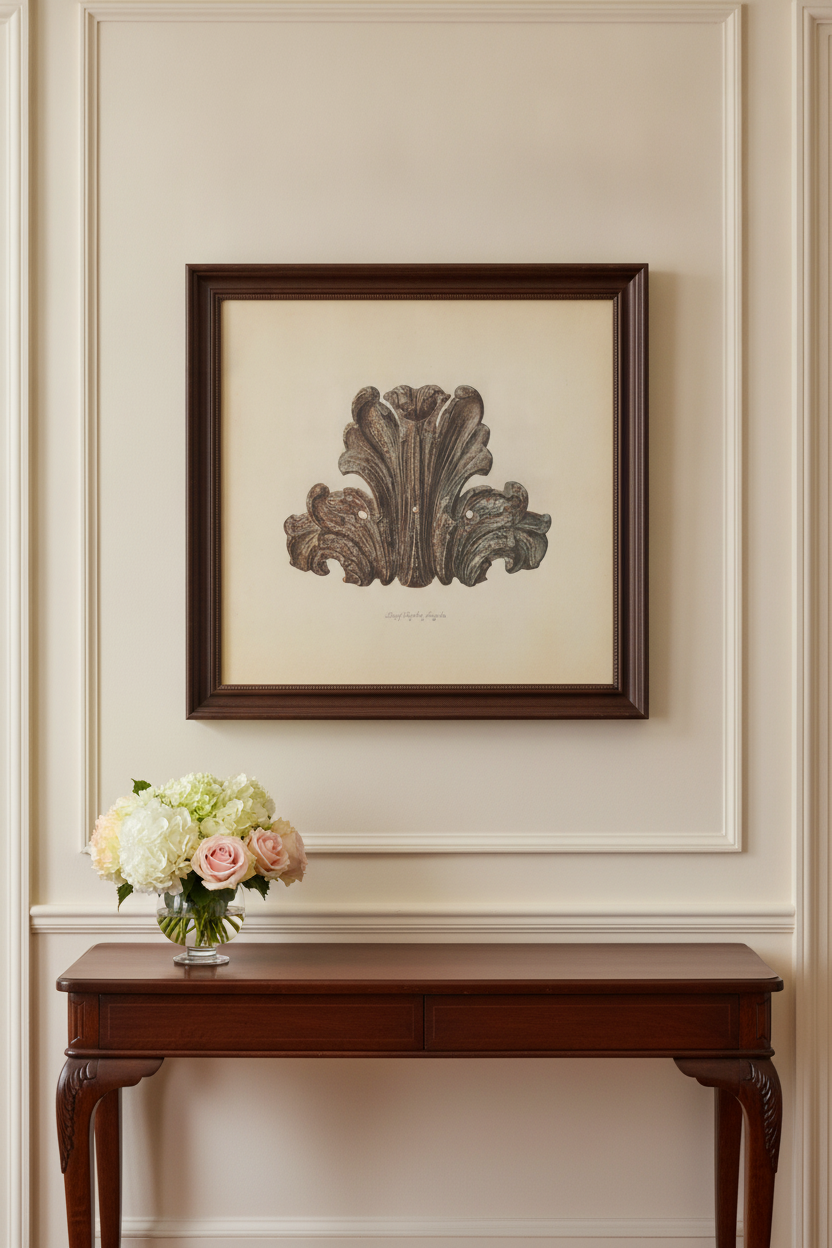
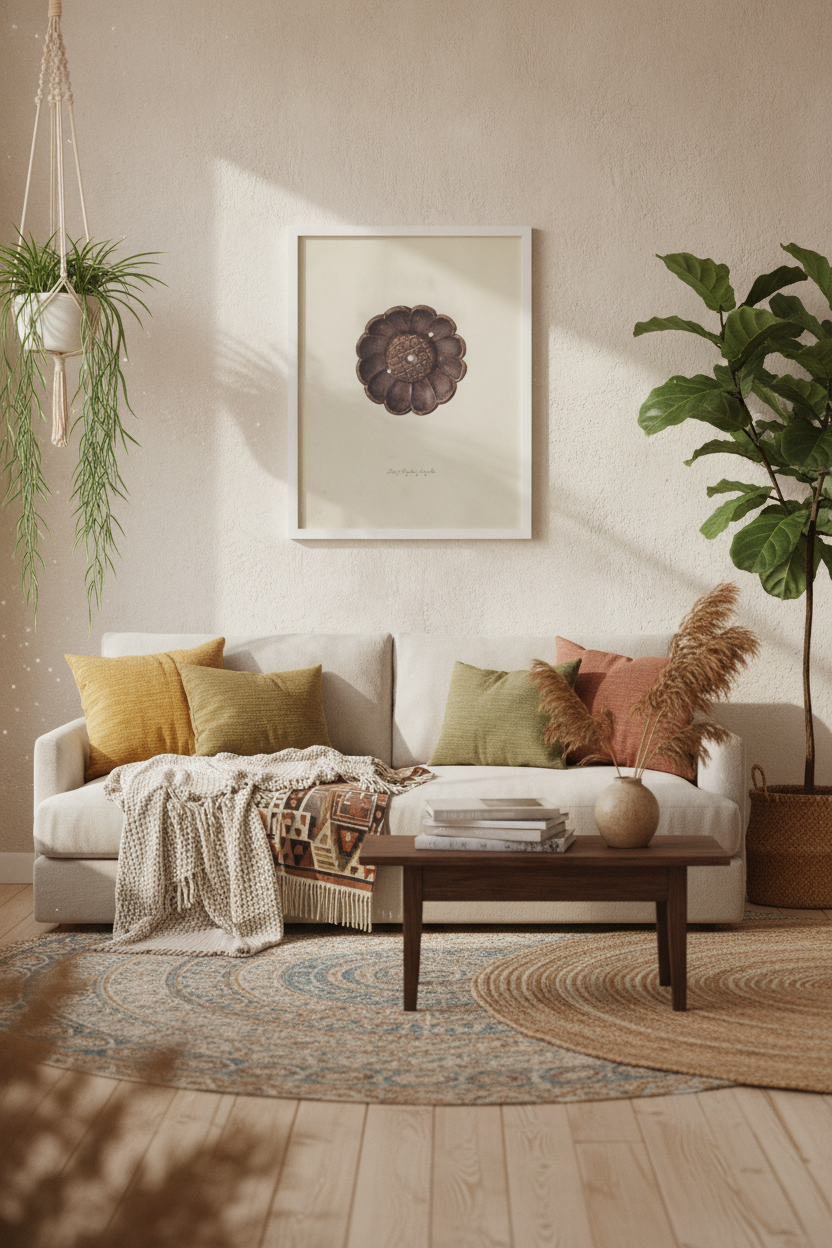
Take, for instance, his exquisite 1938 study, Rosette. In this piece, a simple architectural motif becomes a fascinating exploration of depth and symmetry. By focusing on the subtle gradations of tone, Lemcke makes the carved form feel three-dimensional, almost tangible. It is this dedication to formal realism that makes his work feel both grounded and elevated.
Finding Monumentality in the Simple
Lemcke had a unique ability to find beauty in the structured elements of design and nature. His subjects were rarely grand, dramatic historical scenes. Instead, he turned his eye toward the quiet strength of architectural details and natural forms, treating them with a level of reverence usually reserved for high portraiture.
Another striking example of this approach is Ornamental Iron Leaf. Created in the same period of intense focus, this work highlights his mastery of ironwork texture and organic curves. Through precise draftsmanship, Lemcke transforms a piece of decorative metalwork into a poetic study of line and shadow. You can explore these and other masterworks in the complete Lloyd Charles Lemcke collection, which showcases his unwavering commitment to classical principles.
Why Lemcke's Work Belongs in the Modern Home
There is a common misconception that classical art only belongs in traditional, dark-paneled libraries. In truth, Lemcke's work is spectacularly suited for modern interiors. The clean lines, neutral color palettes, and structured compositions act as a perfect visual anchor for contemporary spaces.
Whether displayed as a textured canvas or a framed fine-art print, Lemcke's art brings a sense of balance and grounding to a room. In minimalist spaces, his prints offer a touch of historical depth without clashing with modern furniture. In more eclectic homes, they provide a serene focal point that ties disparate elements together. Ultimately, Lemcke's work does not demand your attention; instead, it quietly invites you to sit, breathe, and appreciate the beauty of form.
Frequently asked questions
What is Classical Realism?
Classical Realism is an artistic movement that values the traditional skills of drawing and painting, tracing its roots back to the academies of the Renaissance and the 19th century. It emphasizes draftsmanship, proportional harmony, and the realistic depiction of light and form, often in contrast to modern abstract styles.
When did Lloyd Charles Lemcke produce his work?
Lemcke was highly active during the mid-20th century, a time when modernism was dominating the art world. His adherence to classical realism in pieces like his 1938 architectural studies represents a deliberate choice to preserve traditional academic techniques.
How do Lemcke's prints fit into contemporary interior design?
Because Lemcke used a restrained, often monochromatic or neutral color palette and focused on clean, balanced structures, his prints blend seamlessly into modern homes. They bring a sense of architectural elegance and calm to minimalist, transitional, and classic spaces alike.