Why does Max Fernekes' quiet realism feel so modern?
In short: Max Fernekes combined exacting draftsmanship with classical restraint, transforming simple rural scenes and machinery into timeless, atmospheric art.
The Art of Quiet Dignity
In an era dominated by loud, abstract movements, the mid-twentieth-century artist Max Fernekes took a different path. He looked at the world with a disciplined eye, finding permanent dignity in the quietest corners of rural life and historic architecture. His work feels remarkably modern today because of its intense restraint. By stripping away the superfluous, Fernekes created images that are clean, balanced, and profoundly peaceful. He didn't just paint what he saw; he captured the underlying structure of his subjects, making a simple farm tool or a wooden barn feel as monumental as a Greek temple.
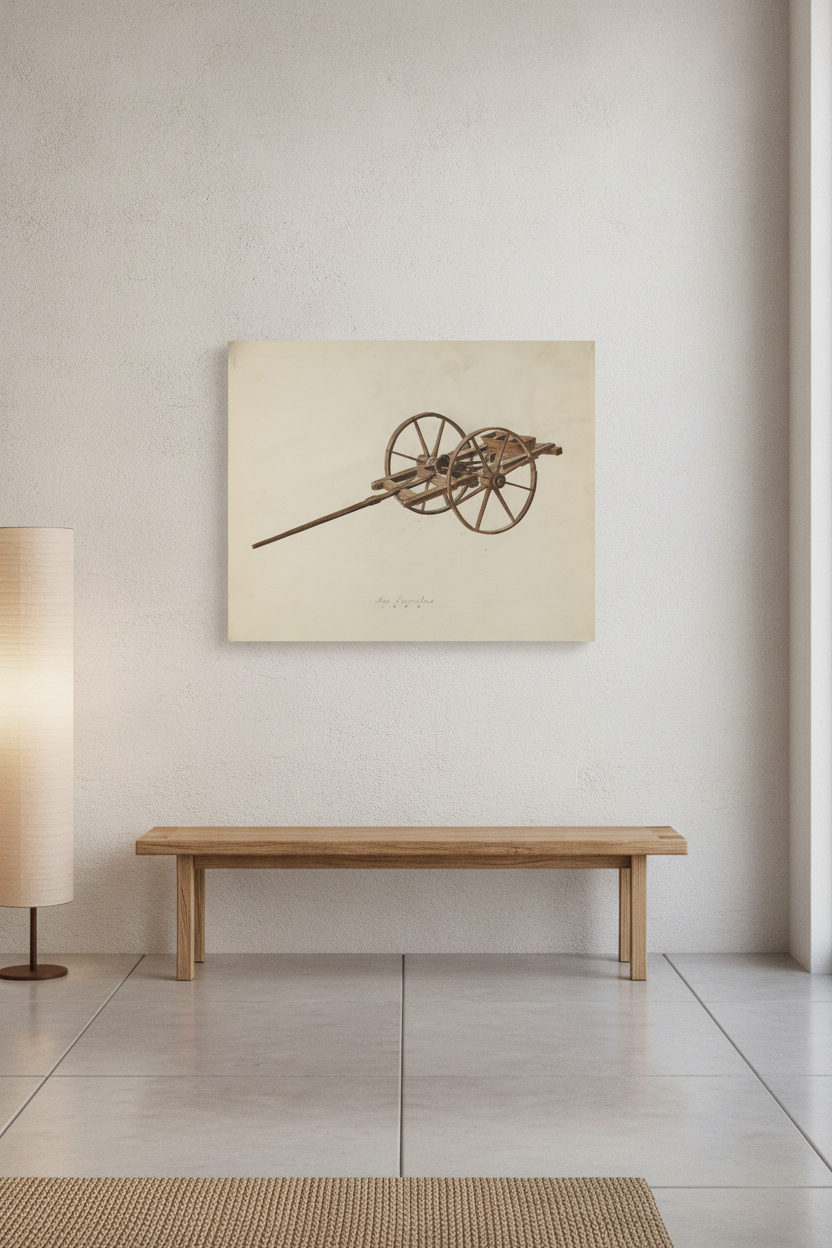
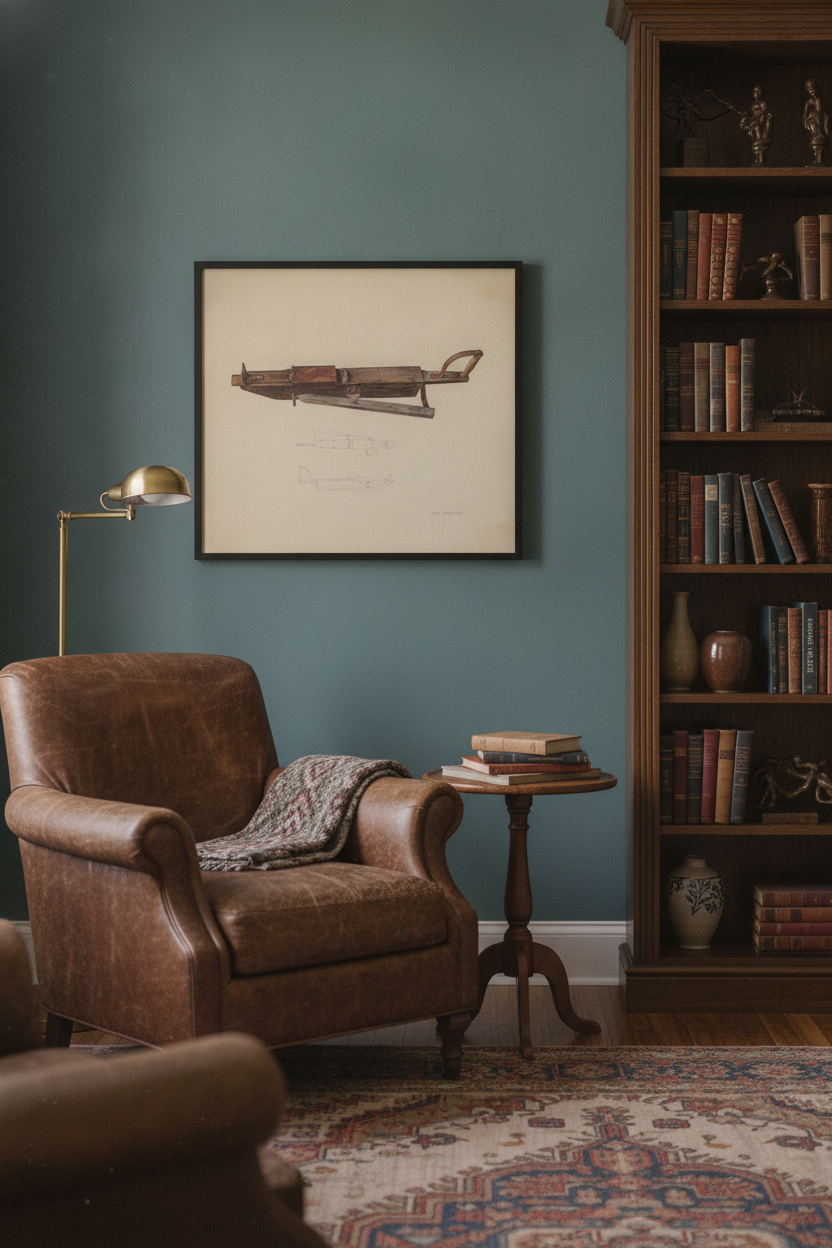
This approach is beautifully clear in his technical drawings of agricultural machinery, such as his rendering of a Model Potato Planter. Here, a piece of farm equipment is elevated into a study of pure form and line, proving that beauty exists in utility when observed with enough patience.
The Geometry of Light and Form
Fernekes was a master of draftsmanship. For him, light was not a decorative afterthought; it was the tool he used to define the weight and mass of his subjects. Whether he was sketching a rural landscape or a decorative architectural detail, he used balanced tonal values to give his work a three-dimensional presence. This focus on structure and space aligns him with the principles of classical realism, a style that values technical precision and timeless order over fleeting trends.
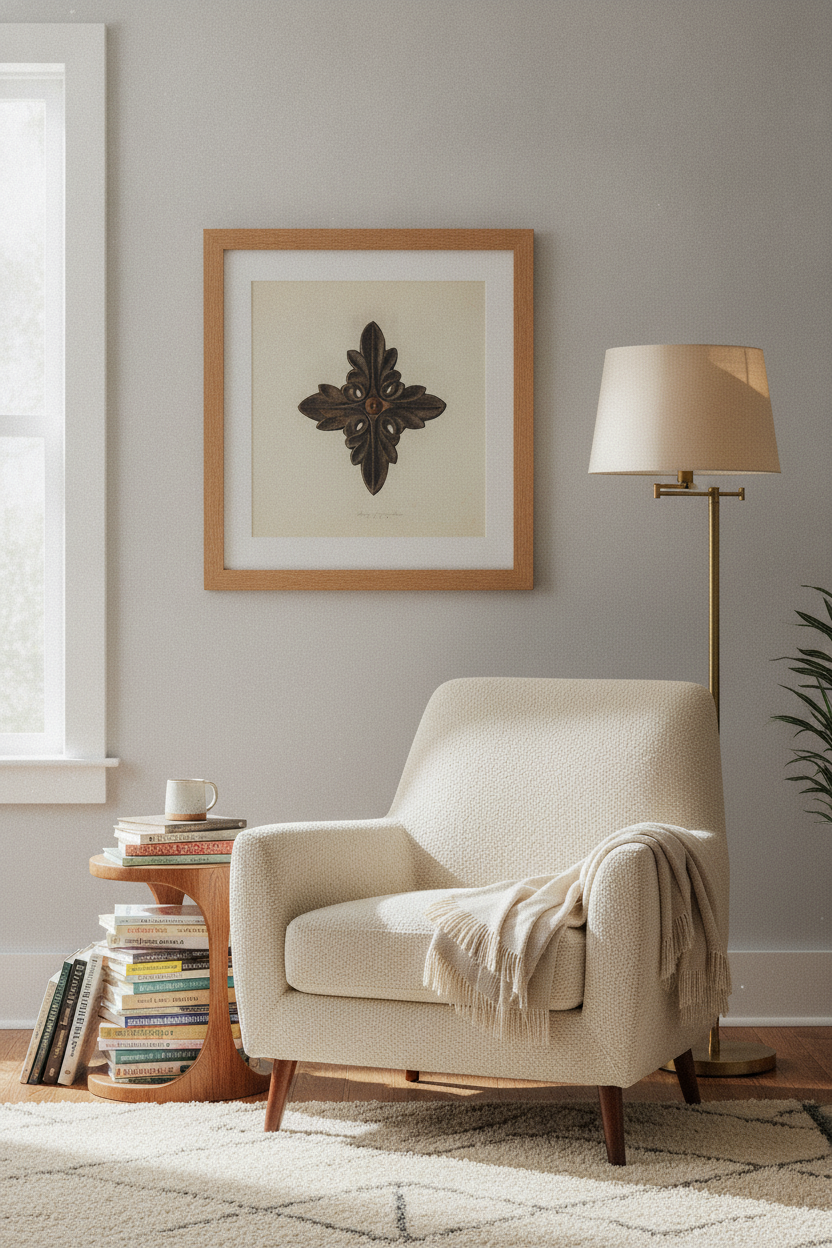
You can see this meticulous attention to detail in his 1938 work Rosette, where the delicate, repeating patterns of architectural ornament are rendered with absolute clarity. Fernekes invites us to slow down and appreciate the craftsmanship of the past, using clean lines to evoke a sense of permanent, silent dignity.
Why His Work Belongs in Today's Interiors
Modern homes often crave a sense of calm. With our busy schedules and screen-filled lives, the spaces we return to should offer a visual deep breath. This is exactly what a fine-art print by Fernekes provides. His compositions have a contemplative stillness that anchors a room without overwhelming it. Because his color palettes and tonal values are so carefully balanced, his prints and canvases integrate seamlessly into a variety of decor styles, from warm rustic spaces to minimalist, contemporary apartments.
Whether you are drawn to the rugged charm of his rural landscapes or the crisp geometry of his architectural studies, exploring the Max Fernekes collection reveals an artist who understood how to capture the quiet soul of his subjects. His work reminds us that art doesn't need to shout to be deeply felt.
Frequently asked questions
What is Classical Realism, and how does Max Fernekes fit into it?
Classical Realism is an artistic movement that values traditional draftsmanship, technical skill, and a deep appreciation for beauty, order, and form. Fernekes fits this tradition perfectly through his disciplined composition, clean lines, and his ability to find timeless, geometric beauty in everyday subjects.
What are the main subjects of Max Fernekes' artwork?
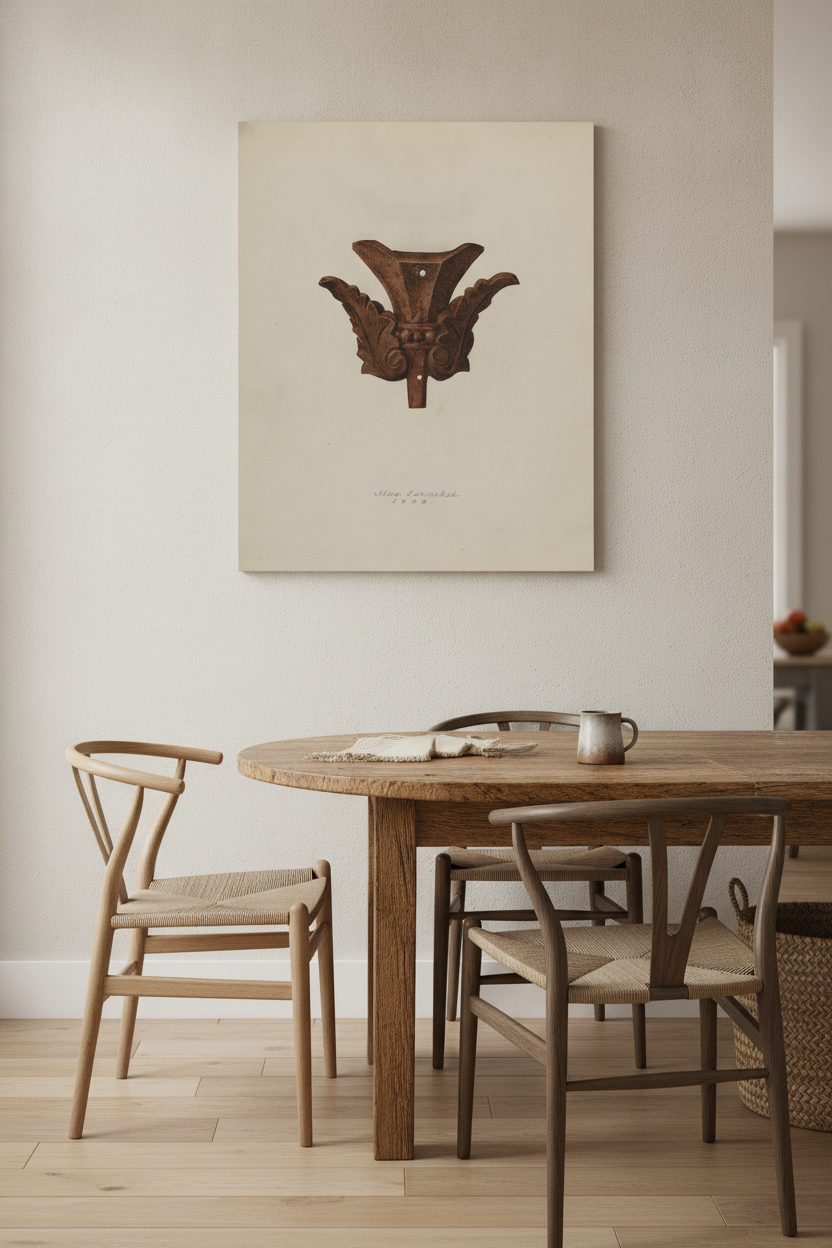
Fernekes focused heavily on rural landscapes, historic architecture, and technical studies of regional machinery and decorative ironwork. He had a unique talent for transforming ordinary, utilitarian objects into atmospheric portraits of quiet dignity.
Why do Max Fernekes prints look so good in modern home decor?
His work relies on a highly disciplined framework of light, shadow, and clean lines. This creates a sense of contemplative stillness and structural balance that complements modern minimalist, industrial, or classic interior design styles beautifully.