Why does Rex F. Bush's art feel so incredibly calm?
In short: Rex F. Bush combined classical realism with atmospheric perspective and harmonious geometry to create deeply calming art, ranging from soft, rolling landscapes to meticulous studies of historic American design.
The Secret to the Stillness
In a world that constantly demands our attention, looking at a painting by Rex F. Bush feels like taking a deep, quiet breath. The profound calm that radiates from his work isn't accidental; it is the result of a deliberate, centuries-old approach known as Classical Realism. Bush built his compositions on a foundation of rigorous balance, proportion, and a deep devotion to the natural world. By ordering his scenes with a subtle, harmonious geometry, he invites us into a space of contemplative stillness that feels entirely removed from the chaos of modern life.
Honoring the Beauty of Everyday Objects
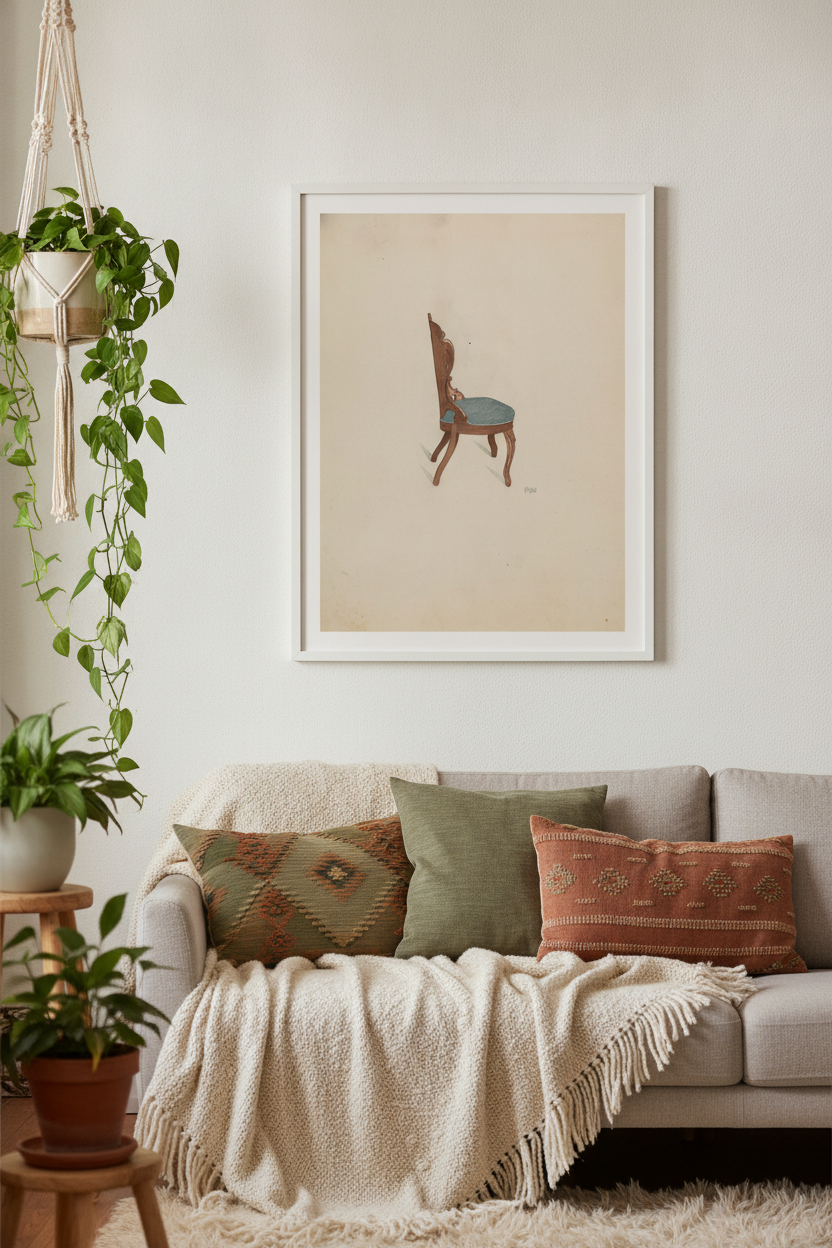
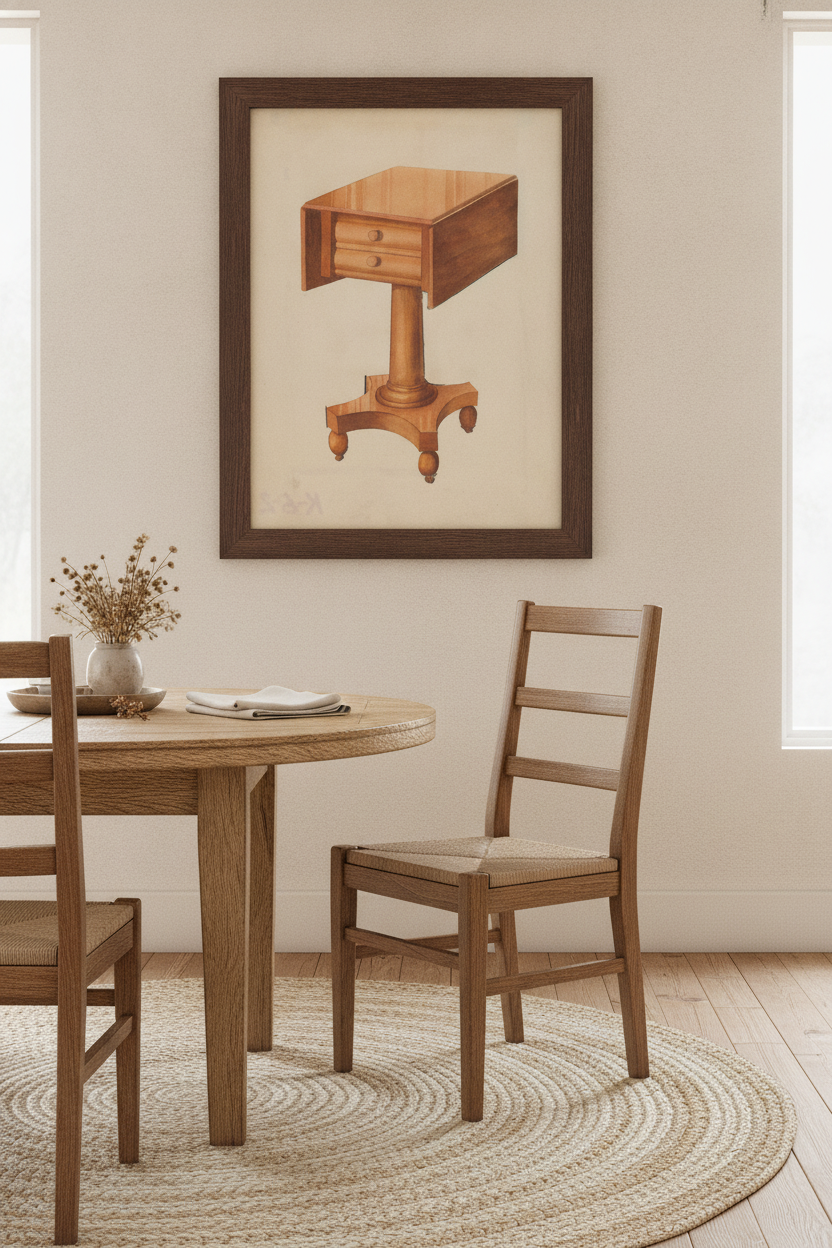
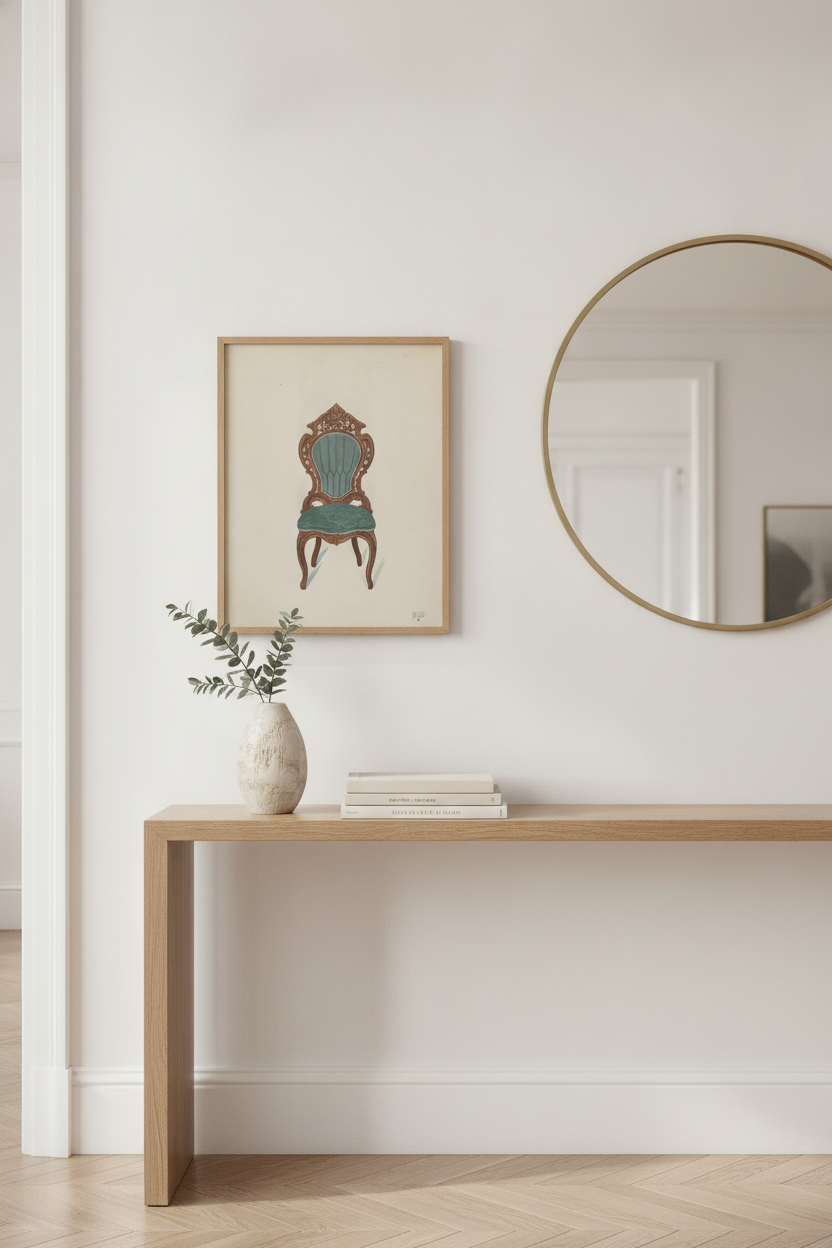
While Bush is celebrated for his quiet landscapes, his eye for classical balance extended beautifully to the material world. During the 1930s, as part of a grand effort to document the history of American craftsmanship, he captured the quiet dignity of historic design. His rendering of the Rosewood Chair (c. 1936) showcases his ability to find majesty in simple, functional objects. Similarly, his depiction of a Drop-leaf Table (c. 1936) treats rich wood grain and turned legs with the same reverence most artists reserve for cathedral spires. In these works, we see how classical realism elevates the domestic into the realm of high art.
Light, Air, and Atmospheric Perspective
To look at a Bush landscape is to feel the temperature of the air and the dampness of the earth. He drew immense inspiration from the academic landscape painters of the nineteenth century, who believed that nature should be both faithfully recorded and poetically elevated. Bush achieved this through a masterly use of atmospheric perspective. By employing a soft, diffused palette, he captured the subtle shifts of light as it rolls over distant hills and quiet waterways. The colors gently fade as they recede into the background, creating a sense of vast, open space that draws the viewer inward.
Bringing Contemplative Art into Modern Spaces
Why do these mid-century interpretations of classical realism work so beautifully in contemporary homes? The answer lies in their restraint. Modern interiors, with their clean lines and open layouts, benefit immensely from art that offers visual breathing room. A print from the Rex F. Bush collection acts as a visual anchor. Whether it is a pastoral vista or a meticulous study of early American furniture, his work brings a grounding, peaceful energy to a room. It doesn't shout for attention; instead, it waits quietly to be noticed, offering a moment of genuine repose every time you pass by.
Frequently asked questions
What is Classical Realism?
Classical Realism is an artistic movement that values the traditional techniques and aesthetic standards of classical antiquity and the Renaissance. It emphasizes draftsmanship, proportion, harmony, and a faithful yet elevated depiction of the real world.
When did Rex F. Bush create his famous furniture renderings?
Many of Bush's detailed renderings of American decorative arts, such as his studies of historic chairs and tables, were created around 1936 as part of the Index of American Design, a federal project documenting historical American material culture.
How does atmospheric perspective work in Bush's landscapes?
Atmospheric perspective is a technique where the artist mimics how the atmosphere affects our view of objects in the distance. Bush used softer, cooler, and more diffused colors for distant hills and waterways, creating a convincing illusion of depth and quiet, open space.