Why does Roy S. Brown's landscape art feel so peaceful?
In short: Roy S. Brown's landscapes achieve their signature tranquility through academic discipline, a muted organic palette, and a masterful control of soft, diffused light.
The Art of Quiet Observation
In a world that often feels loud, hurried, and saturated with bright screens, the landscapes of Roy S. Brown offer a rare, welcoming hush. Unlike the romantic painters who chased the high drama of crashing waves, jagged peaks, or fiery sunsets, Brown found his muse in the quiet grandeur of pastoral vistas and soft, atmospheric horizons. His work is a masterclass in poetic restraint, grounded in the enduring rules of the classical landscape tradition.
So, why does his art feel so profoundly peaceful? The answer lies in his commitment to balance and harmony. Rather than trying to startle or shock the viewer, Brown sought to soothe. By exploring the Full Roy S. Brown collection, one immediately senses a deep, almost meditative reverence for the natural world. He achieved this not through chaotic energy, but through academic discipline and structural clarity, ensuring every hill, tree, and cloud sits in perfect equilibrium.
A Masterclass in Soft Light and Muted Tones
The true signature of Brown’s tranquil style is his extraordinary control of light and tonal gradation. He intentionally avoided dramatic artifice and harsh, theatrical contrasts. Instead, he favored a muted, organic palette of earthy greens, soft ochres, and gentle grays. This choice of color allows each scene to glow with a soft, diffused light, as if captured during a still morning or a hazy, quiet late afternoon when the wind has completely died down.
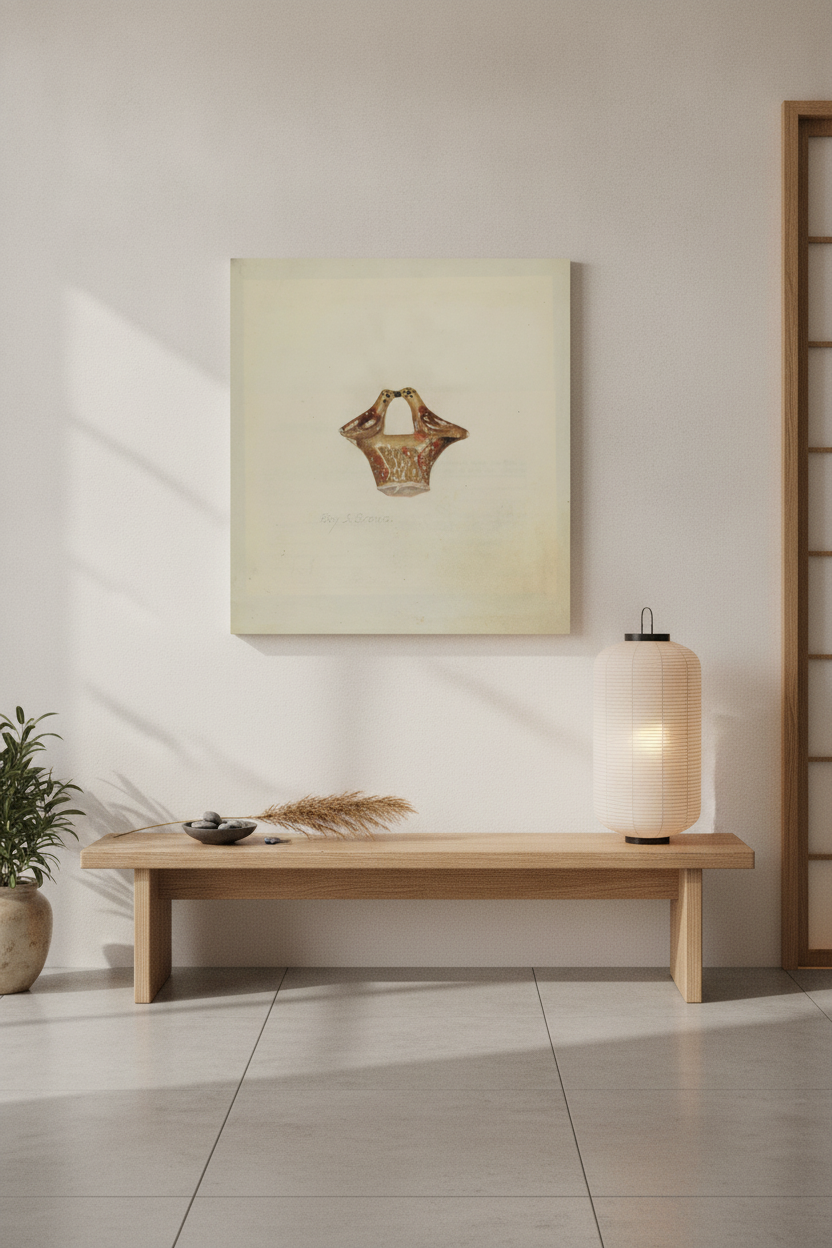
This subtle approach to form and light extends beyond his grand vistas. For instance, in his work Chalkware Birds, created between 1935 and 1942, we see this same dedication to delicate shading and quiet composition. Whether painting a sweeping valley or a simple study of objects, Brown’s focus remained on the gentle, shifting nuances of his subject, capturing depth through incredibly subtle shifts in tone.
Why His Work Belongs in the Modern Home
There is a unique power in art that does not demand your attention, but gently invites it. Because Roy S. Brown’s work relies on understated elegance rather than bold, jarring colors, his pieces make exceptional additions to contemporary living spaces. Modern homes often feature clean lines and open spaces, but they can sometimes feel a bit cold. A classical landscape introduces organic warmth and a sense of history without cluttering the visual field.
An archival print or canvas reproduction of a Brown landscape does more than decorate a wall; it opens a window to a calmer state of mind. His clean compositional lines and sophisticated study of depth pair beautifully with both minimalist decor and warm, traditional interiors. By choosing a high-quality reproduction, you bring a piece of this timeless, quiet meditation into your daily life, proving that true classical harmony never goes out of style.
Frequently asked questions
What is the classical landscape tradition?
The classical landscape tradition is an artistic style rooted in harmony, balance, and idealized order. Popularized by 17th-century masters like Claude Lorrain, it focuses on structured compositions, gentle lighting, and a sense of timeless, peaceful grandeur rather than raw, untamed nature.
What colors define Roy S. Brown's palette?
Brown favored a muted, organic palette. You will find a lot of soft earth tones, gentle grays, muted greens, and warm ochres, all blended seamlessly to create a soft, diffused atmosphere.
How do Roy S. Brown prints fit into modern interior design?
Because of their quiet color schemes and balanced compositions, his prints bring a grounding, serene presence to modern spaces. They complement minimalist, transitional, and traditional decor alike without overwhelming the room.