Why does Ruth Bialostosky's classical style feel so modern?
In short: Ruth Bialostosky's art brings the serene order, balanced proportions, and clean draftsmanship of the classical academic style into the modern home, offering a grounding sense of calm.
The Quiet Power of Order
In a world of fleeting digital noise and ever-changing design trends, there is a profound comfort in looking at something completely stable. The works of Ruth Bialostosky offer exactly this sanctuary. Grounded in the rigorous traditions of the classical academic style, her art prioritizes balance, symmetry, and an idealized representation of form. But why does this traditional approach feel so remarkably contemporary today?
The answer lies in her restraint. By stripping away unnecessary clutter and focusing on clean lines and structural integrity, Bialostosky created images that transcend their era. Her work does not shout; it breathes with a quiet monumentality. This dedication to proportion and grace makes her pieces fit seamlessly into the clean, minimalist aesthetics of modern homes, proving that true classical style is entirely timeless.
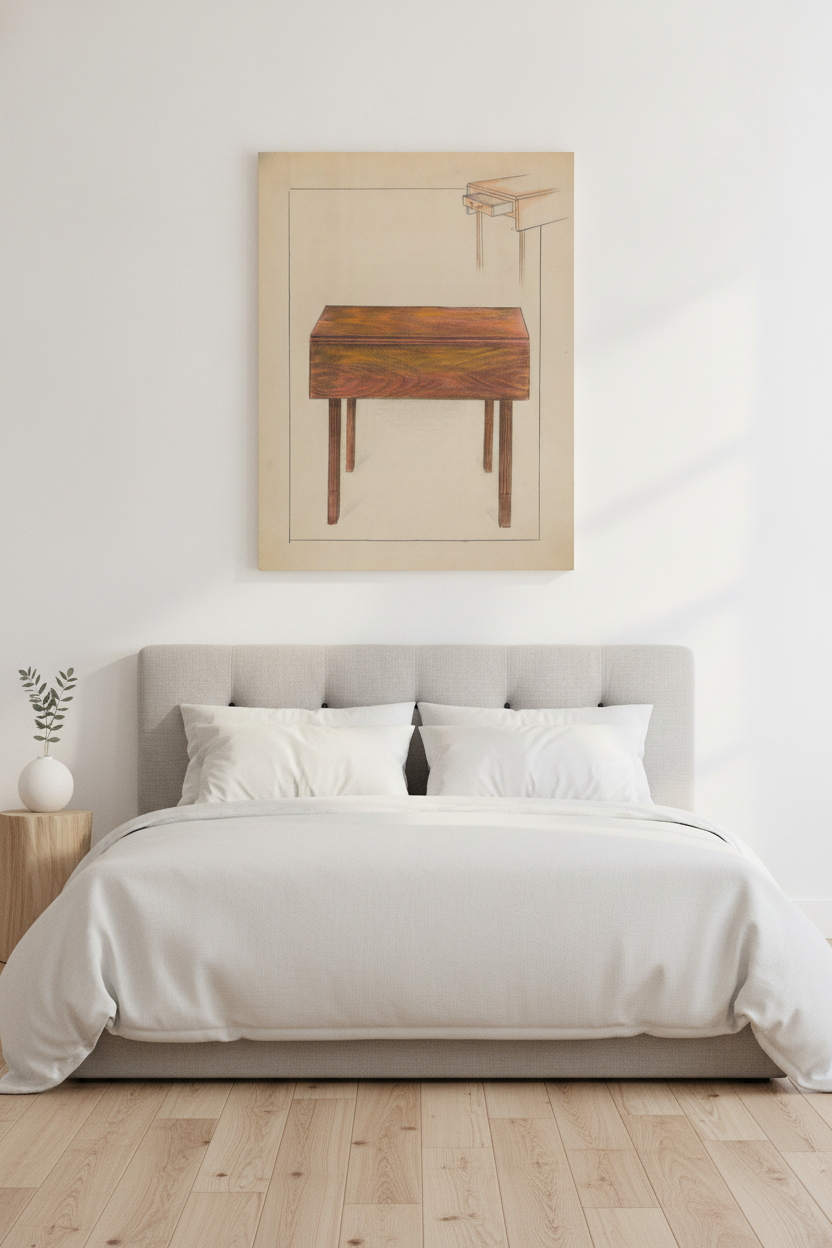
The Anatomy of Classical Draftsmanship
To truly appreciate Bialostosky's mastery, one must look at how she constructed her subjects. Whether rendering a poised figure or a structured everyday object, her approach was deeply rooted in the principles of antiquity. She utilized a harmonious, restrained palette—dominated by earth tones, soft ochres, and muted shadows—that keeps the viewer's focus entirely on form and light.
Instead of chasing fleeting emotions or dramatic, chaotic movement, she sought the eternal. Her pieces, such as her meticulous rendering of a historic Drop Leaf Table, show an extraordinary sensitivity to light and shadow. The light in her work does not just illuminate; it carves the subject out of the background, emphasizing its physical presence and geometric grace. This high level of technical precision elevates simple, functional items into monuments of pure form.
Bringing Academic Grace into the Modern Home
There is a common misconception that classical art belongs solely in dusty museum corridors. In truth, the core principles of the classical canon—serene order, intellectual clarity, and technical perfection—are highly versatile. They act as visual anchors in contemporary living spaces, helping to ground rooms that might otherwise feel cold or overly abstract.
A high-quality print from the Full Ruth Bialostosky collection pairs beautifully with natural wood, mid-century modern furniture, or industrial metal accents. Because her work avoids chaotic colors and jarring narratives, it brings a sense of peace to a room. Whether displayed as a large-format canvas in a sunlit dining room or as a framed paper print in a quiet home office, these works provide a steady, sophisticated presence that honors the lasting power of classical aesthetics.
Frequently asked questions
What defines the classical academic style in Ruth Bialostosky's work?
Her work is defined by a deep commitment to balance, symmetry, and technical precision. Instead of focusing on fleeting emotions, she prioritized clean draftsmanship, a restrained color palette, and a harmonious play of light and shadow to emphasize the structural integrity of her subjects.
How does her work fit into contemporary interior design?
Because of her minimalist color palettes and emphasis on clean, geometric lines, her prints blend seamlessly with modern, minimalist, and mid-century modern decor. They offer a calming, sophisticated focal point without clashing with contemporary color schemes.
What subjects did Ruth Bialostosky typically focus on?
Her subjects range from poised, classical figures to highly structured everyday objects and landscapes. Each subject is treated with the same level of academic rigor, turning simple forms into timeless, monumental compositions.