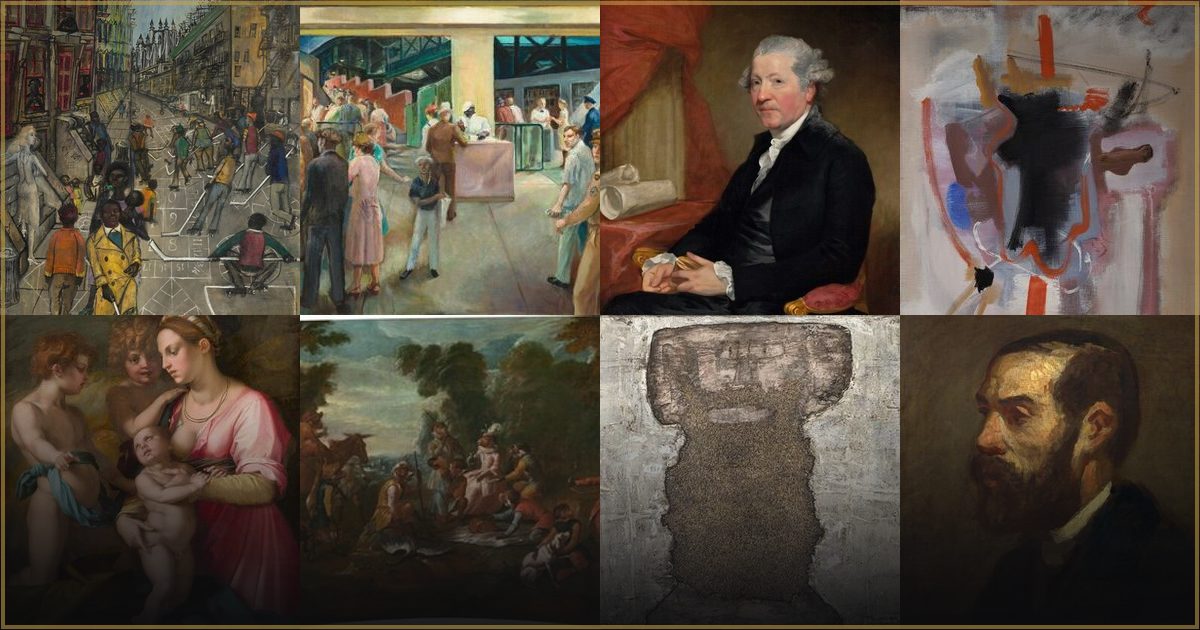
Why does William H. Edwards make folk art look so classical?
In short: By applying the strict rules of classical academic painting to humble American folk art, William H. Edwards created quiet, sculptural masterpieces that bring balance and timeless elegance to modern walls.
The Magic of Academic Precision
At first glance, a wooden bird carved by an anonymous artisan might seem like a simple piece of rustic folk art. But when seen through the eyes of artist William H. Edwards, it becomes something monumental. Edwards possessed a rare gift: the ability to apply the rigorous principles of the classical academic tradition to humble, everyday objects.
By treating folk art and organic subjects with the same reverence and precision historically reserved for grand historical paintings, Edwards bridged the gap between the rustic and the refined. His work answers a fascinating question: how do you make the simple look sublime? You do it through absolute mastery of form, balance, and light.
The Art of Restraint and Light
Edwards’s style is defined by an extraordinary commitment to draftsmanship. In an era that was rapidly moving toward abstraction, he remained dedicated to the faithful study of nature and object. His compositions are never cluttered or chaotic; instead, they reflect a deep love for order and quiet dignity.
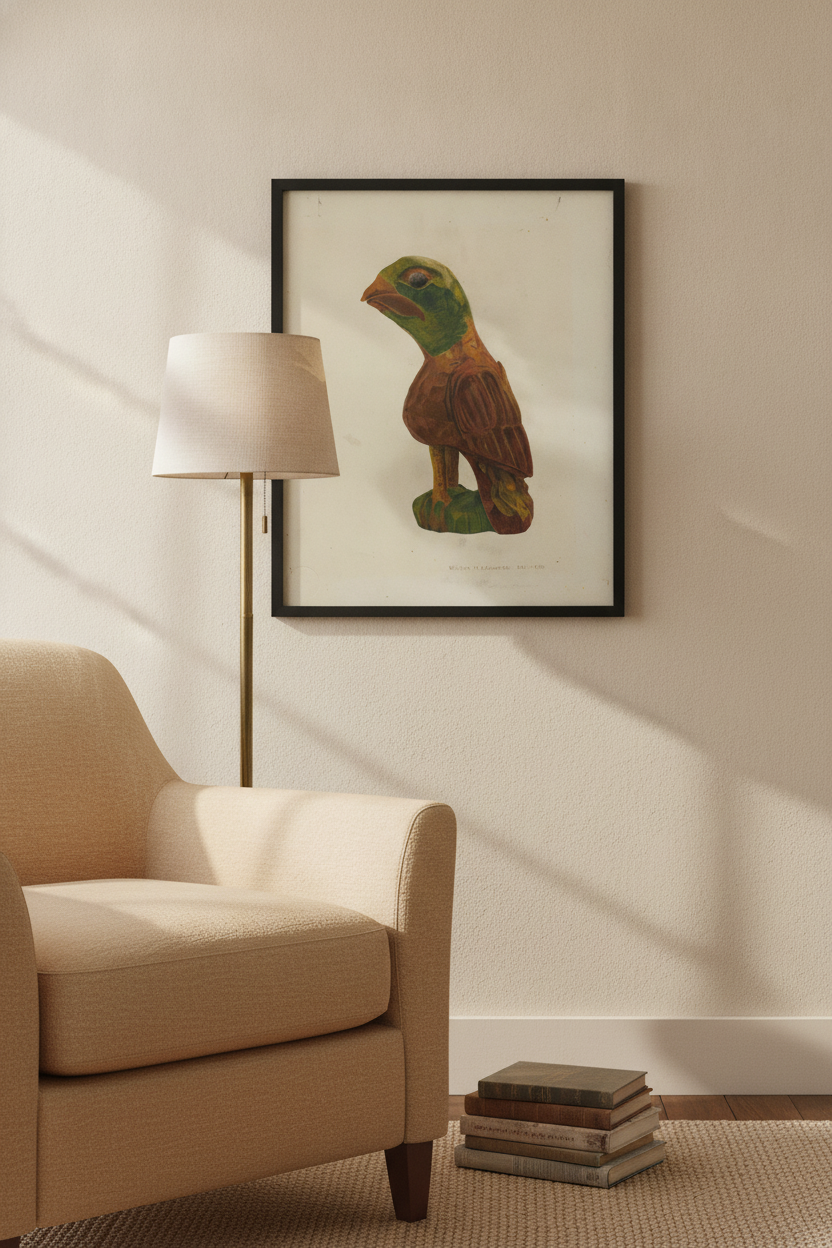
When you look at his work, the first thing that strikes you is the sculptural weight of his subjects. Through delicate tonal transitions and a masterly control of light and shadow, he makes flat paper feel three-dimensional. A perfect example of this is his rendering of the Pa. German Carved Bird. Here, the painted wood texture, the gentle wear of time, and the soft play of light are captured with such clarity that you feel you could reach out and pick it up.
His restrained palette—dominated by earthy tones, soft ochres, and deep, quiet shadows—ensures that the focus remains entirely on the form. It is an exercise in pure contemplation, transforming a fleeting physical object into a timeless study of grace.
Bringing Classical Order to Modern Spaces
Because of their clean lines, balanced compositions, and neutral color stories, Edwards's pieces are uniquely suited for modern interior design. They offer a sophisticated study in restraint that anchors a room without overwhelming it.
In a minimalist space, a print from the Full William H. Edwards collection introduces warmth, history, and a touch of organic texture. In more traditional or transitional homes, his academic precision honors classical design principles while celebrating heritage. Whether framed as a large focal canvas or grouped in a gallery wall, these works bring a sense of calm, quiet dignity to our busy modern lives.
Frequently asked questions
Who was William H. Edwards?
William H. Edwards was an American artist active in the mid-20th century, highly regarded for his academic precision, classical draftsmanship, and masterful use of light and shadow in documenting American material culture.
What makes his style "classical" if he painted folk art?
While his subjects were often rustic, his technique was rooted in the classical academic tradition. He used balanced compositions, a restrained color palette, and precise draftsmanship to give simple objects a sense of sculptural weight and timeless dignity.
How do these prints look on canvas versus paper?
Because of Edwards's rich tonal transitions and sculptural rendering, a textured canvas print brings out the painterly depth of his shadows. A fine-art paper print, on the other hand, highlights his exquisite draftsmanship and the crisp, clean lines of his compositions.