Why is Albert Geuppert's classical art so calming?
In short: Albert Geuppert's drawings capture the timeless, balanced spirit of classical antiquity. Their clean lines, symmetrical forms, and neutral palettes bring an instant sense of order and serenity to modern interior spaces.
The Power of Perfect Balance
Why does some art immediately lower your heart rate? The secret lies in classical symmetry. Albert Geuppert’s work is a masterclass in this quiet, stabilizing force. Rooted deeply in the European classical tradition, his compositions rely on the timeless principles of antiquity: balance, proportion, and structural harmony. When we look at balanced forms, our brains naturally relax, finding order in a world that often feels chaotic.
In a modern environment filled with constant digital noise, Geuppert's art offers a visual sanctuary. By focusing on clean, disciplined forms and avoiding transient trends, he captured a serene, contemplative atmosphere. There are no jarring colors or aggressive brushstrokes here. Instead, you find a refined, restrained palette and a profound respect for formal order that feels both ancient and incredibly fresh.
The Art of the Academic Line
At the heart of Geuppert's appeal is his extraordinary draftsmanship. Every single line and tonal gradation is rendered with academic precision, reflecting years of rigorous training. His subjects often draw from architectural and botanical motifs—the very elements that decorated classical temples, civic buildings, and grand European estates.
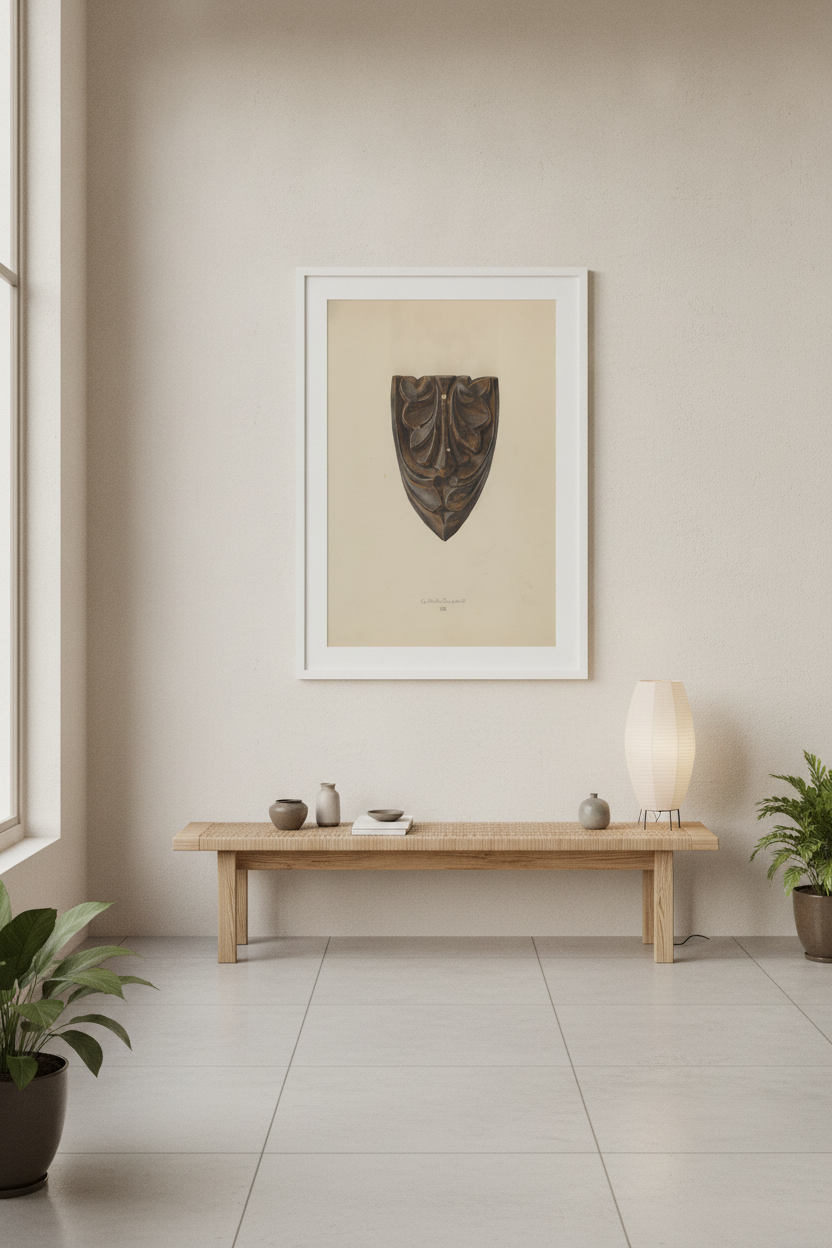
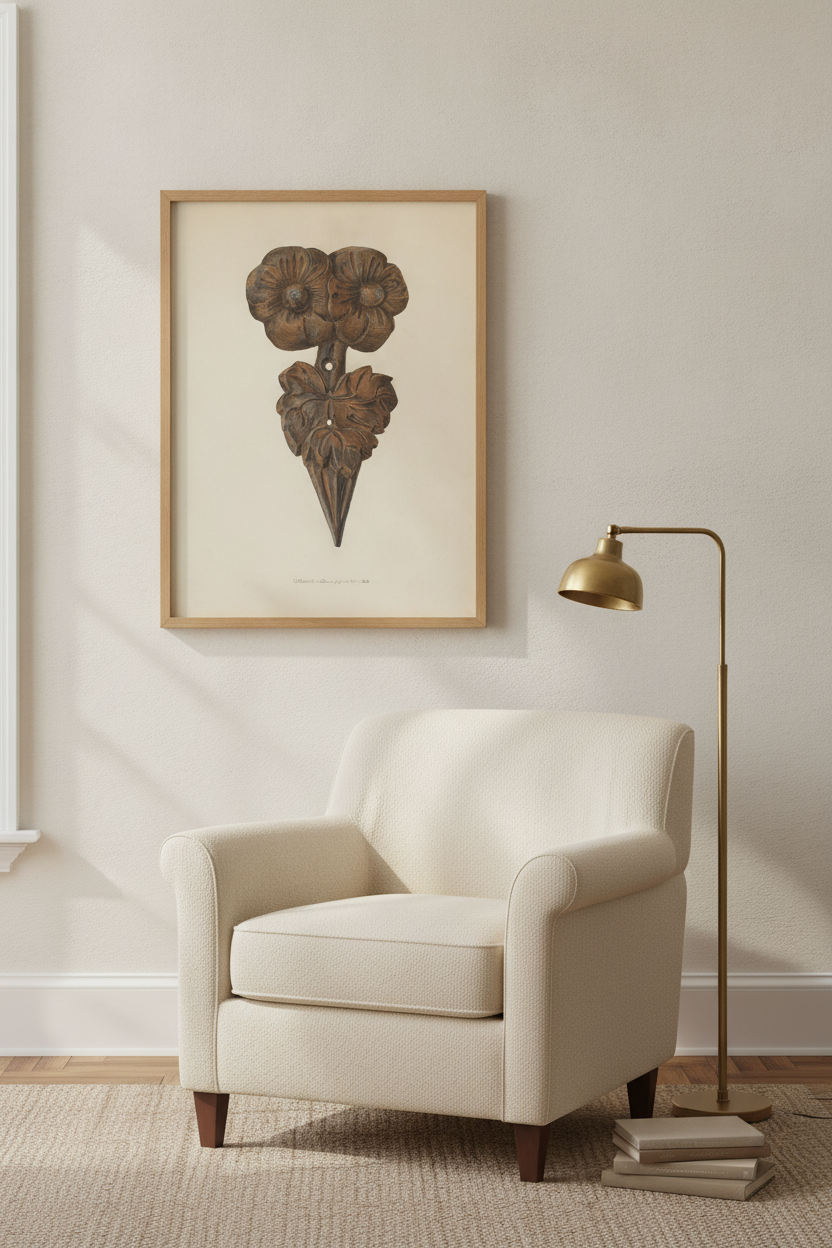
Consider his 1938 study, Leaf Finial. This piece showcases his ability to transform a stylized botanical element into a monument of symmetry. The delicate shading gives the leaf a three-dimensional weight, making it feel like a carved stone ornament you could reach out and touch. Similarly, in Crowning Leaf, Geuppert captures the quiet majesty of the natural world through a highly structured, academic lens. These works show how classical art doesn't just copy nature; it refines it, turning organic shapes into symbols of permanent beauty.
Why Classical Studies Shine in Modern Spaces
You might wonder how drawings from the academic tradition fit into a modern home. The truth is, their minimalist elegance makes them incredibly versatile. Because Geuppert’s work relies on neutral tones—soft creams, charcoal grays, and warm earth shades—it easily complements almost any interior color palette.
In a contemporary, minimalist room, a framed print from the full Albert Geuppert collection acts as a grounding focal point. It introduces organic warmth and historical depth without cluttering the visual field. In more traditional spaces, these pieces echo the historic architecture and classic moldings around them. Whether printed on textured fine-art paper or stretched canvas, Geuppert's studies bring a sense of history, intellect, and quiet sophistication to your everyday living spaces.
Frequently asked questions
Who was Albert Geuppert?
Albert Geuppert was an artist working within the rigorous European classical and academic traditions. His work, famously preserved in mid-20th-century archival projects like the Index of American Design, focuses on rendering historical architectural, decorative, and botanical motifs with extreme precision and draftsmanship.
What is a finial in classical art?
A finial is a decorative element used in architecture and furniture design to mark the top or end of an object. In classical art, finials often took the shape of stylized leaves, acorns, or urns, symbolizing growth, symmetry, and completion.
How do I style Geuppert's prints in my home?
Because of their neutral palettes and clean lines, Geuppert's prints look exceptional when styled in pairs or grids. Try framing them with wide mats and simple dark or natural wood frames to emphasize their architectural, academic quality.