Why is Early Venetian Renaissance art so luminous?
In short: Early Venetian Renaissance art stands out for its brilliant light and rich color, shaped by Venice's unique trade routes, damp climate, and Byzantine heritage.
The Shimmering City of Color
Venice has always been a city of reflections. Built on a salt marsh, suspended between sky and sea, its unique atmosphere deeply shaped how artists saw the world. While Renaissance Florence championed intellectual structure, geometry, and sharp draftsmanship (known as disegno), Venice chose a different path. The artists of the early Venetian Renaissance fell in love with light, atmosphere, and color (known as colore). This was not just an aesthetic choice, but a direct response to their environment.
In the mid-fifteenth century, Venetian painters faced a practical problem. The city's damp, salty air was ruinous to traditional wall frescoes, which cracked and peeled within a few seasons. This forced local workshops to look for alternatives, leading them to master oil paint much earlier than their peers in southern Italy. By building up thin, translucent layers of oil glazes, they captured the luminous, shifting quality of the lagoon itself. The sun hitting the water and reflecting onto the marble facades of palaces created a natural cinema of moving illumination, which painters felt compelled to capture on panel and canvas.
Bridging East and West
To understand early Venetian art, we have to look at where Venice sat on the map. As a dominant maritime trading power, the city was the primary gateway between Western Europe, the Byzantine Empire, and the Islamic world. This cultural melting pot is visible in every brushstroke of the era. Because of these trade routes, Venetian artists had unprecedented access to the finest, most expensive pigments in the world, such as ultramarine blue ground from Afghan lapis lazuli.
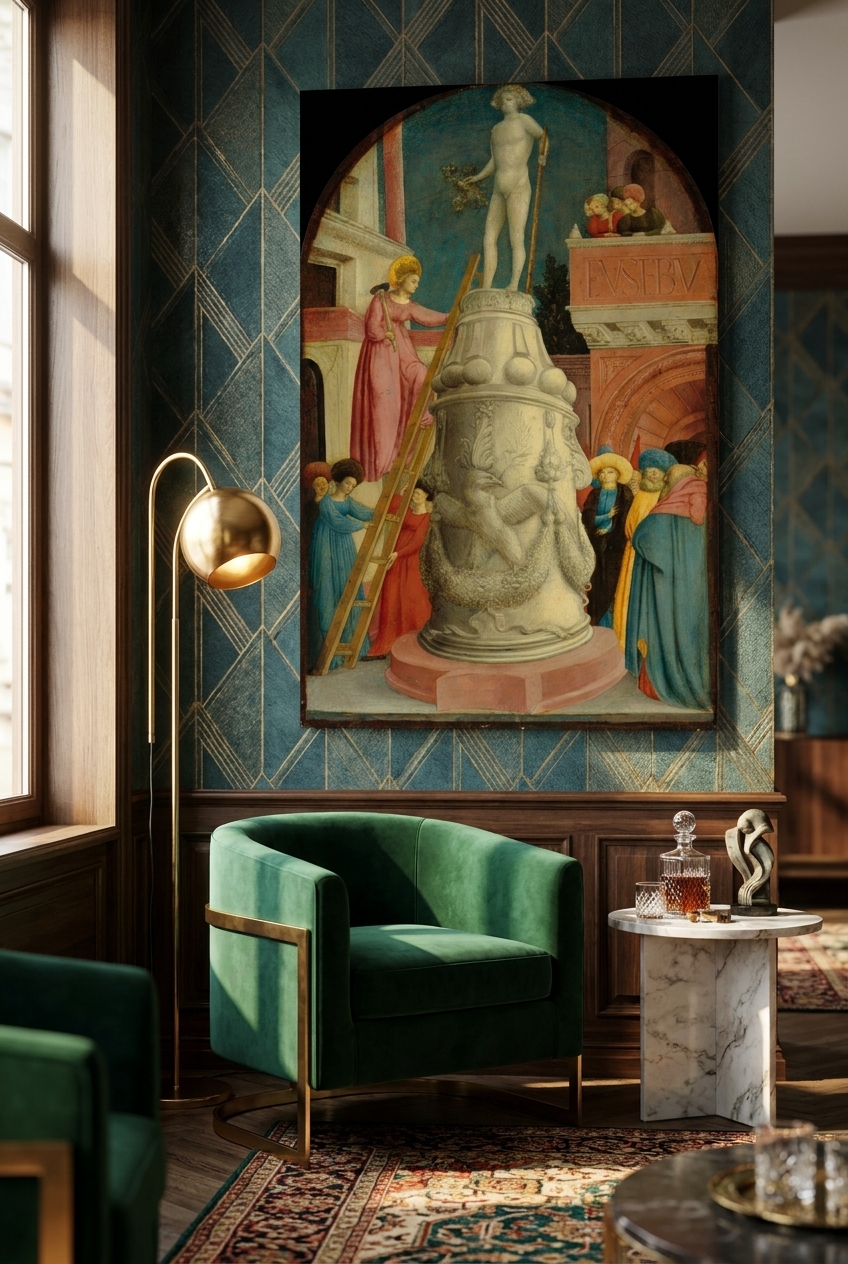
Artists did not simply abandon the rich gold backgrounds and decorative patterns of the Gothic and Byzantine traditions when the Renaissance arrived. Instead, they merged them with the new Florentine focus on anatomy, perspective, and human emotion. A marvelous example of this transition is found in the work of Giovanni d'Alemagna, a painter of German origin who became a key figure in Venice. His collaborative piece, Saint Apollonia Destroys a Pagan Idol (c. 1442/1445), showcases this fascinating blend. It pairs a dramatic, narrative Renaissance sensibility with the intricate, jewel-like architectural details of the Late Gothic style, creating a scene that feels both theatrical and deeply sacred.
The Vivarini Workshop and Human Emotion
As the fifteenth century progressed, Venetian art grew more sculptural, grounded, and emotionally resonant. Much of this evolution happened within family-run workshops, which were the backbone of the city's creative economy. The Vivarini family of Murano was one of the most influential dynasties of the era, constantly pushing the boundaries of what religious art could feel like. They experimented with the transition from egg-based tempera paint to the rich, slow-drying medium of oil.
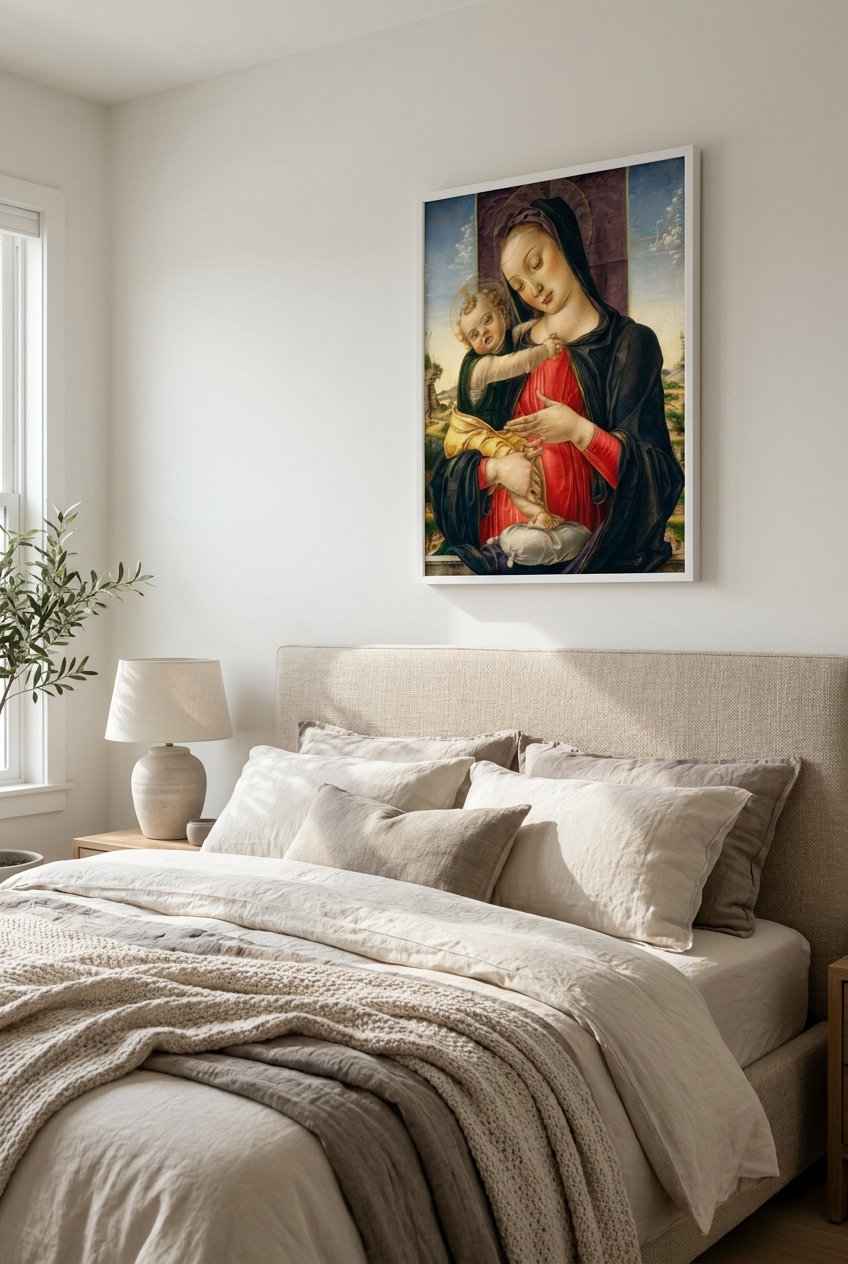
Bartolomeo Vivarini, in particular, brought a new intensity to his subjects. Influenced by the sharp, dramatic lines of nearby Paduan painters, his figures began to step out of the flat medieval plane and occupy real, three-dimensional space. In his Madonna and Child (c. 1475), we see this transition beautifully. The figures possess a tangible, physical weight, yet they are bathed in a gentle, warm light that feels deeply intimate and human. The traditional flat gold background is gone, replaced by a soft, dark space that makes the glowing skin tones and rich fabrics pop off the surface with quiet drama.
Living with Venetian Masterpieces
There is a timeless, meditative quality to early Venetian Renaissance art that makes it exceptionally well-suited for modern living spaces. These are not loud, aggressive paintings; they are works of quiet depth that invite you to slow down and look closer. They bring a sense of history, warmth, and architectural elegance to a room.
When choosing a print for your home, consider these simple design tips:
- Embrace the jewel tones: These works feature rich lapis lazuli blues, deep madder reds, and warm gold undertones. They pair beautifully with rich wood finishes, velvet textures, and neutral walls that let the colors sing.
- Mind the lighting: Because these compositions were designed to capture and reflect light, place them where they can catch the shifting natural light of the day. A soft morning or afternoon sun will bring out the warmth of the painted glazes.
- Choose the right frame: A dark, classic wood frame or a subtle, distressed gold frame respects the historical roots of these pieces while keeping them grounded in a contemporary room.
Frequently asked questions
What is the difference between the Florentine and Venetian Renaissance?
Florentine art focused heavily on "disegno" (drawing, structure, and intellectual geometry), while Venetian art prioritized "colore" (color, light, and atmospheric effects), largely due to Venice's unique light and damp climate.
Why did Venetian artists prefer oil paint over fresco?
Venice's humid, salty lagoon air quickly ruined plaster frescoes. Oil paint, especially when applied to canvas rather than wood panels, proved far more durable in the damp climate and allowed for the rich, glowing glazes the Venetians loved.
Who were the Vivarini family?
The Vivarini were a prominent family of painters based in Murano, Venice, active throughout the 15th century. Along with the Bellini family, they ran the most important workshops of the early Venetian Renaissance, bridging Gothic traditions and new Renaissance realism.