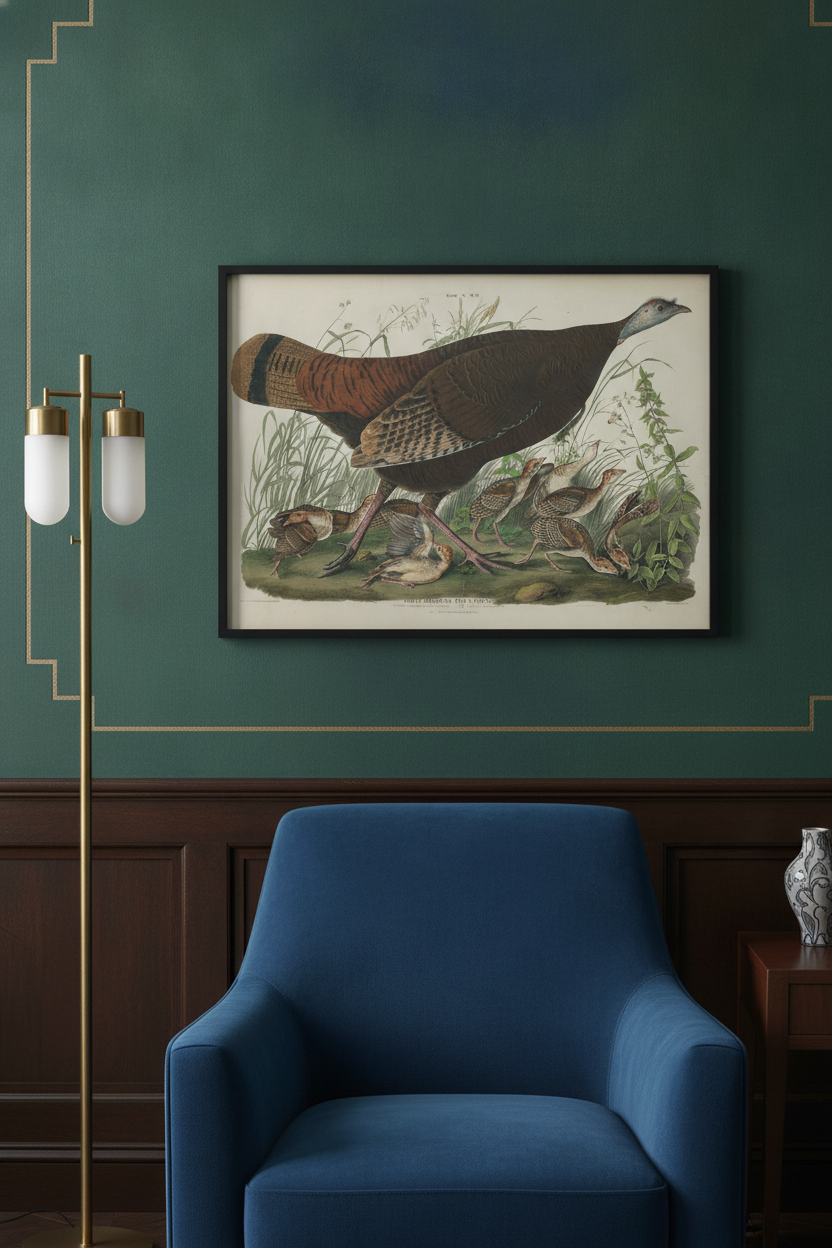
Wild Grandeur: How William Home Lizars Brought Audubon's Birds to Life
In short: Before Audubon's Birds of America became a masterpiece, Scottish engraver William Home Lizars translated his first wild watercolors onto copper plates, setting a new standard for natural history.
The Meeting of Two Worlds
In the autumn of 1826, a self-taught American naturalist named John James Audubon arrived in Edinburgh, carrying a portfolio of oversized, breathtakingly vivid watercolors. His goal was audacious: to document every bird species in North America at life-size. To realize this dream, he needed an engraver with the technical genius to translate his fluid, energetic brushstrokes onto copper plates. He found that genius in William Home Lizars, a master Scottish engraver who immediately recognized the revolutionary nature of Audubon's work.
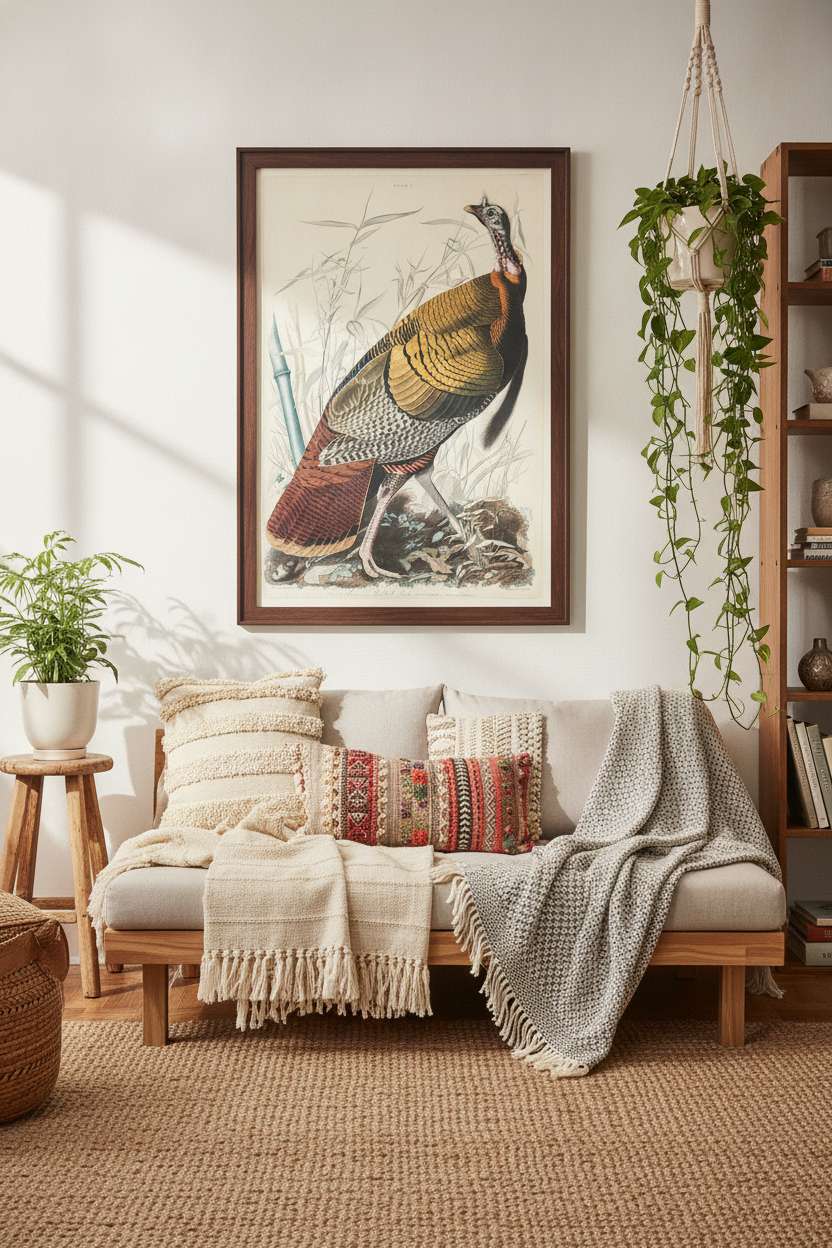
Their collaboration marked a monumental chapter in nineteenth-century natural history. Lizars was the first to take on the immense challenge of the "double-elephant" folio format. His very first plate, the magnificent Great American Cock, shocked the European art world. Instead of the stiff, profile-only diagrams common in scientific texts of the time, Lizars presented a towering, dynamic creature that seemed ready to step off the page.
The Art and Craft of the Copperplate
Translating watercolor to metal is an act of translation that requires both intense discipline and artistic intuition. Lizars did not merely copy Audubon's lines; he reinterpreted them. Through meticulous line work and delicate tonal gradations, he captured the soft, downy texture of feathers, the rough bark of ancient trees, and the glossy sheen of leaves.
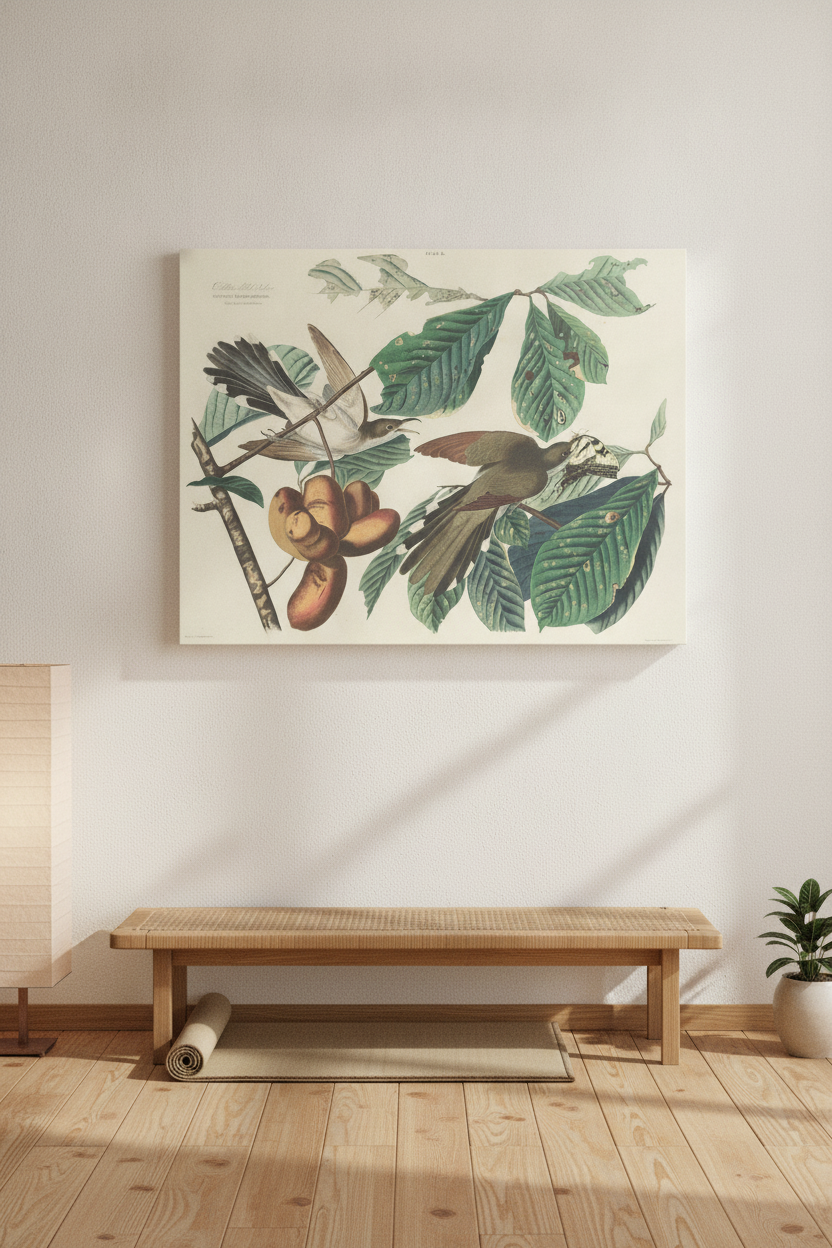
Consider his work on the Yellow-billed Cuckoo. Here, the engraving process highlights the tension of the bird snatching a tiger swallowtail butterfly. Every leaf of the pawpaw tree is rendered with a tactile, living presence. Lizars used fine hatching and cross-hatching to build depth, allowing the black-and-white lines of the copperplate to hold the hand-painted watercolors that would be applied later. This synthesis of scientific accuracy and theatrical composition elevated ornithological study into the realm of high art.
A Classical Obsession with Romantic Grandeur
The early nineteenth century was defined by a fascinating intellectual tension: a Classical obsession with empirical, scientific observation wedded to a Romantic love for the wild and untamed. The Lizars-Audubon prints are the absolute pinnacle of this cultural moment. Each plate serves as a rigorous scientific record, yet vibrates with a sense of drama and narrative.
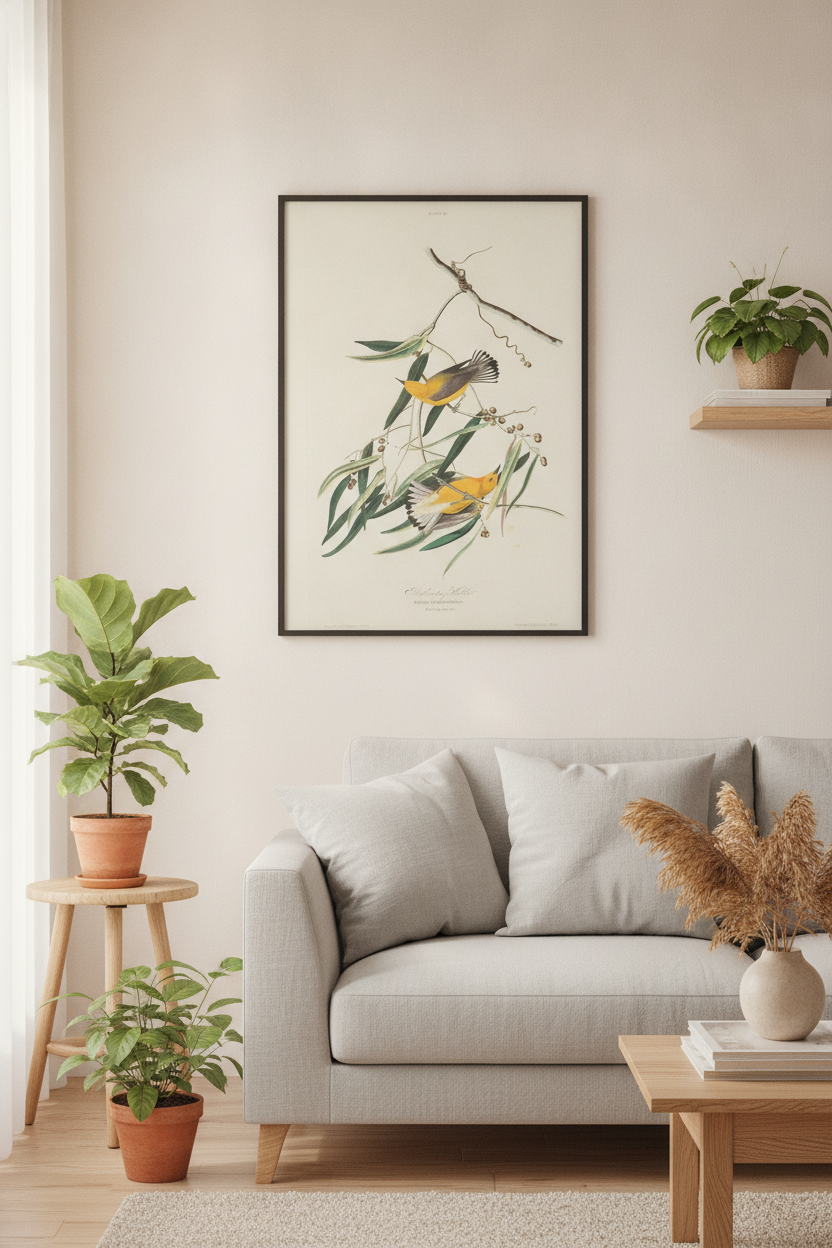
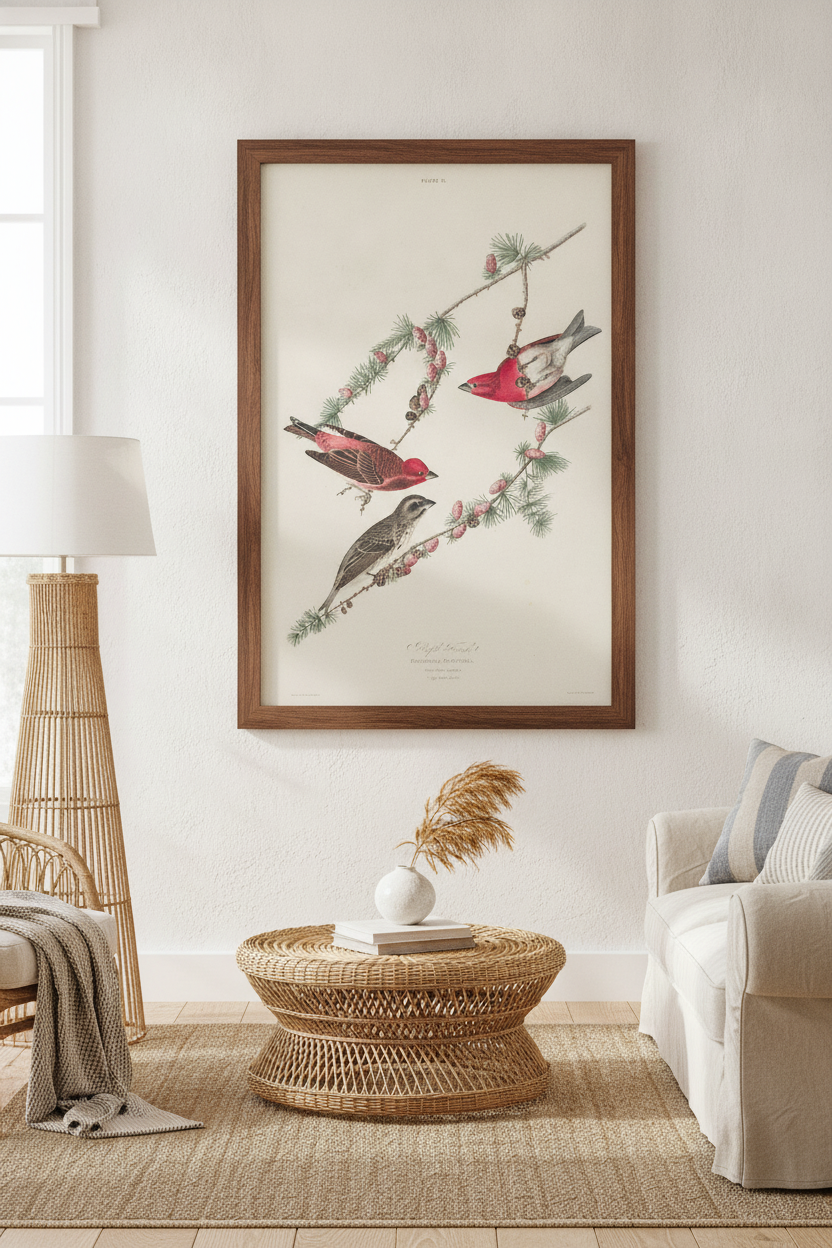
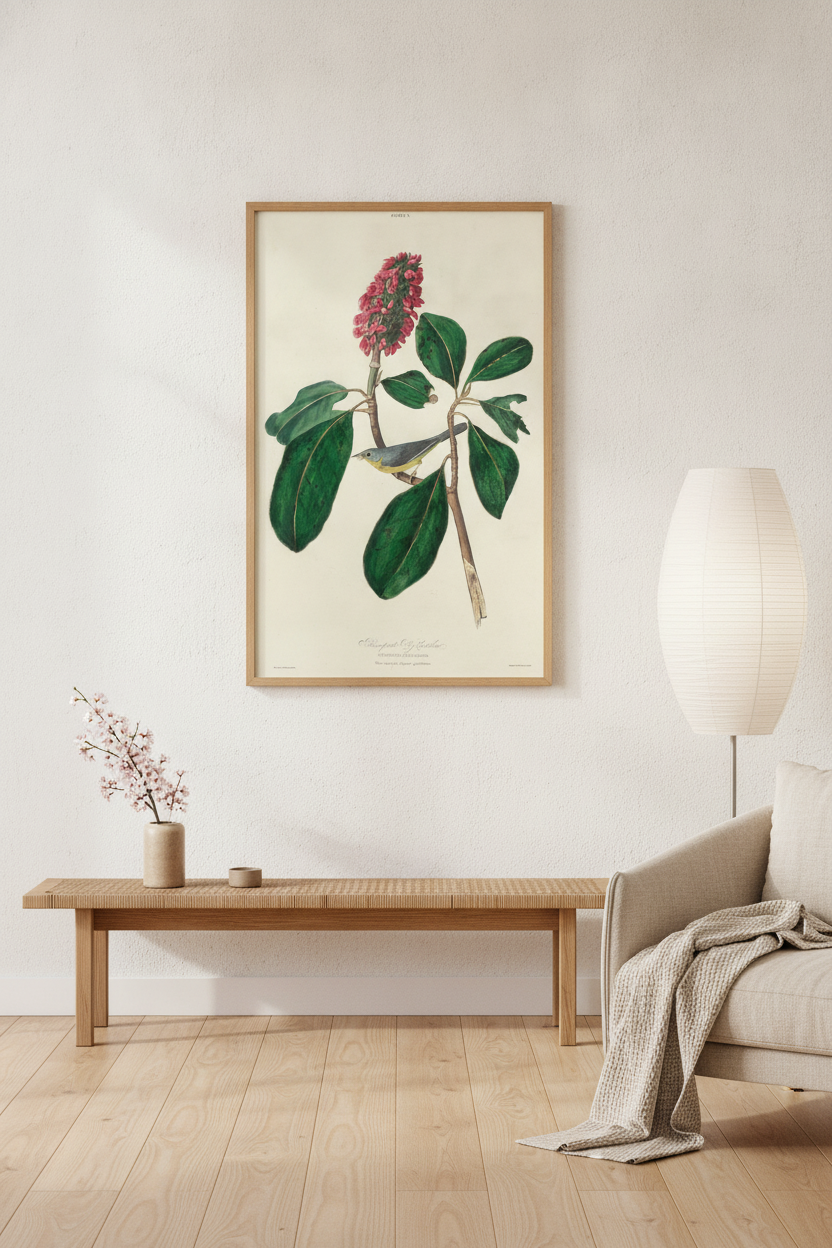
Rather than presenting birds in isolation, Lizars engraved them interacting with their natural environments—fighting, feeding, and displaying courtship rituals. You can explore this dramatic energy across the full Lizars after Audubon collection, where each piece reflects a deep reverence for the American wilderness. The prints capture a fleeting moment in history when the natural world still felt endlessly vast and mysterious.
Bringing Historic Drama into the Modern Home
Today, these historic engravings make an extraordinary statement in modern interiors. Because they were designed on such a grand scale, they possess a bold, architectural quality that commands attention. Whether framed as a large-scale canvas or a classic fine-art paper print, they bridge the gap between historic charm and contemporary minimalism.
The organic forms, intricate botanical details, and rich historical context of these works bring warmth and character to a room. They work beautifully in dining rooms, libraries, or modern living spaces where their graphic lines and vibrant natural subjects can spark conversation. They are more than just decorative pieces; they are windows into an era of discovery, rendering the untamed vitality of the wilderness with timeless elegance.
Frequently asked questions
Who was William Home Lizars?
William Home Lizars was an eminent Scottish engraver and painter based in Edinburgh. He was the first engraver John James Audubon hired to translate his original watercolors into the massive copperplate engravings that initiated the legendary 'Birds of America' series.
Why did Lizars only engrave the first few plates of the series?
After Lizars completed the first ten plates, his team of professional colorists went on strike. To prevent the massive project from stalling, Audubon had to quickly find a new collaborator, eventually transferring the work to Robert Havell Jr. in London.
What makes Lizars' engravings distinct from other Audubon prints?
Lizars' plates represent the very beginning of Audubon's grand vision. His work is characterized by incredibly fine, classical line engraving that captures minute botanical details and texture, establishing the high aesthetic standards that defined the entire series.