
The Iridescent Magic of Umbrian Maiolica: Deruta and Gubbio
In short: Sixteenth-century Umbrian maiolica transformed clay into a canvas for Renaissance humanism. Famous for brilliant luster glazes and cobalt outlines, these masterworks bring warmth, history, and graphic elegance to modern walls.
Clay Transformed into Canvas
In the hill towns of Umbria during the height of the Italian Renaissance, a quiet revolution took place not in marble or fresco, but in humble clay. Workshops in towns like Deruta and Gubbio took simple, utilitarian earthenware and elevated it to a high art form known as maiolica. This tin-glazed pottery became a brilliant canvas for the intellectual and artistic currents of the age, turning everyday objects into treasures.
Instead of simple kitchenware, these potters created objects of astonishing beauty. They drew inspiration from classical mythology, biblical narratives, and the humanist philosophy sweeping through Italy. Today, pieces from the Full Deruta or Possibly Gubbio 16th Century collection allow us to appreciate how these anonymous masters blurred the line between craft and fine art, making the domestic space a gallery of intellectual expression.
The Alchemist's Touch: Luster and Cobalt
What makes 16th-century Umbrian maiolica so instantly recognizable is its spectacular luminous quality. This was achieved through a complex, multi-firing process and the mastery of luster glazes. Gubbio, in particular, became legendary for its secret workshop recipes that produced iridescent, metallic finishes—most notably a brilliant, fiery ruby red and shimmering, brassy gold.
Deruta, on the other hand, was celebrated for its precise, elegant compositions and cool harmony. Artists there often outlined their figures and patterns in deep, rich cobalt blue before filling them with warm ochres and soft copper greens. When these two regional traditions met or influenced one another, the result was sheer magic: pottery that captured and reflected the flickering candlelight of Renaissance homes with an ethereal, painterly brilliance.
Stories, Symbols, and Stylized Nature
When you look closely at these Renaissance ceramics, you enter a world of rich symbolism and storytelling. Some plates feature proud portraits of lovers or noble figures, surrounded by scrolls bearing moral maxims. Others showcase elaborate, stylized depictions of the natural world, blending observation with imagination.
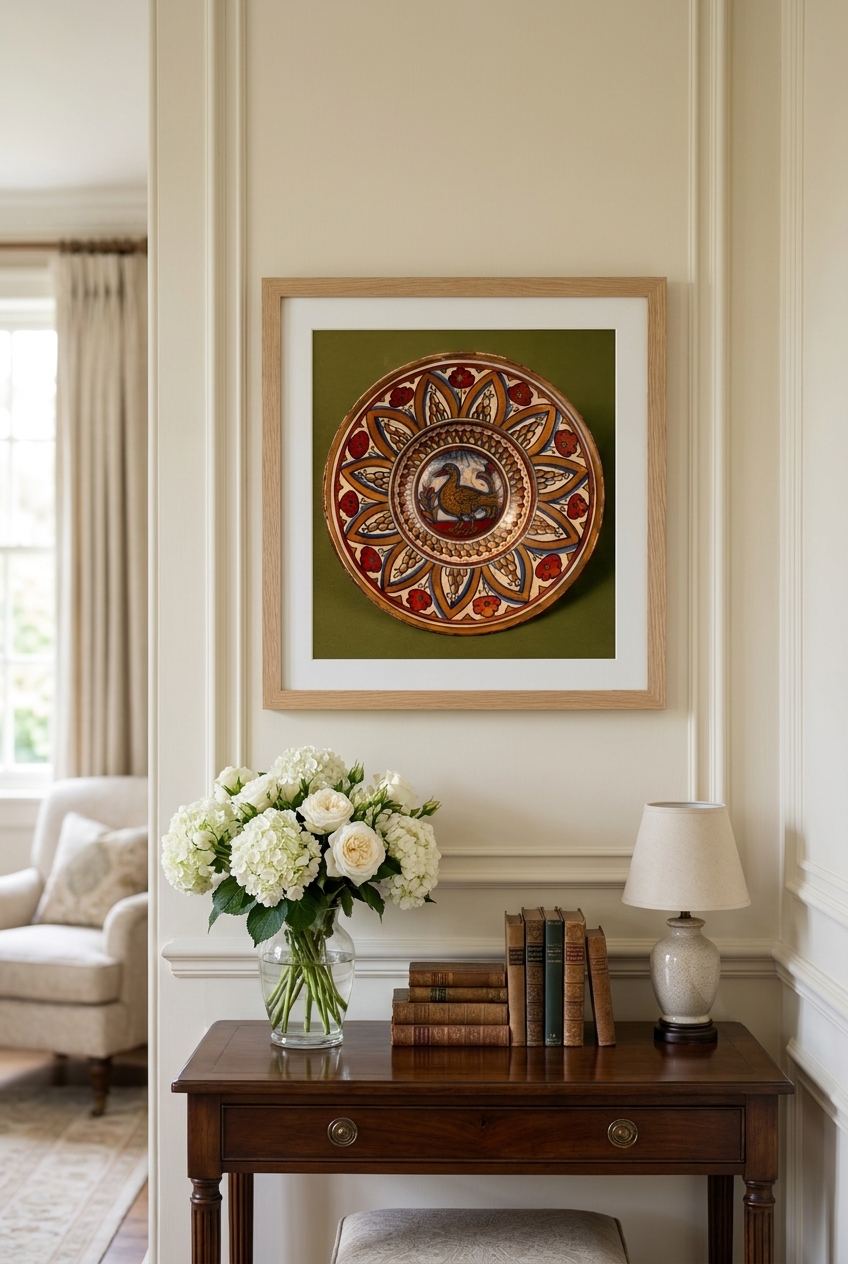
A perfect example of this delicate balance between nature and geometric order is the Plate with border of rounded hills within pointed arches with flowers between them; in the center, a wading bird between stylized plants. Here, the artist frames a solitary bird with rhythmic, repeating patterns of hills and arches, capturing the Renaissance desire to find harmony, mathematical beauty, and divine order in the wildness of nature.
Renaissance Radiance for Modern Walls
Why do these centuries-old ceramic designs translate so beautifully into modern fine-art prints and canvases? The answer lies in their graphic strength and rich, saturated palette. The bold cobalt outlines, warm golden tones, and intricate borders offer a striking visual anchor for contemporary interiors, bridging the gap between historical depth and modern minimalism.
On a high-quality paper or canvas, the painterly brushstrokes and the illusion of the glazed, reflective surface come alive in a new way. Hanging one of these reproductions brings a touch of Umbrian sunlight, historical depth, and intellectual curiosity into a living room, dining space, or study. It is a testament to the enduring power of Renaissance design, proving that great art transcends its original medium.
Frequently asked questions
What is maiolica?
Maiolica is a style of Italian tin-glazed earthenware that became highly popular during the Renaissance. The white tin glaze provided a bright, opaque background that allowed artists to paint intricate, colorful designs directly onto the ceramic surface before firing.
Why are some pieces attributed to "Deruta or Possibly Gubbio"?
Because these two Umbrian towns were located close to each other and shared artistic styles, techniques, and even craftsmen, it can be difficult for historians to pinpoint the exact workshop of origin for certain unsigned 16th-century pieces. Both represent the absolute peak of Renaissance ceramic art.
How do these ceramic designs translate to flat paper or canvas prints?
Our high-resolution archival prints capture the incredible depth, texture, and subtle cracks of the original glazed earthenware. The rich cobalt blues, warm ochres, and metallic luster effects are reproduced with stunning fidelity, offering the visual warmth of the original three-dimensional object on your wall.