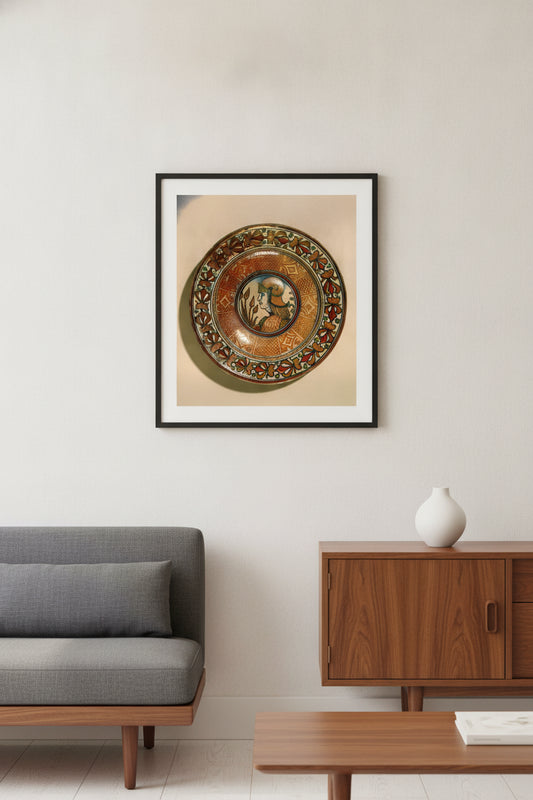
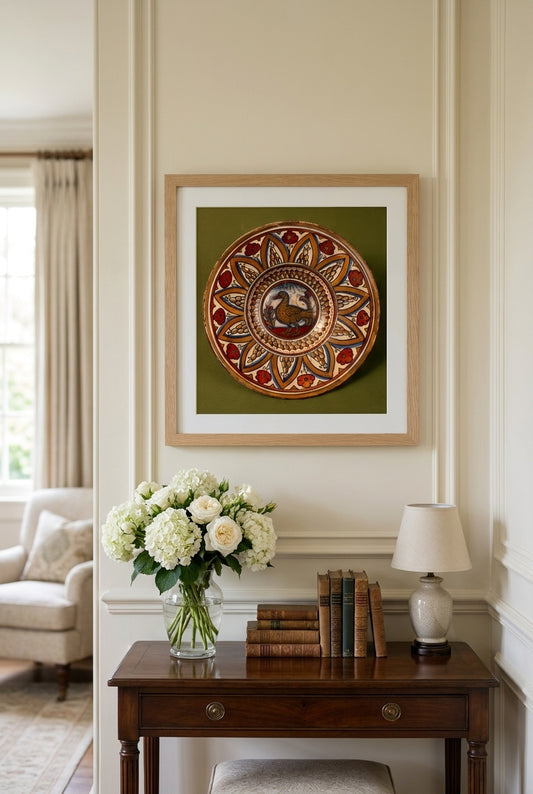
Masterworks of sixteenth-century Italian maiolica and iridescent lusterware.
Originating from the prestigious ceramic workshops of Umbria during the height of the Italian Renaissance, works attributed to Deruta or Gubbio represent the pinnacle of tin-glazed earthenware, or maiolica. These historic centers of production were celebrated for their technical virtuosity, transforming utilitarian vessels into sophisticated canvases for classical mythology, biblical narratives, and allegorical portraiture.
The defining signature of this period lies in the mastery of luster glazes—particularly the brilliant ruby reds and golden metallics perfected in the workshops of Gubbio and the refined, cobalt-outlined compositions of Deruta. The artists of these regions applied a sophisticated understanding of Renaissance humanism, utilizing rich pigments and iridescent washes that caught the light with an ethereal, painterly brilliance.
Today, these anonymous masterworks stand as vital historical testaments to the synthesis of decorative craft and fine art. Characterized by their balanced proportions, grotesque borders, and narrative depth, they capture the intellectual curiosity and aesthetic opulence of the sixteenth-century Italian peninsula.