The translation of fluid Mannerist elegance into precise classical engraving
In the vibrant artistic landscape of sixteenth-century Italy, the collaborative translation of master designs became an art form of its own. Enea Vico’s interpretive engravings after the compositions of Parmigianino represent a peak of High Renaissance and Mannerist graphic art. Through this dialogue between designer and engraver, the fluid, expressive draftsmanship of the Emilian master was translated into a medium of permanent, structured elegance.
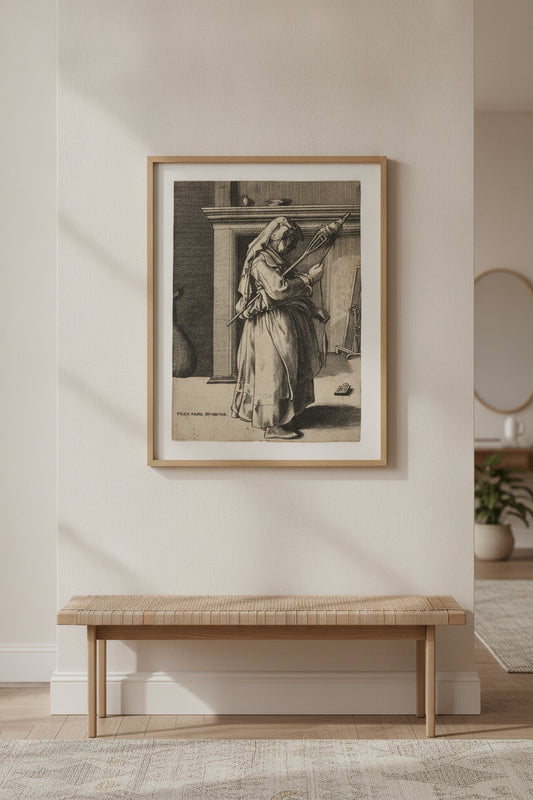
Vico’s technical mastery lies in his ability to capture Parmigianino’s signature aesthetic—characterized by elongated proportions, delicate, swelling contours, and an ethereal, courtly grace. Using precise, swelling lines and delicate stippling, Vico rendered the subtle play of light and shadow, transforming fluid ink drawings into highly disciplined, sculptural engravings that retain their original poetic sensuality.
The resulting body of work stands as a testament to the intellectual rigor of the classical tradition. These compositions do not merely reproduce; they elevate the graphic medium, offering a sophisticated study of form, drapery, and human emotion that remains a cornerstone of Renaissance print connoisseurship.