Collection: Giotto

Architect of human emotion and sculptural depth in early Western art

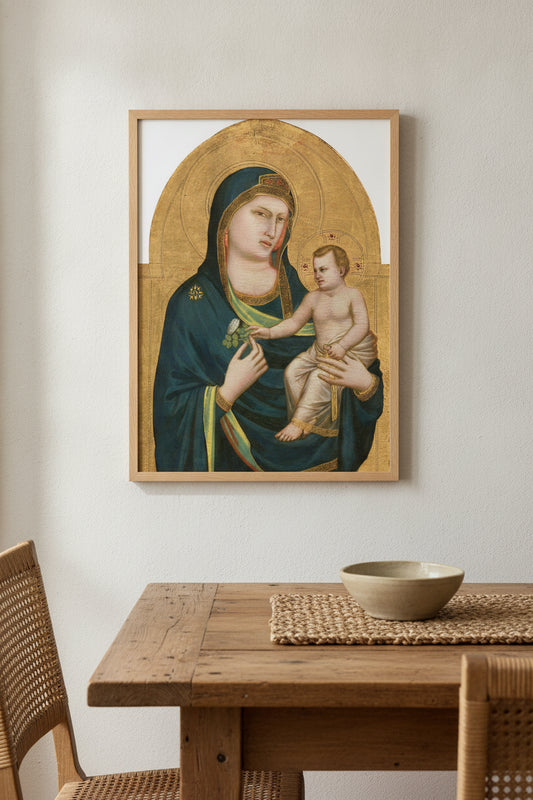
Giotto di Bondone stands as the monumental bridge between medieval Byzantine stylization and the revival of classical naturalism. Active in fourteenth-century Italy, his revolutionary approach to form and space dismantled the flat, two-dimensional conventions of his predecessors, effectively charting the course for the Italian Renaissance.

His stylistic signature lies in the unprecedented weight and volume he bestowed upon the human figure. Through a masterful command of sculptural drapery, subtle chiaroscuro, and spatial depth, Giotto introduced a profound sense of gravity—both physical and emotional—to his narratives.

The resulting body of work is defined by its quiet, monumental drama. By grounding his subjects in recognizable, earthly environments and capturing genuine human pathos, Giotto transformed sacred iconography into deeply felt, universal human experiences.