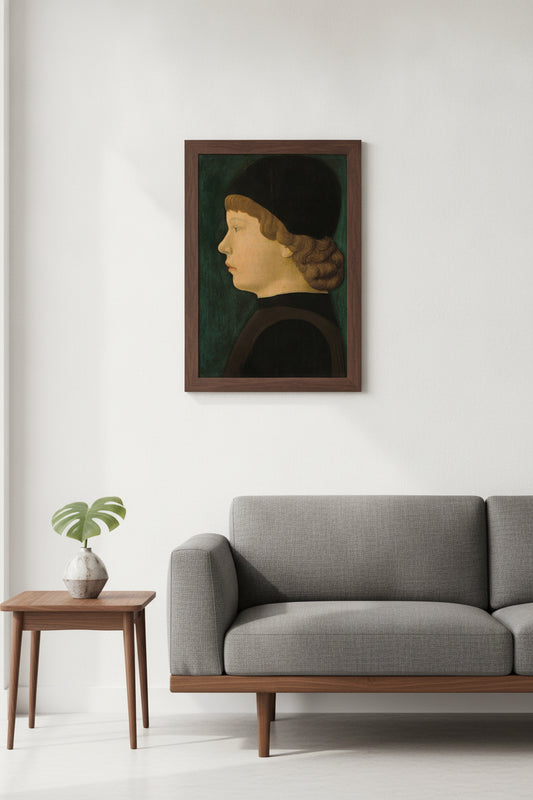
The quiet geometry and humanism of the early Northern Italian Renaissance
Emerging from the prosperous courts of Lombardy, Veneto, and Emilia-Romagna, the anonymous masters of fifteenth-century Northern Italy forged a distinct visual language. Bridging the decorative lyricism of the Late Gothic style with a burgeoning devotion to classical antiquity, these works reflect a period of profound intellectual and artistic transition.
Characterized by a rigorous pursuit of perspective, linear precision, and a muted, earthy palette, the regional style favored structural clarity and quiet contemplation. Unlike the dramatic humanism of their Florentine contemporaries, Northern Italian draftsmen and painters maintained an analytical, almost architectural approach to form, rendering sacred and secular subjects with a serene, disciplined dignity.
The surviving corpus of this era—ranging from delicate devotional panels to precise architectural studies—stands as a testament to the meticulous craftsmanship of the Quattrocento. Each piece captures a moment of poised stillness, where mathematical order and human observation exist in perfect, enduring harmony.