Pioneering master of the Barbizon School and atmospheric French landscapes
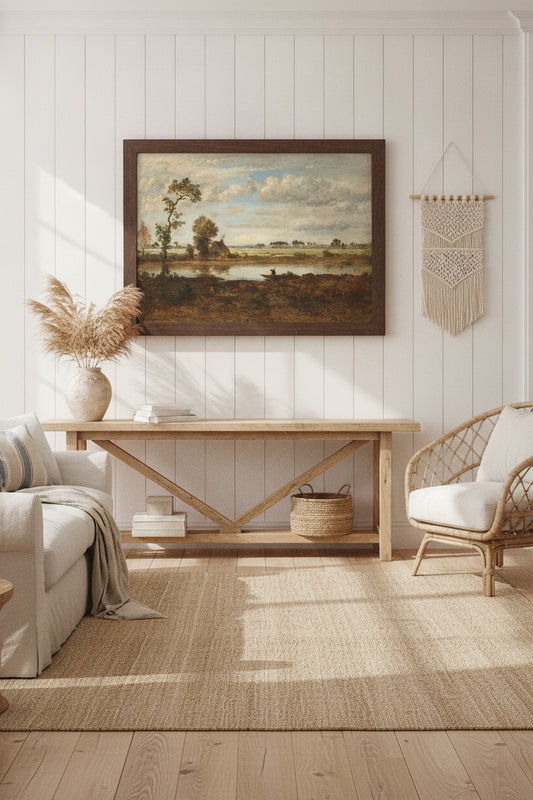
Théodore Rousseau stood as the defining force of the Barbizon School, leading a mid-nineteenth-century rebellion against the rigid constraints of academic classicism. Rejecting idealized, mythological settings, Rousseau retreated to the Forest of Fontainebleau to paint directly from nature, capturing the raw, unvarnished truth of the French countryside.
His stylistic signature lies in his profound, almost spiritual reverence for the natural world. Through dense, textured brushwork and a rich, earthy palette, Rousseau rendered the complex anatomy of ancient oaks, the weight of silent marshes, and the fleeting drama of northern light with unprecedented gravity and atmospheric depth.
Rousseau’s melancholic yet majestic landscapes marked a pivotal shift in art history. By elevating the quiet corners of the wilderness to subjects of monumental importance, his dedicated naturalism laid the essential foundations for the Impressionist movement that followed.